
call us
+86-18811954888
2026-02-12
In modern urban transportation systems, Steel Poles for Traffic Lights Signals are not merely physical carriers for signal lights, signboards, and surveillance equipment; they are core infrastructure ensuring road safety and urban operational efficiency. With the global acceleration of smart city construction, these seemingly simple metal structures are undergoing unprecedented technological innovations. This article provides an in-depth analysis of the steel signal pole industry from the perspectives of material science, production processes, smart trends, and global procurement standards.
In the field of traffic engineering, the choice of material directly determines the service life and safety of the facilities. Despite the emergence of new materials like aluminum alloys and fiber-reinforced polymers (FRP), Steel Poles remain the dominant choice in the global market due to their unparalleled mechanical performance and processing flexibility.
Structural Strength and Stability: Steel (especially Q235B or Q355B grade carbon structural steel) possesses extremely high tensile and yield strength. In modern traffic systems, intersection designs are increasingly complex, often requiring signal poles to support Mast Arms spanning 15 to 20 meters. These poles carry large-scale signal heads, LED lane control signs, traffic guidance boards, and enforcement cameras. The rigidity of steel ensures that under high loads and long moment arms, the pole body does not produce excessive vertical deflection or horizontal vibration. This stability is crucial for the image clarity of video surveillance and the visual continuity for drivers observing signals.
Durability and Wind Resistance: In coastal hurricane zones, high-altitude windy belts, or seismic areas, steel traffic signal poles exhibit excellent fatigue resistance. Through precise sectional designs (such as octagonal or conical shapes), steel poles can effectively disperse wind loads and alter fluid dynamic characteristics. Research shows that professionally modeled steel poles can withstand extreme wind speeds exceeding 160 km/h (approx. Category 16 hurricane). In the event of a severe collision, the ductility of steel allows it to absorb part of the impact energy rather than shattering instantly like brittle materials, which is key to ensuring public safety during extreme disasters and accidents.
Cost-Benefit Analysis: From a Life Cycle Cost (LCC) perspective, steel poles perform exceptionally well. Although initial installation may require heavy equipment like cranes, the raw materials are globally accessible and 100% recyclable. Combined with mature Hot-Dip Galvanizing (HDG) anti-corrosion processes, their service life typically reaches 30 to 50 years or more. In contrast, FRP materials are prone to fiber embrittlement under long-term UV exposure, and the material cost and welding difficulty of aluminum alloys increase exponentially for large-span structures with high loads, making them difficult to replace steel on a large scale.
For traffic infrastructure exposed outdoors for long periods, corrosion is the primary killer that shortens lifespan. Hot-Dip Galvanizing (HDG) serves as the core anti-corrosion process for steel signal poles. By immersing the steel in molten zinc at approximately 450°C, a uniform, dense, and robust zinc-iron alloy layer is formed on the surface.
Dual Mechanism of Physical and Chemical Protection: The galvanized layer is not just a simple physical barrier; it provides the critically important "Cathodic Protection." In the electrochemical series, zinc is more active than iron. This means that even if the coating is slightly scratched during transportation, hoisting, or harsh weather impact, the zinc layer will act as a sacrificial anode and oxidize first. This creates a self-healing effect that prevents rust from spreading into the base steel. In typical industrial or coastal high-salt-mist environments, a zinc thickness of 85 microns (or even over 100 microns) can provide over 30 years of maintenance-free service, significantly reducing municipal operating costs.
Synergy of Aesthetics and Powder Coating: To meet the diverse aesthetic requirements of modern urban landscapes, many high-end projects adopt a "Duplex System," applying Powder Coating over the galvanized layer. This process uses electrostatic adsorption of polyester powder followed by high-temperature curing at 200°C. It not only offers a rich choice of colors (such as classic dark gray, urban black, olive green, or cautionary yellow) but also further seals the micropores of the galvanized layer. This enhances resistance to acid rain, chemicals, and UV rays, ensuring the pole's appearance remains fresh even under extreme weather.
The sectional shape of the pole body relates not only to visual aesthetics but also profoundly affects the mechanical performance and vibration modes of the pole under specific dynamic loads.
Octagonal Poles: This is currently the most widely used shape for international arterial roads. Due to its eight edges, it performs exceptionally well in Torsion resistance. When long mast arms are subjected to lateral wind forces, the octagonal structure significantly reduces torsional deformation, making it ideal for signal systems with heavy multi-head lamp assemblies. Furthermore, the edges break the symmetry of airflow, effectively disrupting the Kármán vortex street phenomenon and reducing induced vibrations.
Conical Poles: Conical poles have a smooth surface with extremely uniform stress distribution and no stress concentration points. Their streamlined appearance aligns with modern minimalist aesthetics and provides less visual pressure, often used for urban center landscape roads, park perimeters, or light-load signal supports. Manufacturing conical poles typically requires higher-precision spinning or continuous roll-shearing processes.
Stepped Poles: Composed of multiple sections of circular pipes with different diameters joined by welding or slip-joints. They have the lowest cost but are relatively weaker in aesthetics and wind resistance, mostly used for rural roads or temporary facilities sensitive to budget constraints.
|
Feature |
Octagonal Poles |
Conical Poles |
Stepped Poles |
Square Poles |
|---|---|---|---|---|
|
Wind/Torsion Resistance |
Excellent |
Great |
Fair |
Poor |
|
Load Capacity |
High (Suitable for 12m+ arms) |
Medium |
Low |
Medium |
|
Aesthetics |
Industrial, Strong |
Modern, Streamlined |
Traditional, Structural |
Modern, Rigid |
|
Manufacturing Difficulty |
Medium (Requires 1000t+ press) |
High (Requires spinning) |
Low (Standard welding) |
Low (Standard profiles) |
|
Primary Applications |
Main Arterials, Highways |
Commercial Streets, Parks |
Rural Roads, Surveillance |
Architectural Areas |
With the comprehensive implementation of Smart City and Internet of Things (IoT) concepts, intersections no longer require only a single signal function. Integrated Smart Poles have become the new standard for global urban renewal, transforming steel signal poles into the "peripheral nerves" of a smart city.
Redefinition of Structural Loads: Traditional signal pole designs only consider the weight of signal heads. Modern "Smart Poles" need to reserve space for mounting 5G micro-base stations (heavy Active Antenna Units), public Wi-Fi access points, multi-spectral environmental sensors (PM2.5, temperature, humidity, noise), broadcast speakers, and EV charging piles. This means engineers must significantly increase steel wall thickness (from 6mm to 8mm or more) and use large-diameter flanges with high-strength Grade 10.9 bolts to handle the doubled static and wind loads.
Smart Maintenance and Internal Wiring Design: Optimization of Internal Wiring space is key to the success of smart poles. Modern designs require the separation of high and low voltage and separate tracks or conduits within the pole to accommodate power cables, trunk fiber optics, and various control signal lines. The base of the pole is usually designed as a larger equipment compartment with waterproof, anti-pry high-strength maintenance doors. Integrated miniature circuit breakers and optical network units support remote fault diagnosis, reducing the frequency of manual climbing inspections.
In global procurement, since standard systems (such as US ASTM/AASHTO, European EN1090, Chinese GB50017) differ across regions, ensuring products comply with local laws and safety certifications is the top priority for risk reduction.
In-depth Welding Quality Inspection: The most vulnerable parts of a signal pole are usually the flange connections between the arm and the main pole, or the longitudinal welds. High-quality manufacturers must hold AWS D1.1 (American Welding Society) or equivalent certifications. Internal defects invisible to the naked eye (such as lack of fusion, slag inclusion, cracks) are the culprits behind future pole collapses. Therefore, Ultrasonic Testing (UT) and Magnetic Particle Testing (MT) reports provided by third-party agencies are critical documents for acceptance. For mast arms at major junctions, 100% UT testing of critical welds is essential.
Raw Materials and Wall Thickness Control: Some low-end manufacturers use "sub-standard" steel to survive price wars. For example, a nominal 6mm wall thickness might actually be only 5.5mm, causing a 10%+ drop in load capacity. During acceptance, a calibrated ultrasonic thickness gauge must be used for random multi-point sampling. Additionally, check the Mill Test Certificate to confirm that sulfur/phosphorus content and yield strength meet standards, preventing low-temperature brittle fracture caused by secondary recycled steel.
Sectional Transportation and Precise Slip-joint Process: For large poles exceeding 12 meters, sectional design is mandatory due to 40ft container limits. The Slip-joint process is the current international mainstream, requiring extremely precise taper matching between male and female tubes. A manufacturing error exceeding 1mm may result in failure to fit on-site or axial deviation after assembly. High-quality factories perform horizontal pre-assembly before shipment.
Anchor Bolt Pre-embedding and Foundation Construction: Safety always begins underground. High-strength Anchor Bolts must be paired with precise steel Templates. On-site construction deviations are common; if bolt pre-embedding deviates by more than 5mm or tilts, it will be impossible to align the multi-ton steel pole. Therefore, manufacturers should courier templates before shipping poles and require the construction team to re-measure after concrete pouring to ensure a perfect fit.
Related Products
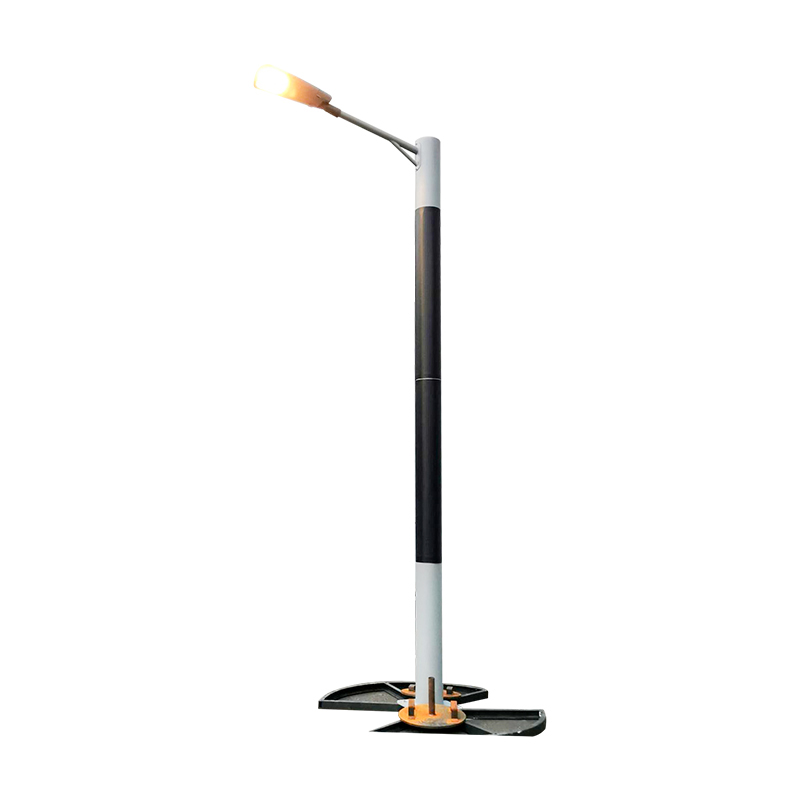 DDK-SSPL-2000 Cylinder Solar Pole Single/Double Arms And Street LED Lamps
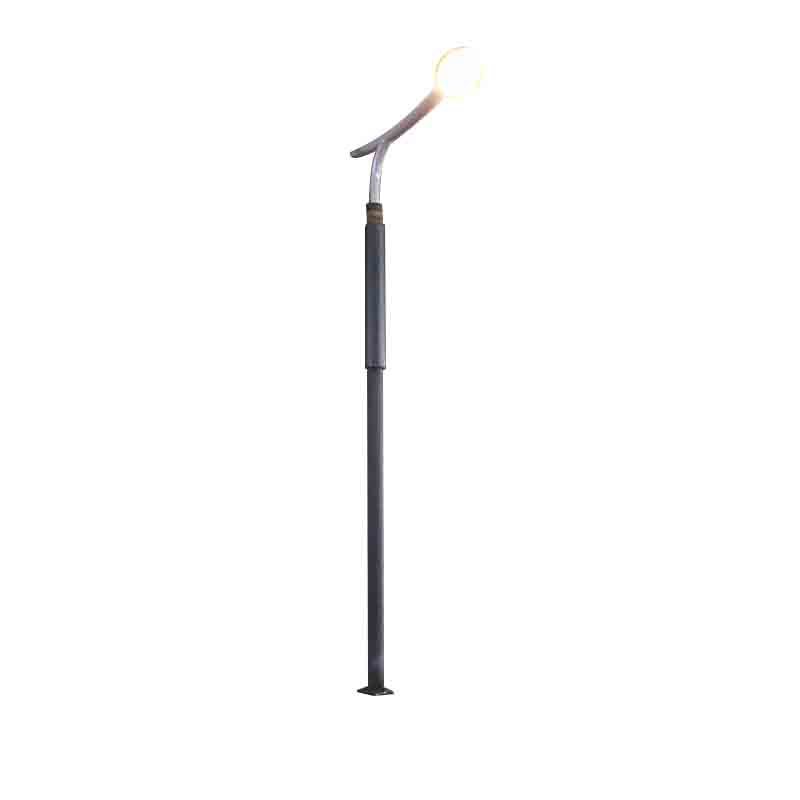 DDK-SSPL-2002 Cylinder Solar Pole With Lamp Head
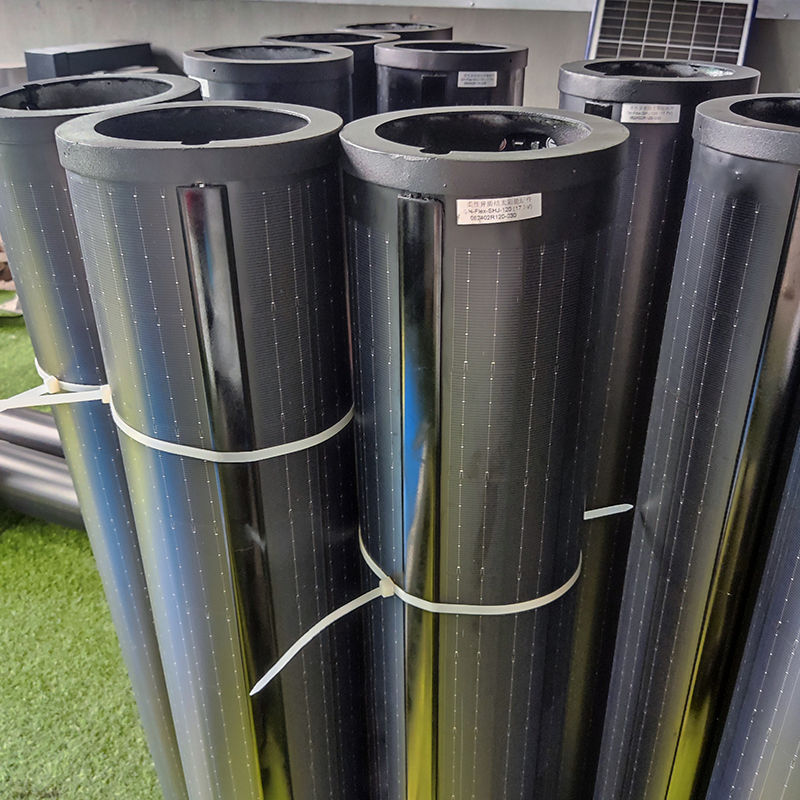 140W Flexible Solar Panel: High-Performance, Elegant and Versatile Power Solution for Lighting Poles and Park Lightings
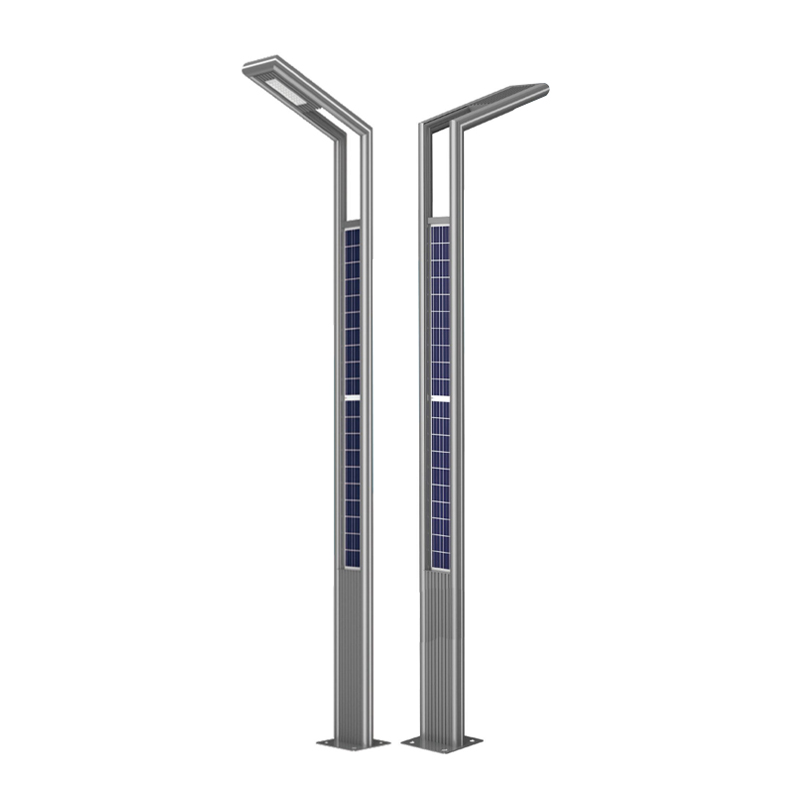 DDK-GN003 Double Sides Integrated Solar Aluminium Pole
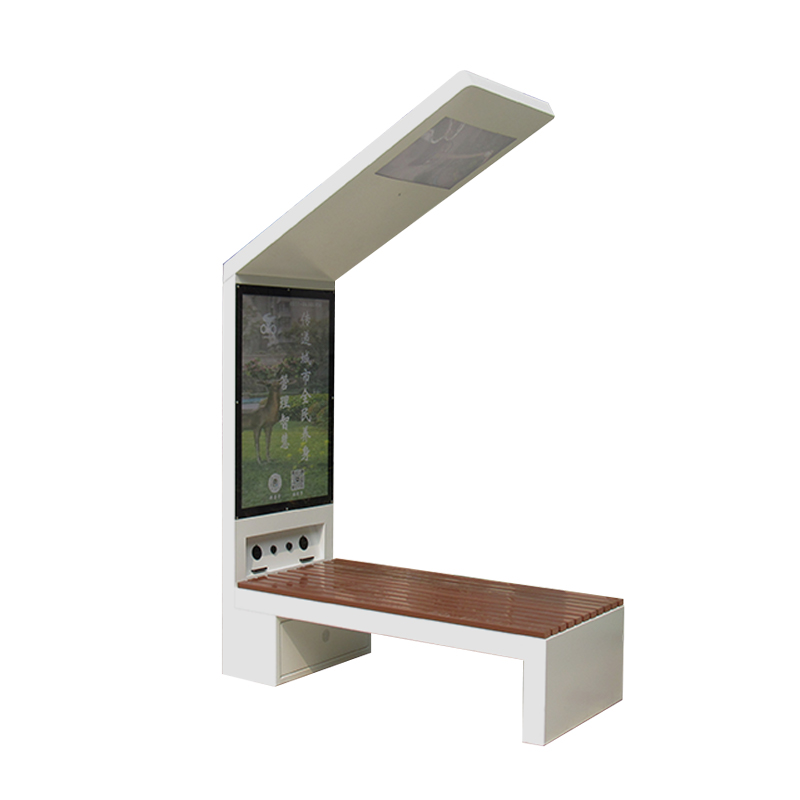 DDK-2000A Charging WIFI Solar Bench Outdoor Bench with Roof on the Top
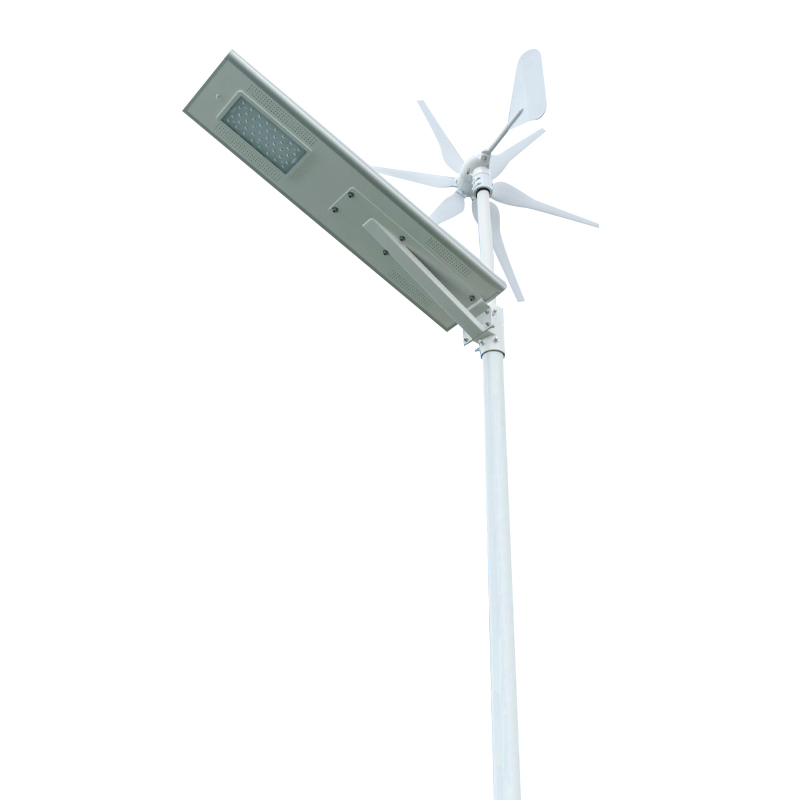 DDK G01 Solar&Wind Hybrid Integrated Optical Lens Solar All in One Light
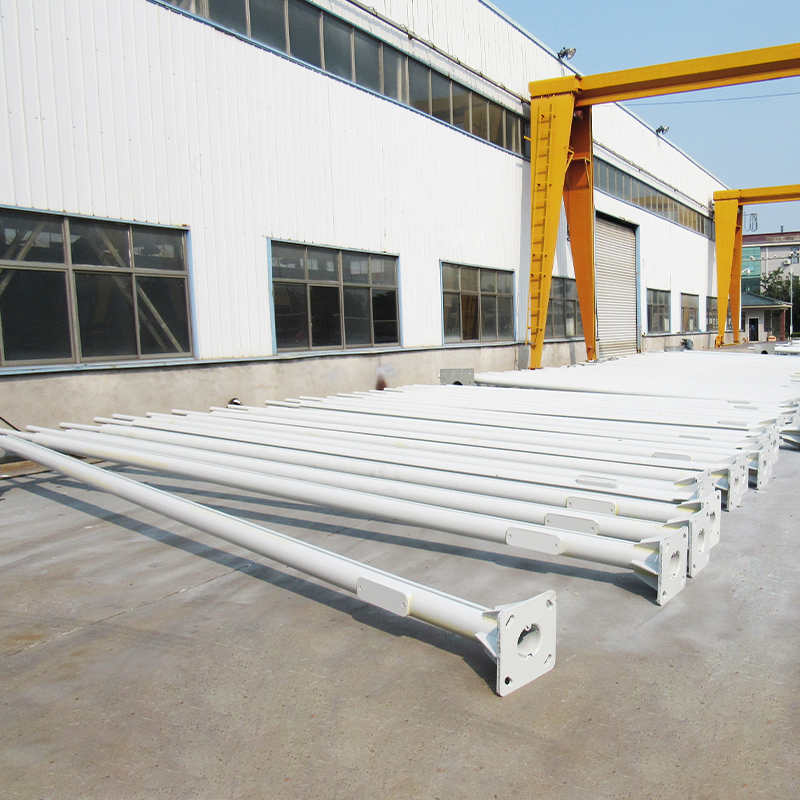 Customized Round Hexagon Octagonal Square Steel Street Light Poles for Outdoor Lightings
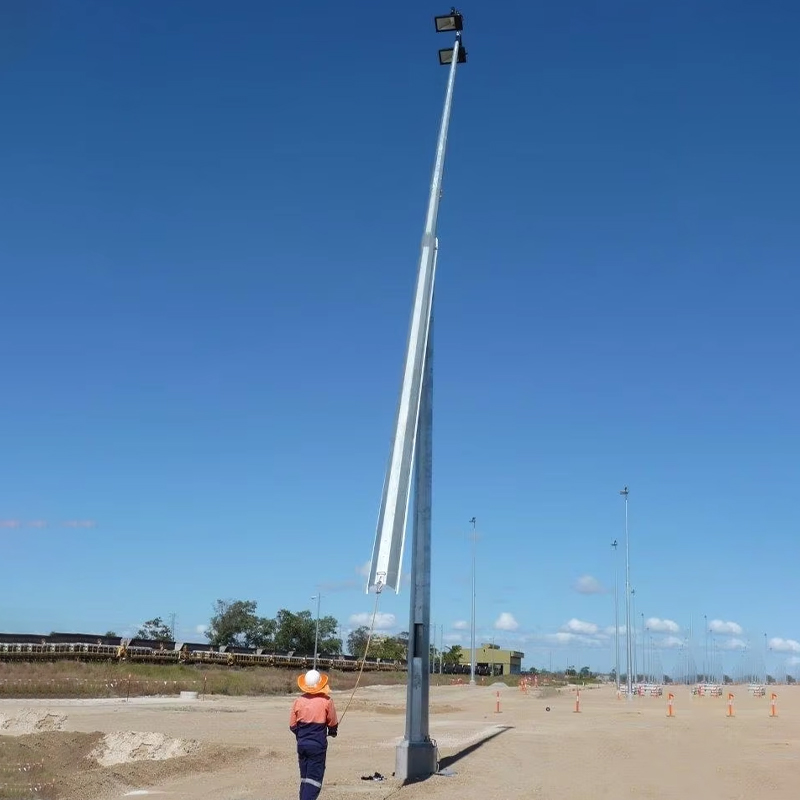 3 to 16M Galvanized Steel Hinged Poles
Contact us
180 meters south of the intersection of Nanbei Avenue and Xuba Road, Gaoyou City, Yangzhou City, Jiangsu Province, China.
+86-18811954888
ddk@cnddk.net
 English
 русский
 Español
 عربى
عربى

