
call us
+86-18811954888
2026-04-30
Street lamps typically range from 5 meters (16 feet) to 12 meters (40 feet) in height, with residential roads using 5 to 8 meter poles, arterial and collector roads using 8 to 10 meter poles, and motorways or large intersections using 10 to 14 meter high mast poles. The exact height of a street light is not arbitrary: it is determined by the road width, the required illuminance level at the road surface, the mounting arrangement (single arm, twin arm, or central median), and the light distribution pattern of the luminaire mounted at the top. Understanding these relationships allows engineers, municipalities, landscape designers, and property developers to specify the correct pole height from the outset rather than discovering lighting deficiencies after installation.
The question of how tall street lamps are comes up in several distinct contexts: infrastructure planning, private development, replacing existing poles, matching heritage streetscapes, and specifying solar all in one lights for off-grid areas. Each context has its own governing standards and practical constraints, and this guide addresses all of them with specific data rather than broad generalizations. It also covers the relationship between solar panel direction and angle for pole-mounted solar lighting systems, the dimensions and applications of garden light poles and fence post solar lights, and the key differences between LED Street Lights, HPS Street Lights, and Solar All in One Lights as a decision framework for lighting specification.
The height of a lamp post is governed by road classification standards, national lighting design codes, and the illuminance requirements published in standards such as EN 13201 (Europe), ANSI/IES RP-8 (North America), and AS/NZS 1158 (Australia and New Zealand). These standards define minimum average maintained illuminance values for each road category, and the pole height is one of the key design variables that a lighting designer optimizes to achieve compliance at minimum installed cost.
On residential streets, cul-de-sacs, shared surfaces, and local access roads with carriageway widths of 5 to 8 meters, poles in the 5 to 6 meter height range are standard. At this height, a luminaire with a medium-throw distribution can illuminate a 6 to 8 meter road width at spacings of 25 to 30 meters while meeting the minimum horizontal illuminance requirement of 5 to 10 lux specified for residential roads in most national standards. A 6 meter pole is the most common height for residential street lighting in the United Kingdom, Europe, and many parts of Asia, where dense urban street patterns favor shorter poles at closer spacing over tall poles at wide spacing.
In the United States, residential pole heights in the 7.6 meter (25 foot) to 9.1 meter (30 foot) range are more common, reflecting the wider road cross-sections and larger setbacks typical of North American suburban street design. Decorative pole types used in historic districts and town center environments often use shorter poles of 4 to 5 meters with globe luminaires or lantern heads to achieve the correct visual scale for pedestrian-oriented streetscapes.
Collector roads, secondary distributor roads, and urban arterials with carriageway widths of 9 to 14 meters are typically lit by poles in the 8 to 10 meter height range. At 8 to 10 meters, a wide-throw luminaire can cover a two-lane carriageway with a single staggered or opposite mounting arrangement at spacings of 30 to 40 meters, meeting the 10 to 30 lux average illuminance requirements of collector and minor arterial road categories. The 8 meter pole with a single outreach arm is the standard specification for most urban arterial road lighting projects across European, Middle Eastern, and Southeast Asian infrastructure programs.
Street lamp dimensions at this height class typically include a shaft diameter of 76 to 114 millimeters at the base, tapering to 42 to 60 millimeters at the top, with a wall thickness of 3 to 5 millimeters for hot-dip galvanized Steel Street Light Poles and 4 to 6 millimeters for ornamental poles. The outreach arm adds a horizontal projection of 0.5 to 2.5 meters from the pole axis, positioning the luminaire over the carriageway for optimum light distribution on the road surface.
Motorways, expressways, large roundabouts, and interchanges use poles from 10 to 14 meters for conventional single-arm or twin-arm column mounting. For large open areas including port container yards, stadium car parks, sports fields, and industrial yards, high mast poles from 20 to 45 meters carry ring-mounted multi-luminaire arrays that can illuminate several hectares from a small number of pole positions. A 30 meter high mast pole carrying 12 to 16 LED floodlights of 500 watts each can illuminate an area of approximately 2 hectares at an average maintained illuminance of 30 lux, making high mast systems the most economical solution per square meter of illuminated area for very large open spaces.
Steel Mast Poles for high mast applications are fabricated from conical tubular steel sections with base diameters of 400 to 700 millimeters, engineered to withstand wind loads in excess of 150 km/h and the dynamic loading of the luminaire ring assembly. These poles are typically equipped with a winch and lowering device that allows the luminaire ring to be lowered to working height for lamp replacement and maintenance without the need for elevated access equipment.
| Application | Typical Pole Height | Road Width Served | Typical Spacing | Recommended Luminaire |
|---|---|---|---|---|
| Residential road | 5 to 6 m | 5 to 8 m | 25 to 30 m | 30 to 60W LED Street Lights |
| Collector road | 8 to 10 m | 9 to 14 m | 30 to 40 m | 80 to 150W LED Street Lights |
| Arterial road | 10 to 12 m | 14 to 20 m | 35 to 45 m | 150 to 250W LED Street Lights |
| High mast area | 20 to 45 m | Large open areas | 80 to 150 m | Multi-array LED floodlights |
| Garden and pathway | 2.5 to 4.5 m | 2 to 4 m | 8 to 15 m | Garden Lamp Head, 10 to 30W |
The structural performance of a street lighting installation depends as much on the pole as on the luminaire. Steel Street Light Poles are the dominant pole type in global street lighting infrastructure, accounting for an estimated 70 to 80 percent of all new pole installations worldwide, because of their combination of high strength, consistent dimensional quality, long service life, and the ability to be fabricated to custom heights and configurations that aluminum and concrete poles cannot easily match. Understanding the key dimensions and design parameters of steel poles enables accurate specification and procurement.
A standard Steel Street Light Pole for an 8 meter installation has the following typical physical dimensions:
Steel Street Light Poles are typically finished with hot-dip galvanizing to a minimum zinc coating of 85 micrometers (equivalent to 600 g per square meter) per EN ISO 1461, providing a designed corrosion protection life of 30 to 50 years in typical urban environments. Decorative powder coat or wet paint finishes are applied over the galvanized surface for color-specified installations in city centers, parks, and heritage streetscapes.
Steel Mast Poles for high mast applications are engineered structures rather than standard manufactured products, with each pole designed to a specific height, wind zone, luminaire load, and foundation condition. Key structural parameters for Steel Mast Poles include:
Garden Light Poles occupy the lower end of the outdoor pole height spectrum, typically ranging from 2.5 to 4.5 meters for pathway and garden area lighting in parks, housing estates, resort landscapes, and commercial plazas. At these heights, the lighting objective shifts from road surface uniformity to visual ambience, pedestrian orientation, and accent lighting of landscape features, which means that the Garden Lamp Head design and aesthetics are as important as the photometric performance of the luminaire.
Standard Garden Light Poles are available in decorative cast iron, aluminum extrusion, or round steel tube profiles. Cast iron poles in Victorian lantern styles, typically 3 to 4 meters tall with ornamental fluting and scroll brackets, are the standard specification for heritage parks and town center pedestrianization schemes. Aluminum extrusion poles in contemporary straight or curved profiles, 3 to 4.5 meters tall with slim 76 to 89 mm shaft diameters, are the dominant choice for modern landscape lighting in commercial and residential developments.
A Garden Lamp Head for a 3 meter garden pole typically uses a LED module of 15 to 30 watts, producing a luminous flux of 1,500 to 3,000 lumens with a warm white color temperature of 2,700 to 3,000 K that is preferred in residential and hospitality landscape settings for its visually comfortable and aesthetically flattering light quality. The luminaire housing is commonly made of die-cast aluminum with a tempered glass or polycarbonate diffuser, finished to match or complement the pole surface treatment.
The choice between LED Street Lights, HPS Street Lights, and Solar All in One Lights is the most consequential technical decision in any street lighting project, determining not only the upfront capital cost but the long-term energy cost, maintenance burden, carbon footprint, and light quality of the installation for the next 20 to 30 years. LED Street Lights are now the technically and economically dominant choice for grid-connected street lighting in almost all application categories, while Solar All in One Lights have become a genuinely viable and cost-effective solution for off-grid and remote installations where grid extension cost is prohibitive.
LED Street Lights now achieve luminous efficacies of 150 to 200 lumens per watt for the highest-performing commercial products, compared to 90 to 120 lumens per watt for high-pressure sodium (HPS) sources and 40 to 70 lumens per watt for the metal halide sources they have largely replaced. This efficacy advantage directly reduces the wattage required to meet a given illuminance standard: a road that required a 250W HPS Street Light can typically be served by a 100 to 150W LED Street Light meeting an equivalent or higher maintained average illuminance, with proportionally lower energy consumption.
The payback period for replacing HPS Street Lights with LED Street Lights, calculated on energy savings alone, is typically 3 to 6 years at commercial electricity tariffs, and over a 20-year service life, the total cost of ownership of an LED installation is typically 40 to 60 percent lower than the equivalent HPS installation when maintenance cost savings are included alongside energy savings. LED Street Lights have a rated service life of 50,000 to 100,000 hours (L70 point, the point at which output falls to 70 percent of initial value), compared to 10,000 to 24,000 hours for HPS lamps, dramatically reducing the frequency and cost of lamp replacement maintenance.
Modern LED Street Lights also offer smart lighting capabilities that HPS Street Lights cannot match: dimming on a defined schedule or in response to ambient light sensors and motion detectors, remote monitoring and fault detection via wireless networks, and data collection on energy consumption and operating hours that supports infrastructure management decision-making. A city that installs a networked LED street lighting system with remote management can reduce energy consumption by an additional 20 to 40 percent beyond the baseline LED versus HPS saving through intelligent dimming during low-traffic periods.
HPS Street Lights remain in service across large portions of the world's street lighting infrastructure, including many developing markets where LED replacement programs have not yet been funded, and some legacy systems in developed markets where replacement has been deferred for budgetary reasons. HPS light sources produce a characteristic amber-yellow light with a Color Rendering Index (CRI) of 20 to 25, which is adequate for road visibility but renders colors poorly and reduces the ability of security cameras to capture useful identification images.
The primary contexts where HPS Street Lights remain specified for new installations are limited to situations where the warm amber color is aesthetically required for heritage streetscape compliance, where the very low initial capital cost of HPS equipment versus LED is the overriding procurement constraint, or where the available infrastructure for smart LED systems (power quality, maintenance skills, procurement channels) is not yet in place. In all other circumstances, a reputable led street light manufacturer will recommend LED technology as the superior technical and economic choice for new street lighting projects.
Solar All in One Lights integrate a solar panel, lithium battery, LED module, motion sensor, and charge controller into a single self-contained unit that mounts directly to the pole head without any external wiring or grid connection. This integration eliminates the civil works cost of trenching, conduit laying, and cable installation that represents 30 to 60 percent of the total installed cost of a grid-connected street lighting system, making Solar All in One Lights cost-competitive or cost-advantaged for installations in rural areas, developing regions, remote estates, construction site roads, and any location where grid connection cost is high relative to the lighting value delivered.
A high-quality Solar All in One Light with a 40W LED module, a 50Wh lithium iron phosphate battery, and a 40W monocrystalline solar panel can provide 10 to 12 hours of lighting at full power in a location receiving 4 to 5 peak sun hours per day, which covers the full night-time period in most inhabited latitudes for at least 85 to 90 percent of nights in a year when autonomous operation is properly designed with adequate battery capacity relative to the worst-case solar resource period. Motion sensing dimming, which reduces output to 30 to 40 percent when no pedestrian or vehicle activity is detected and ramps up to 100 percent when motion is sensed, extends the autonomous endurance of Solar All in One Lights significantly, allowing the same system to perform reliably through longer cloudy periods without sacrificing functional safety.
The limitation of Solar All in One Lights compared to grid-connected LED Street Lights is their dependence on daily solar resource, which makes them unsuitable for latitudes above approximately 60 degrees north or south (where winter sun hours are insufficient to charge the battery), for locations in permanent shade from buildings or trees, or for applications requiring guaranteed full-power operation every night regardless of weather conditions, such as motorway emergency lighting or security lighting for critical infrastructure.
| Parameter | LED Street Lights | HPS Street Lights | Solar All in One Lights |
|---|---|---|---|
| Luminous Efficacy | 150 to 200 lm/W | 90 to 120 lm/W | 140 to 180 lm/W (LED module) |
| Color Rendering Index (CRI) | 70 to 85 | 20 to 25 | 70 to 80 |
| Rated Service Life | 50,000 to 100,000 hours | 10,000 to 24,000 hours | LED 50,000 hrs; battery 5 to 8 years |
| Grid Connection Required | Yes | Yes | No |
| Smart Dimming Capability | Yes (full range) | Limited (ballast dependent) | Yes (motion sensor standard) |
| Maintenance Frequency | Low (10 to 15 year lamp life) | High (2 to 4 year lamp change) | Medium (battery replacement 5 to 8 yrs) |
| Best Application | All grid-connected road lighting | Legacy retrofit or heritage compliance | Off-grid, rural, developing regions |
The solar panel direction and angle of any solar-powered outdoor lighting system, whether a Solar All in One Light on a street pole, a standalone solar garden luminaire, or fence post solar lights on a property boundary, are the most critical design variables for maximizing the daily energy harvest from the available solar resource. Getting solar panel direction and angle wrong is the single most common reason that solar outdoor lights underperform or fail to operate reliably through the night, and it is a design error that is entirely avoidable with basic knowledge of the principles governing solar panel orientation.
The optimal compass direction for a solar panel is toward the equator from the installation location: due south in the northern hemisphere and due north in the southern hemisphere. This orientation maximizes the cumulative daily irradiance intercepted by the panel because the sun tracks an arc across the southern sky (in the northern hemisphere) or the northern sky (in the southern hemisphere), and a panel facing directly toward that arc receives sunlight at the most direct angle for the longest daily period.
Deviations of up to 30 degrees east or west of true south (in the northern hemisphere) reduce annual solar energy yield by less than 5 percent, which is a commercially insignificant penalty and means that east-facing or west-facing panel installations on buildings or poles with constrained orientation options are still viable. Deviations beyond 45 degrees from due south begin to produce more significant energy penalties: a due-east or due-west facing panel loses approximately 20 percent of annual solar yield compared to due south, and a due-north facing panel in the northern hemisphere loses 40 to 60 percent depending on latitude, rendering it unsuitable for serious solar lighting applications without a very large panel oversizing factor.
For integrated Solar All in One Lights where the panel is fixed to the top or rear of the luminaire body, the installer must ensure that the pole is positioned and oriented so that the panel side of the luminaire faces south (northern hemisphere) at installation. Many Solar All in One Light models include a compass reference mark on the fixture housing or installation instructions that explicitly specify which face of the unit must point toward the equator.
The optimal tilt angle of a solar panel from horizontal is equal to the latitude of the installation site for maximizing annual energy yield. At a latitude of 30 degrees north (corresponding to cities such as Cairo, Houston, and Shanghai), the optimal fixed tilt is approximately 30 degrees from horizontal. At a latitude of 51 degrees north (London), the optimal tilt is approximately 51 degrees. At a latitude of 23 degrees north (the tropics), panels mounted nearly flat at 15 to 25 degrees from horizontal achieve close to optimal annual performance.
For fence post solar lights and other small decorative solar lighting products where the panel is integral to the product design and mounted at a fixed angle by the manufacturer, the product is typically designed for a specific latitude band and should not be used significantly outside that band without expecting reduced performance. A fence post solar light designed for tropical use with a 15 degree panel tilt will harvest substantially less energy per day in northern European latitudes where a 50 degree tilt would be appropriate, potentially resulting in the light failing to operate for the full night period.
For adjustable-tilt solar panels on street poles in the 20 to 55 degree latitude band, setting the panel tilt to within 10 degrees of the local latitude achieves at least 95 percent of the maximum possible annual energy yield, which is sufficiently precise for practical street lighting design without the need for site-specific solar modelling software. Adjustable tilt mounts on solar street light poles that allow the panel angle to be field-set at installation are therefore a valuable feature for products intended to be deployed across a wide geographic range.
Even a small shadow covering 5 to 10 percent of a solar panel's active area can reduce its output by 30 to 50 percent due to the series electrical connection of cells within the panel, which means the weakest (most shaded) cell limits the current output of the entire string. For fence post solar lights located near garden trees, hedgerows, or buildings, shading during the mid-morning or mid-afternoon period when the sun angle is relatively low is a common cause of inadequate charging that results in the light extinguishing before the end of the night.
The practical rule for solar panel site assessment is to ensure that the panel has an unobstructed view of the sky for at least 6 hours per day centered on solar noon, with no shadow-casting objects within a horizontal angular sector of 90 degrees (45 degrees each side of due south in the northern hemisphere). Shadow mapping using a solar path calculator app with the phone camera pointed at the panel location from the intended mounting position is a straightforward and reliable method for identifying shading risks before installation.
Fence post solar lights and Outdoor Street Lights serve complementary roles in the spectrum of exterior lighting applications, from property boundary marking and decorative garden illumination at the domestic scale to road and pathway safety lighting at the infrastructure scale. Selecting and installing each correctly requires understanding their specific technical capabilities and limitations.
Fence post solar lights are decorative and functional accent lights designed for mounting on fence post caps, gate pillars, and low boundary walls. They use small monocrystalline solar panels of 0.5 to 2W, small nickel metal hydride or lithium battery packs of 300 to 800 mAh, and LED modules of 0.5 to 3W that produce 30 to 200 lumens of light output. This output level is appropriate for path edge marking, aesthetic garden boundary definition, and general ambience but is not adequate for safety-critical pathway lighting or vehicular access lighting, which requires the higher output levels of Outdoor Street Lights or dedicated pathway poles with 10 to 30W luminaires.
Quality fence post solar lights from reputable manufacturers achieve 8 to 12 hours of operation per night after a full day's charging in direct sunlight, using automatic dusk-on and dawn-off control via an integral photocell. Budget products with lower-quality panels and batteries may achieve only 4 to 6 hours on a good charge day and fail to operate reliably after several consecutive cloudy days. Specifying products with lithium battery technology rather than nickel metal hydride extends cycle life from approximately 500 cycles (roughly 18 months of daily operation) to 2,000 or more cycles (5 to 6 years), a meaningful durability difference that justifies the modest price premium of lithium-equipped products for permanent garden installations.
Outdoor Street Lights for commercial, municipal, and infrastructure applications must meet a substantially higher performance and durability standard than decorative garden products. Key specifications to verify when procuring Outdoor Street Lights from any led street light manufacturer include:
A responsible led street light manufacturer will provide full photometric data files in IES or EULUMDAT format for each luminaire model, allowing the lighting designer to import the luminaire data into industry-standard design software (such as Dialux or Relux) and produce a quantified compliance calculation demonstrating that the proposed installation meets the applicable illuminance standard before any poles are ordered or installed.
The global market for LED street lighting includes hundreds of manufacturers ranging from premium-tier European and North American brands with full vertical manufacturing integration and comprehensive third-party certification programs to low-cost manufacturers producing products of highly variable quality without verified performance data. Selecting the wrong led street light manufacturer for a major infrastructure program can result in premature luminaire failures, non-compliant performance, and replacement costs that dwarf any initial procurement savings.
The following criteria provide a structured framework for evaluating any led street light manufacturer under consideration for a significant procurement:
Residential street lamps are typically 5 to 6 meters tall in most European and Asian markets. In North America, 7.6 to 9.1 meter poles are more common on residential streets due to wider road cross-sections. The height is selected to achieve the required illuminance level at the required pole spacing for the specific road width being lit.
For an 8 to 10 meter arterial road lighting pole, typical street lamp dimensions include a base diameter of 100 to 140 mm, a top diameter of 42 to 60 mm, a wall thickness of 3 to 5 mm, and a base plate of 300 x 300 mm to 400 x 400 mm. The overall pole height above grade is 8 to 10 meters, with a 0.5 to 0.8 meter embedment below grade for direct burial poles.
High mast light poles used for large area lighting of ports, stadiums, motorway junctions, and industrial yards range from 20 to 45 meters in height. A 30 meter Steel Mast Pole carrying 12 to 16 LED floodlights can illuminate approximately 2 hectares at 30 lux average maintained illuminance, making high mast systems the most economical solution per illuminated area for very large open spaces.
The optimal solar panel direction is toward the equator: due south in the northern hemisphere and due north in the southern hemisphere. The optimal tilt angle equals the local latitude. Deviations of up to 30 degrees from due south reduce annual yield by less than 5 percent, but deviations beyond 45 degrees produce significant energy penalties that compromise nighttime operation reliability.
Quality fence post solar lights with lithium batteries and efficient LED modules achieve 8 to 12 hours of operation per night after a full day's charging in direct sunlight. Budget products with nickel metal hydride batteries may achieve only 4 to 6 hours. Products with lithium batteries have cycle lives of 2,000 or more cycles (5 to 6 years of daily use) compared to 500 cycles for nickel metal hydride alternatives.
The three principal street lighting types in current use are LED Street Lights (dominant for all new grid-connected installations), HPS Street Lights (legacy technology being progressively replaced), and Solar All in One Lights (growing rapidly for off-grid and rural applications). LED Street Lights offer 150 to 200 lm/W efficacy and 50,000 to 100,000 hour service life, making them the clear technical and economic choice for grid-connected systems.
Garden Light Poles are typically 2.5 to 4.5 meters tall, used for pathway, park, and landscape lighting at spacings of 8 to 15 meters. A Garden Lamp Head for a 3 meter garden pole typically uses 15 to 30 watts LED, producing 1,500 to 3,000 lumens at a warm white 2,700 to 3,000 K color temperature preferred in residential and hospitality landscape settings.
Choose LED Street Lights for any location with reliable grid connection, high traffic volume, or guaranteed full-night operation requirements. Choose Solar All in One Lights where grid connection cost exceeds the solar system premium (typically true for rural and remote locations requiring more than 200 to 300 meters of new underground cable per pole), where peak sun hours average at least 4 hours per day, and where motion-sensing dimming can be used to manage battery endurance.
Require ENEC certification for European markets, UL or DLC listing for North American markets, and CB scheme certification for international procurement. All products should be supported by photometric data files from an accredited third-party goniophotometer test laboratory, LM80 lumen maintenance test data confirming the L70 service life claim, and IP65 or higher ingress protection certification from an accredited test house.
Highway and expressway street lighting uses pole heights of 10 to 12 meters for standard single-arm or twin-arm column installations serving dual-carriageway roads of 14 to 20 meter width. At interchanges, large roundabouts, and multi-lane junctions where centrally placed high mast lighting is preferred, pole heights of 20 to 30 meters are standard, allowing one or two poles to cover the full extent of a complex road geometry from central positions rather than requiring dozens of roadside columns.
Related Products
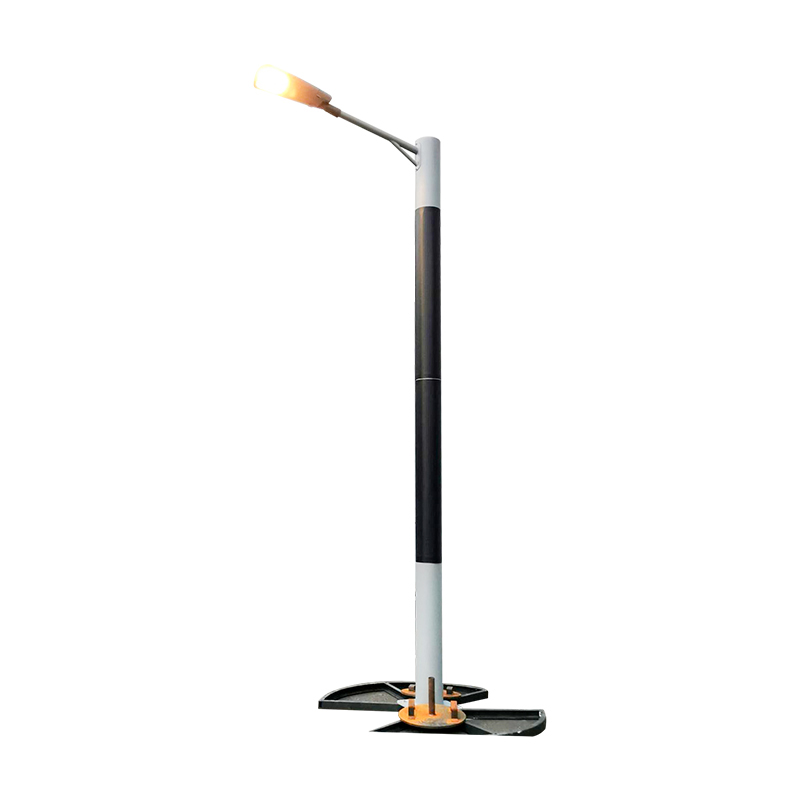 DDK-SSPL-2000 Cylinder Solar Pole Single/Double Arms And Street LED Lamps
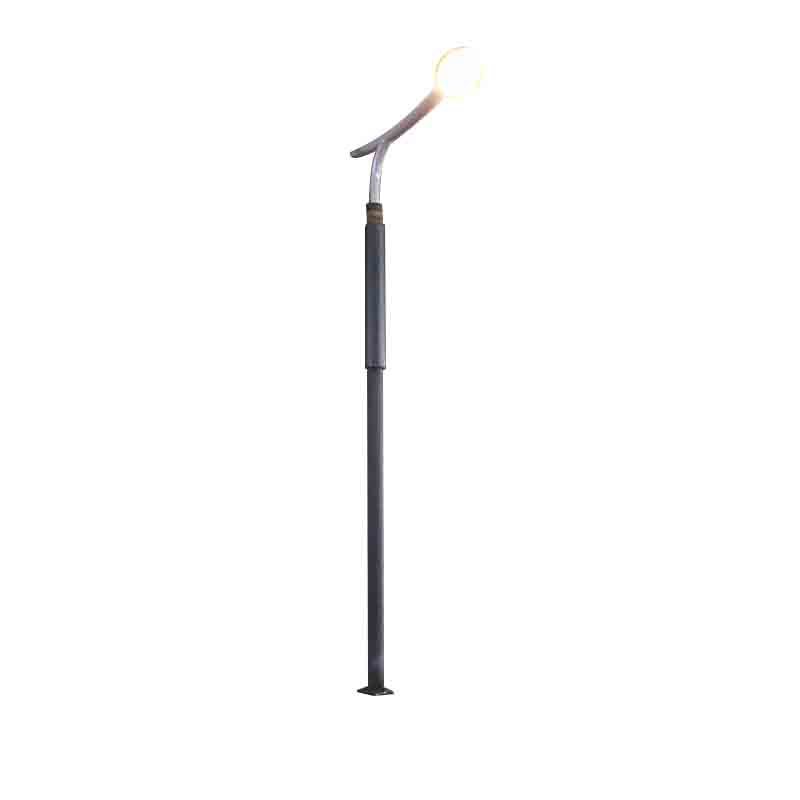 DDK-SSPL-2002 Cylinder Solar Pole With Lamp Head
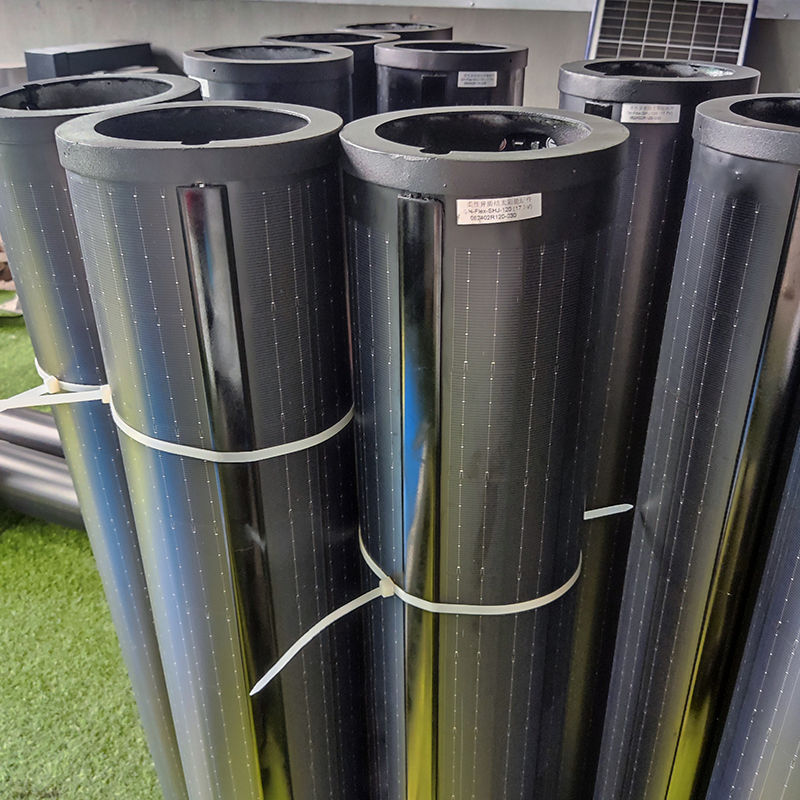 140W Flexible Solar Panel: High-Performance, Elegant and Versatile Power Solution for Lighting Poles and Park Lightings
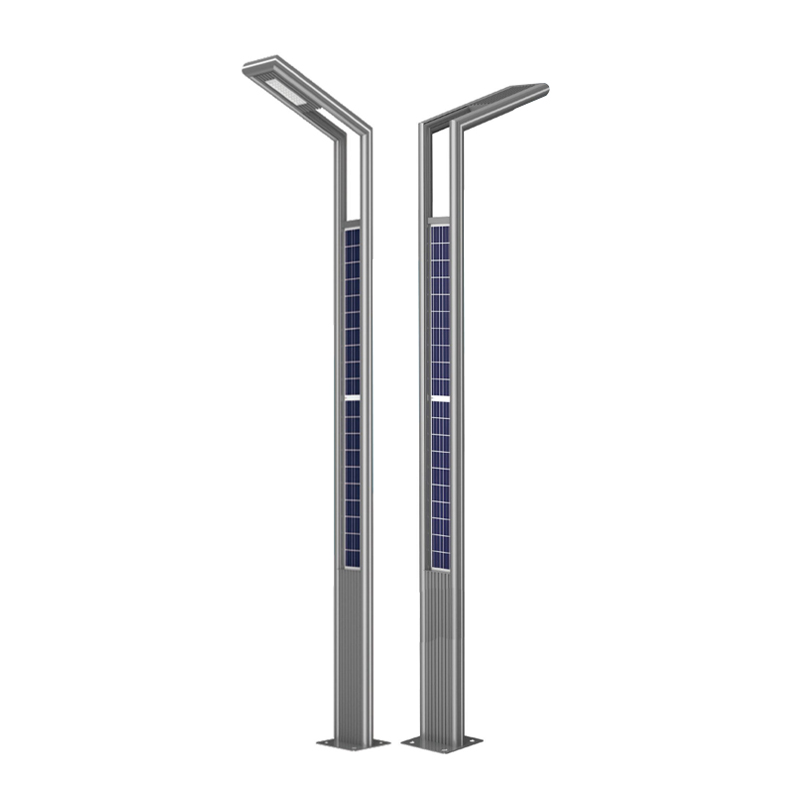 DDK-GN003 Double Sides Integrated Solar Aluminium Pole
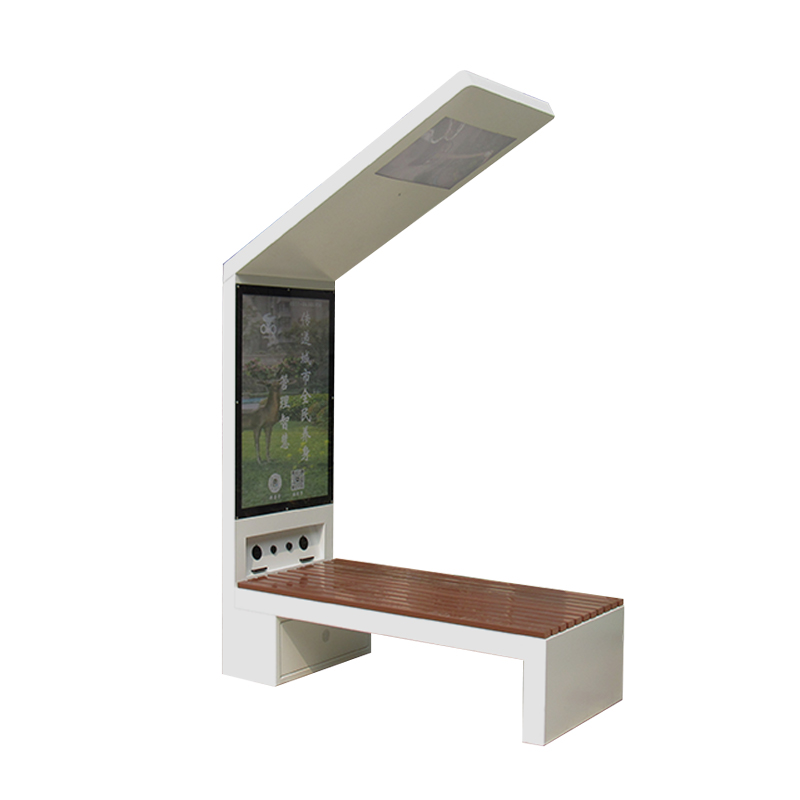 DDK-2000A Charging WIFI Solar Bench Outdoor Bench with Roof on the Top
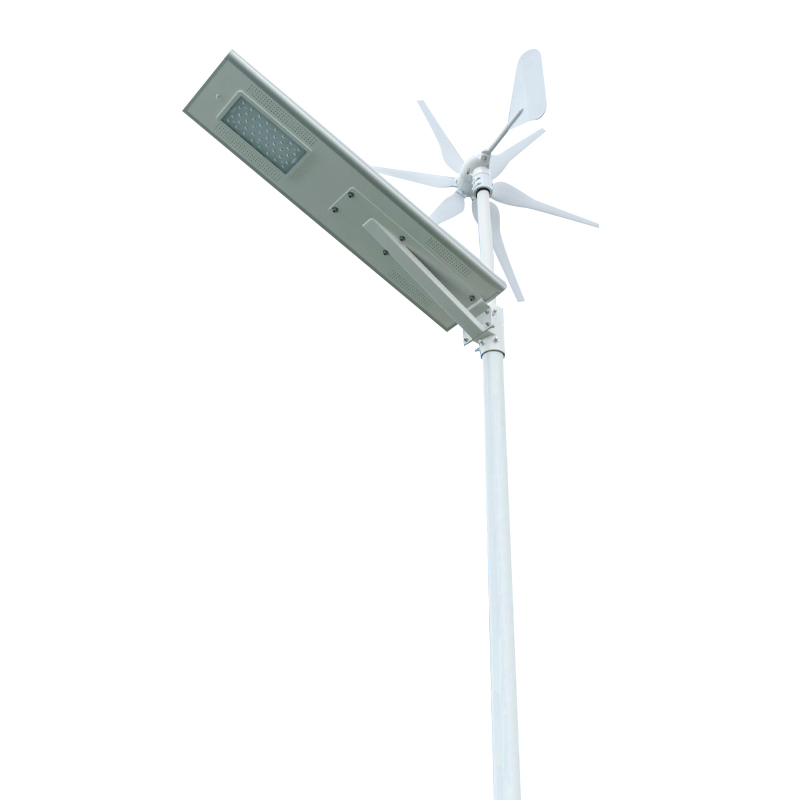 DDK G01 Solar&Wind Hybrid Integrated Optical Lens Solar All in One Light
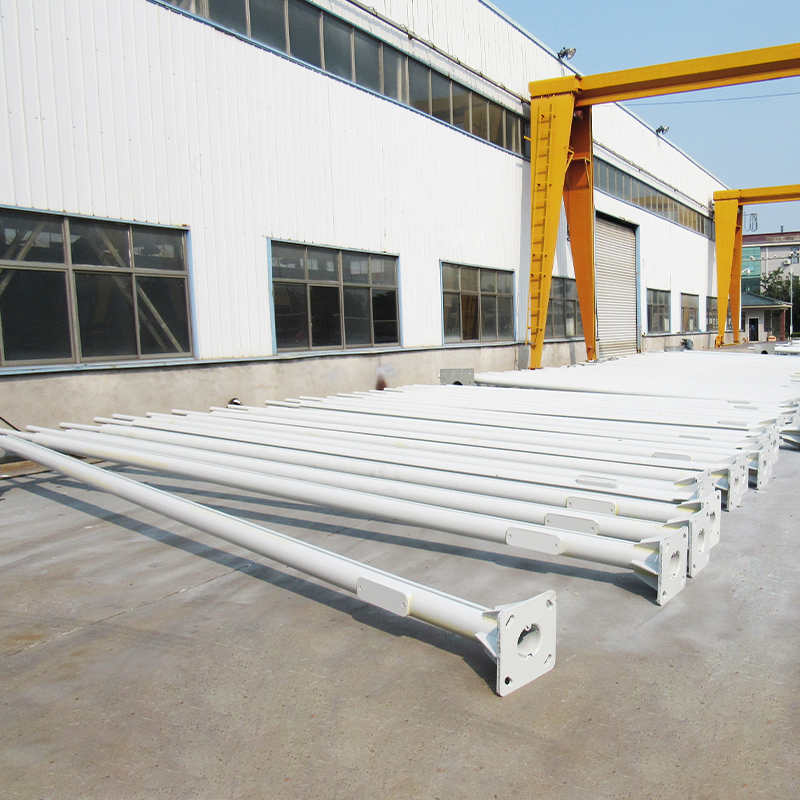 Customized Round Hexagon Octagonal Square Steel Street Light Poles for Outdoor Lightings
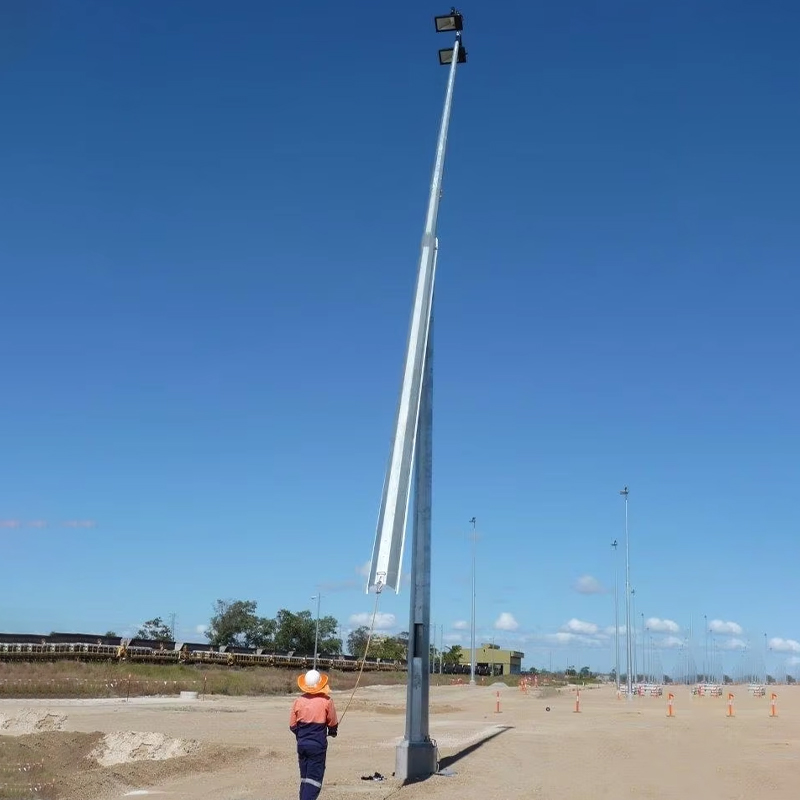 3 to 16M Galvanized Steel Hinged Poles
Contact us
180 meters south of the intersection of Nanbei Avenue and Xuba Road, Gaoyou City, Yangzhou City, Jiangsu Province, China.
+86-18811954888
ddk@cnddk.net
 English
 русский
 Español
 عربى
عربى

