
call us
+86-18811954888
2026-11-05
A 6 m pole on a coastal collector road, a 30 m high-mast array over a stadium car park, and a 3 m garden pole beside a pedestrian path are all called "street lights," yet they use different light sources, optics, poles, power arrangements and maintenance plans. If you specify them from a single catalogue page, the risk usually appears later: glare at a bend, a driver failure after two storm seasons, a solar battery that cannot carry three cloudy days, or a pole that is galvanized to 55 micrometres instead of the 80 micrometres the site needs.
The practical answer is to treat "type" as a combination of four layers: the light source, the optical distribution, the support structure, and the power and control system. The sections below compare the main families, explain where each still makes sense, and show which details change the purchase decision. The conclusion is simple: LED is the default for grid-connected road lighting, high-pressure sodium remains a retrofit option in specific cases, solar is a system design rather than a lamp swap, and decorative, high-mast and smart versions need separate selection rules.
Buyers often ask for a "100 W LED street light" when the real requirement is a luminaire that delivers a maintained average illuminance of 20 lux over a 7 m carriageway, with a uniformity ratio above 0.35, a colour temperature near 4000 K, a surge rating suitable for a lightning-prone area, and a pole that carries the luminaire at 8 m in a 140 km/h wind zone. The wattage is only one input.
The first layer is the light source: LED, high-pressure sodium, metal halide, mercury vapour, fluorescent, induction or solar-powered LED. The second is the optical system: the lens or reflector that produces Type I, II, III, IV or V distributions, asymmetric road optics, pedestrian-scale optics, or narrow high-mast beams. The third is the mechanical support: straight or tapered steel poles, octagonal or polygonal sections, hinged poles, decorative aluminium poles, traffic and CCTV poles, high-mast structures and wall brackets. The fourth is the power and control layer: mains supply, integral or remote driver, photovoltaic panels and batteries, photocells, timers, dimming protocols and central management.
When a project team asks "what are the different types of street lights," a useful answer separates these layers early. It prevents a low-price comparison between items that are not equivalent, such as a 120 W LED with a 10 kV surge protector and a 120 W LED with a basic 4 kV driver, or a solar all-in-one unit with a 12.8 V 60 Ah lithium battery and one with a smaller lead-acid battery that will not survive a cold season.
LED road luminaires are now the baseline for new grid-connected lighting. Typical outdoor products run from about 100 to 200 lumens per watt, with good road optics delivering 130 to 170 lm/W in practical fixtures. A 60 W to 200 W LED luminaire can replace a 150 W to 400 W high-pressure sodium fixture while improving colour rendering and enabling dimming. The light is available at 3000 K, 4000 K, 5000 K and 5700 K; for most urban roads, 4000 K is a balanced choice, while 3000 K is often preferred near residential windows and 5000 K may suit high-speed roads or areas where cooler light is accepted.
The weak points are not the LED chips themselves but the driver, surge protection, thermal path and sealing. A road luminaire may be rated IP66 and IK08, but if the driver compartment reaches 75 degrees Celsius in still air, the electrolytic capacitors age faster. For coastal sites, the salt spray test and the quality of the gasket matter as much as the lumen output. For lightning-prone regions, a 10 kV or 10 kA surge rating is a more meaningful specification than a generic "surge protection" claim. Dimming can be 0-10 V, 1-10 V or DALI, and a photocell or astronomical timer can cut energy during low-traffic hours.
Optics deserve more attention than they usually receive. A symmetric flood optic on a 10 m road pole creates glare and wasted light. A proper Type II or Type III distribution places light along the carriageway, reduces spill behind the pole and improves uniformity. For pedestrian crossings, a higher vertical illuminance may be needed to make people visible to drivers. For heritage areas, a warmer CCT and a shielded optic may be required to reduce skyglow.
In our LED street light range, the DDKLD121 series covers 40 W to 200 W high-efficiency outdoor lamps, and the ASIA STAR series covers 60 W to 200 W. These are suitable for municipal roads, industrial parks, campus roads and residential access roads when the optical distribution and mounting height are matched to the site. The specification should still state the required maintained illuminance, uniformity, CCT, CRI, IP rating, IK rating, surge rating and warranty period rather than only the wattage.
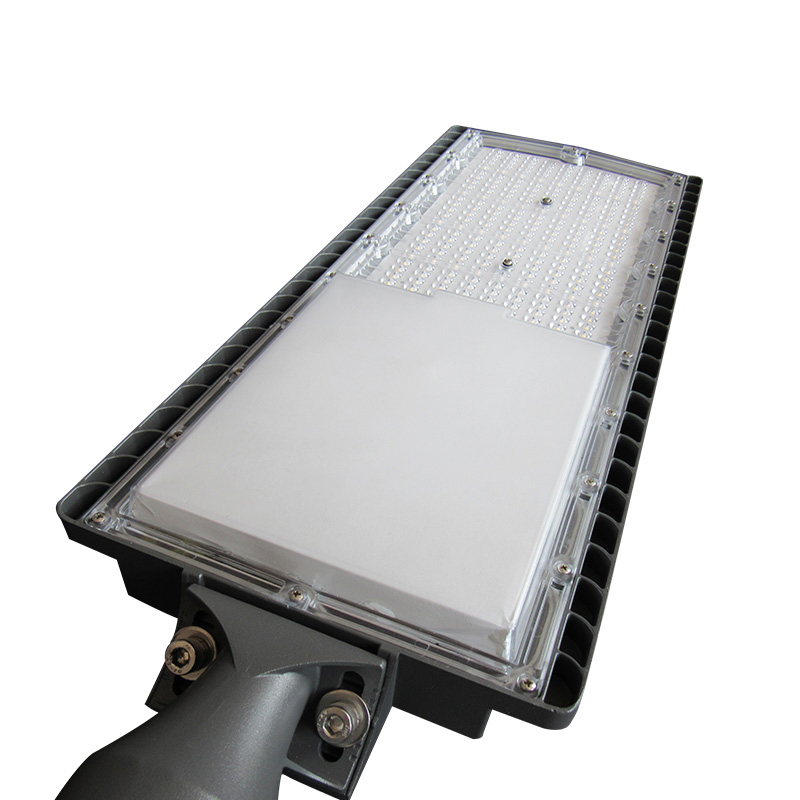 DDK-LD121 Series LED Street Light for Outdoor RoadsAn outdoor LED street light series with 40–200 W options, 150 lm/W efficiency, IP66/IK09 protection and adjustable mounting, suited to municipal, industrial and campus roads.View Product →
High-pressure sodium lamps remain in service because they are efficient, inexpensive to replace and familiar to maintenance crews. A 150 W to 400 W HPS lamp typically delivers 80 to 140 lumens per watt, with a warm golden-white light around 2000 K to 2200 K. Colour rendering is low, usually CRI 20 to 30, so red and blue objects look dull. Rated life is often 20,000 to 30,000 hours, but lumen depreciation is significant, and the ballast adds losses.
The operational characteristic that matters most is restrike. After a power interruption, an HPS lamp may need 5 to 15 minutes to cool and restrike. On a road with frequent outages, that delay can leave a junction dark. HPS also contains mercury and requires careful disposal. For new lighting, LED usually wins on energy, control and maintenance; for existing HPS installations where the poles, wiring and budgets are already in place, a lamp-for-lamp replacement may be considered. However, replacing only the lamp while keeping an ageing magnetic ballast often preserves the same losses and failure rate.
A better retrofit compares three options: replace the complete HPS luminaire with LED, replace the lamp and ballast with new HPS, or replace the optical gear tray with an LED retrofit kit. The first is usually the most robust because the driver, optics and thermal design are matched. The second may be justified where the utility owns the asset and has a large HPS lamp stock. The third needs a careful thermal and photometric check, because retrofit kits often do not reproduce the original distribution. For projects that still require HPS, 150 W to 400 W fixtures are available for industrial and urban applications, but the procurement should include ballast type, voltage, igniter compatibility and photocell control.
Metal halide lamps were once common in city centres, sports areas and high-mast lighting because they offered higher colour rendering than HPS. Typical efficacy is 60 to 100 lumens per watt, CRI is 65 to 90, and life is often 10,000 to 20,000 hours. They need a warm-up period of several minutes and a restrike delay after interruption. Their white light can look attractive, but the maintenance burden and energy use are usually higher than modern LED. In a high-mast installation, a metal halide lamp that fails in a cluster can force a crane visit, which changes the whole-life cost calculation.
Mercury vapour lamps are the oldest family still encountered in some secondary roads, yards and decorative fixtures. Efficacy is roughly 40 to 60 lumens per watt, life is around 24,000 hours, and colour rendering is poor. Mercury is a hazardous material, and mercury vapour lighting has been phased out in many markets under the Minamata Convention. The practical response is replacement rather than like-for-like purchase. A direct LED retrofit may be possible, but the existing ballast must be removed or bypassed, and the luminaire's thermal capacity must be checked.
Fluorescent and induction sources appear in tunnels, underpasses, car parks and low-level linear applications. Fluorescent efficacy is about 60 to 100 lumens per watt, but output drops in cold weather and the tubes are fragile. Induction lamps can reach 50,000 to 100,000 hours and 60 to 90 lumens per watt, with better cold-weather behaviour than fluorescent, but they are less controllable and less efficient than LED. For new road lighting, these families are niche choices. For maintenance replacement, the key question is whether the existing fitting can accept an LED tube or whether the complete luminaire should be replaced to improve optics and sealing.
Solar street lights are not a single product. An all-in-one unit integrates the panel, battery, controller and LED head in one housing. A split system separates the panel from the luminaire and battery box, which allows a larger panel and better thermal management. A semi-split or pole-integrated system places the panel on the pole or uses a cylindrical solar pole with the battery inside the pole. Flexible solar panels are also used on curved poles, shelters and irregular structures. Each layout has different wind load, shading, maintenance access and battery temperature behaviour.
The sizing must start with the nightly load, not the nominal wattage. If a 60 W LED runs for 10 hours per night, it consumes 600 Wh before controller and battery losses. If the site needs three days of autonomy and the usable depth of discharge is 80 percent, the battery bank needs roughly 600 x 3 / 0.8 = 2250 Wh, plus a margin for ageing and temperature. A lithium iron phosphate battery may offer 2000 to 6000 cycles and better usable capacity than lead-acid, but it must not be charged below 0 degrees Celsius without a heating or charge-protection strategy. A lead-acid battery is cheaper upfront but should not be discharged below about 50 percent, and its cycle life is shorter.
Panel sizing depends on the worst solar month, not the annual average. A common design margin is 1.3 to 1.5 times the calculated daily energy demand to cover cloudy days, dust, module soiling and temperature derating. The tilt angle should be set for winter production if the site has a pronounced seasonal gap. Shading from trees, buildings or the pole itself can destroy output, so the panel must be positioned before the pole foundation is fixed. A solar street light that looks adequate on a summer day may fail in December if the design used annual average irradiance.
Controls also differ from grid-connected LED. A solar controller needs low-voltage disconnect, temperature compensation, overcharge protection and preferably MPPT tracking. Dimming profiles can extend autonomy: 100 percent for the first five hours, 50 percent for the next five hours, and motion-based boost where pedestrians or vehicles approach. However, aggressive dimming can create dark patches that fail the lighting design. The right approach is to design the road lighting first, then size the solar system to support that profile, not to shrink the lighting to fit a small panel.
For projects that need an integrated solar road light, the DDKS0219 solar all-in-one street light is a compact option for paths, campus roads and secondary roads where the solar resource and autonomy target are realistic. For larger schemes, a split or cylindrical solar pole allows the panel and battery to be sized independently. Our solar street lighting systems guide explains the energy balance in more detail. The main procurement warning is to avoid comparing a solar light by LED wattage alone; ask for the battery capacity, usable depth of discharge, panel wattage, autonomy days, controller type and warranty terms.
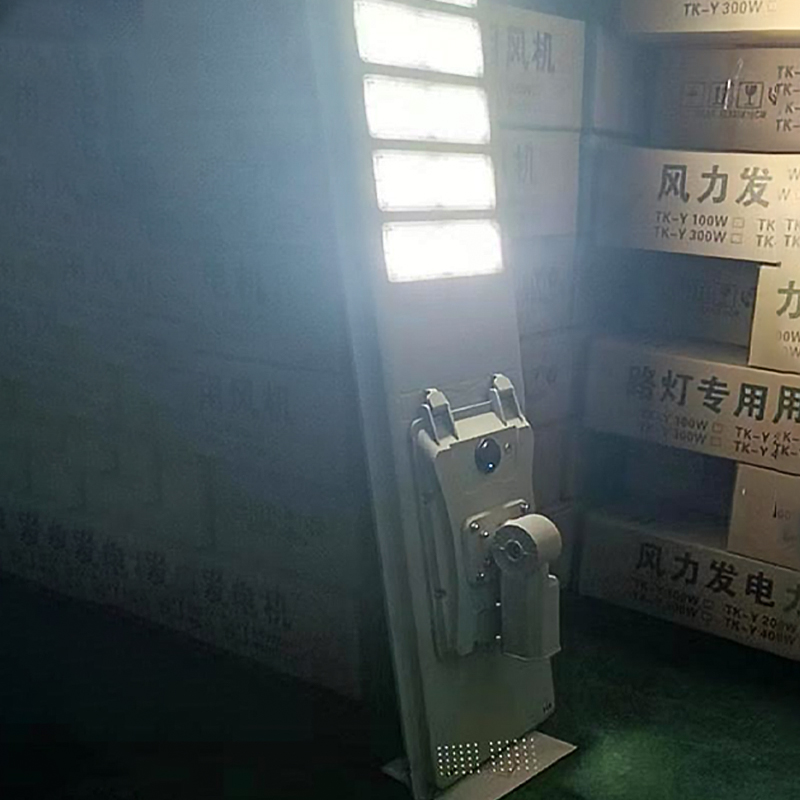 DDK-S0219 Solar All-in-One Street Light for Outdoor ProjectsIntegrated solar street light with 100 W panel, 150 W LED and LiFePO4 battery, suited to paths and campus or secondary roads.View Product →
A smart street light is usually an LED luminaire with a controller, sensor or communication module. The "smart" part may be as simple as a photocell and a preset dimming schedule, or as complex as a central management system that monitors energy, reports faults and adjusts light levels by time and traffic. DALI, 0-10 V and 1-10 V are common dimming interfaces. NEMA 7-pin and Zhaga sockets allow sensors or communication nodes to be added later. If the project may add CCTV, environmental sensors or EV charging, the pole and power distribution need spare capacity from the beginning.
The value of smart control is not only energy saving. A dimming schedule that reduces output from 100 percent to 50 percent between midnight and 05:00 can cut energy substantially, but it must be checked against the road's lighting class and traffic volume. Fault reporting can reduce inspection visits. A luminaire that reports its own driver failure or power loss lets the maintenance team bring the right part on the first visit. On a 500-pole scheme, that can matter more than the cost of the controller.
Connected poles also change the structural brief. A CCTV camera, small cell antenna or charging point adds load and wind area. The pole must be designed for the combined load, not just the luminaire. Cable access, fuse protection, surge protection and earthing need to be coordinated. For public spaces, solar smart benches and solar charging stations combine seating, lighting, charging and sometimes CCTV; these are not street lights in the traditional sense, but they use the same photovoltaic and battery logic. They should be specified as public furniture systems with clear maintenance access and anti-vandal measures.
Cybersecurity and interoperability are often neglected. A proprietary control system may be acceptable for a single campus, but a municipal network should support open protocols and firmware updates. Ask whether the controller can operate offline if the network fails, and whether the dimming schedule is stored locally. A smart light that fails to full output after a network outage may be safer than one that fails dark, but either behaviour should be known before acceptance.
Decorative street lights are selected for appearance as much as photometry. Garden poles, lawn lights, bollards, heritage-style lanterns and aluminium profile pole lights define the character of a park, plaza, residential lane or hotel forecourt. Typical mounting heights range from 0.6 m for lawn lights to 3 m to 6 m for garden poles. The light distribution should be pedestrian-scale: enough vertical illuminance to read faces and see steps, but not so much upward light that the site loses its night-time character.
The common mistake is to use a road optic on a decorative pole. A 5 m garden pole with a narrow road beam can create hot spots on the path and dark gaps between poles. A wider, shielded distribution with a lower mounting height usually works better. Colour temperature also matters: 2700 K to 3000 K is often preferred near seating areas, while 4000 K may be used on active paths. Glare control is important because pedestrians look toward the light rather than along the road. Louvres, frosted diffusers and deep-set LEDs reduce discomfort.
Materials need to match the maintenance regime. Die-cast aluminium, stainless steel fasteners and a suitable powder coating are common for coastal or humid sites. A decorative base cover can hide the foundation bolts and improve the appearance, but it must not trap water. For heritage areas, the luminaire may need a specific lantern shape while the internal LED module and driver remain modern. This is a customization problem rather than a catalogue problem: the optical performance, thermal path and sealing must be checked after the decorative housing is selected.
Lawn lights and garden lamp heads are also part of the street furniture family. They are often low wattage, but poor sealing and cable entry can cause failures within a year. The cable gland, IP rating, drainage and access for re-lamping should be reviewed. In public parks, vandal-resistant screws and impact-resistant diffusers are practical requirements. A decorative light that is difficult to service will eventually be left dark, no matter how good it looks on the drawing.
High-mast lighting serves airports, stadiums, highway interchanges, ports and large logistics yards. Mounting heights commonly range from 20 m to 50 m, with clusters of 400 W to 1000 W luminaires. The light source may be LED or high-intensity discharge, but the maintenance method is the defining feature. A high-mast structure should have a lowering device, a winch or a hinge system so that the luminaire ring can be serviced without a crane. If the design omits that, the cost of one lamp replacement can exceed the savings from a cheaper pole.
Wind load and vibration are more severe at high mast heights. The pole section, base plate, anchor bolts and foundation must be designed for the local wind speed and the projected area of the luminaire ring. A polygonal section with a dodecagon or twenty-sided shape can offer good stiffness and a clean appearance. Aviation obstruction lights and marking may be required depending on location and height. The optical design must also control spill light, because a high-mast installation can throw light far beyond the intended area.
For highway and stadium applications, customizable dodecagon and twenty-sided high-mast poles are available with the required height, section, base connection and lowering arrangement. The procurement should include the design wind speed, the number and weight of luminaires, the allowed deflection, the galvanizing thickness and the foundation loads. A high-mast pole is a structural product, not an accessory to the lamp.
 Customizable Dodecagon Twenty-Sided High Mast PolesHigh-mast lighting poles for highways and stadiums, made for heavy-duty fixtures with customizable heights, corrosion resistance and stable outdoor performance.View Product →
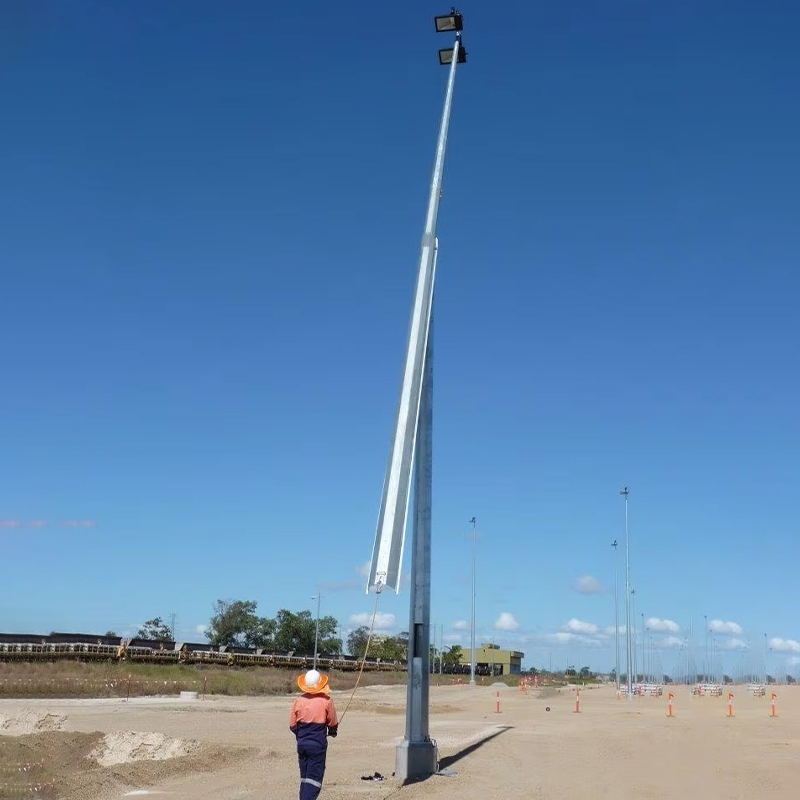
Two street lights with the same LED module can behave differently because of the pole. A straight tapered steel pole at 8 m with a single arm places the luminaire over the carriageway. A 12 m pole with a double arm serves a wider road or a central reservation. A hinged pole allows maintenance at ground level and is useful where access equipment is expensive. A decorative aluminium pole suits a park or promenade. A traffic or CCTV pole carries cameras and signal heads as well as lighting. A high-mast pole carries a ring of luminaires at 20 m or more.
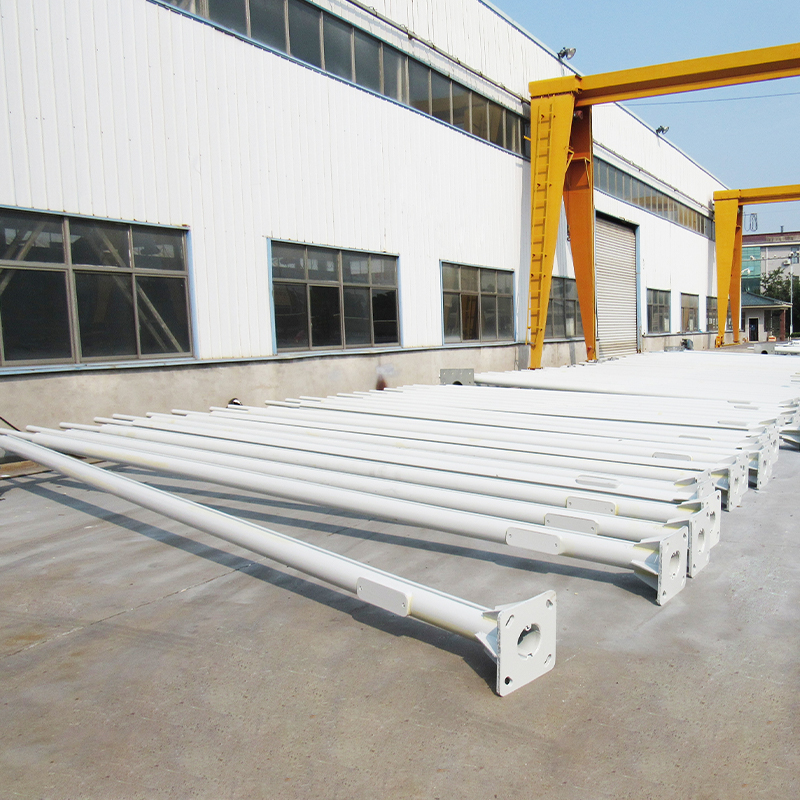
Steel poles are commonly made from Q235 or Q355 steel, with hot-dip galvanizing in the range of 70 to 100 micrometres and an optional powder coating. The wind load calculation should use the local basic wind speed, the terrain category and the height above ground. A coastal site may need a higher galvanizing thickness or a duplex coating because salt spray accelerates corrosion at the base and at the arm weld. The foundation design must match the pole base plate, the anchor bolt pattern and the soil condition.
Aluminium profile poles are popular for garden and decorative lighting because they can be extruded into clean shapes and finished with a durable coating. They are lighter than steel, but the structural capacity and the base connection must be checked for the specific height and luminaire load. A decorative base cover can improve the appearance, but it should be removable for bolt inspection and drainage. If a project mixes steel and aluminium, the installer should use isolating washers or bimetallic connectors to avoid galvanic corrosion.
Our manufacturing and customization capability covers poles made to client drawings as well as standard road, garden, traffic, CCTV and high-mast designs. The practical point for the buyer is to issue one coordinated package: luminaire, bracket, pole, foundation bolts and finish. When these items are bought separately, the interfaces are often the source of site problems, such as an arm that does not fit the pole spigot or a base plate that does not match the civil foundation.
The table below summarizes the main families. The values are typical ranges for outdoor lighting; actual performance depends on the luminaire, driver, optics and operating conditions. Use the table for early screening, then request photometric files, LM-79 and LM-80 data, driver specifications and warranty terms for the shortlisted products.
| Type | Typical efficacy | Typical life | Colour rendering | Best fit | Procurement watchouts |
|---|---|---|---|---|---|
| LED | 100-200 lm/W | 50,000-100,000 h | CRI 70-80, optional 90 | New roads, retrofits, smart control | Driver thermal design, surge rating, IP/IK, optic type |
| High-pressure sodium | 80-140 lm/W | 20,000-30,000 h | CRI 20-30 | Legacy systems, low-cost replacement | Restrike delay, ballast losses, mercury disposal |
| Metal halide | 60-100 lm/W | 10,000-20,000 h | CRI 65-90 | Older city centres, sports areas | Warm-up, restrike, high maintenance |
| Mercury vapour | 40-60 lm/W | About 24,000 h | CRI 20-50 | Obsolete installations | Phase-out, hazardous waste, poor efficiency |
| Fluorescent / induction | 60-100 lm/W | 10,000-100,000 h | CRI 60-80 | Tunnels, underpasses, linear low-level | Cold-weather output, fragile tubes, limited control |
| Solar all-in-one | 100-180 lm/W LED | LED 50,000 h; battery 3-8 years | CRI 70-80 | Paths, campus roads, off-grid sites | Autonomy, battery chemistry, panel shading, theft |
| Solar split / pole-integrated | 100-180 lm/W LED | LED 50,000 h; battery 5-10 years | CRI 70-80 | Larger roads, high-latitude sites | Panel structure, cable routing, battery temperature |
Selection should follow the lighting class, geometry and maintenance model. A residential access road at 6 m mounting height does not need the same optic as a 12 m arterial road. A pedestrian path needs vertical illuminance and glare control, not maximum horizontal lux. A high-mast interchange needs a structural design and a lowering system. The matrix below is a starting point for the design brief.
| Application | Typical mounting height | Recommended type | Typical target | Key control or detail |
|---|---|---|---|---|
| Residential access road | 5-8 m | LED, 3000-4000 K | 10-20 lux average | Type II/III optic, midnight dimming, glare shield |
| Urban collector road | 8-10 m | LED, 4000 K | 20-30 lux average | 10 kV surge, DALI or 0-10 V dimming |
| Arterial road | 10-12 m | LED, 4000-5000 K | 30-50 lux average | High uniformity, photocell, fault reporting |
| Park or promenade | 3-5 m | Decorative LED or garden pole | 5-15 lux average | Warm CCT, shielded optic, vandal resistance |
| Parking area | 8-12 m | LED or solar split system | 15-30 lux average | Uniformity, CCTV coordination, solar autonomy |
| Highway interchange or stadium | 20-50 m | High-mast LED or HID | Project-specific | Lowering device, wind load, aviation marking |
| Rural or off-grid road | 5-8 m | Solar all-in-one or split | 10-20 lux average | 3-5 days autonomy, MPPT, theft protection |
For a mixed scheme, avoid using one type everywhere just to simplify procurement. A decorative park light and a high-mast stadium light may come from the same manufacturer, but they should not share the same driver, optic or warranty assumptions. It is better to group the project into lighting packages: road lighting, pedestrian and landscape lighting, high-mast and structured poles, and solar or smart systems. Each package can then have its own performance criteria and acceptance tests.
A specification is only useful if it can be verified. The following checklist covers the details that most often change the outcome after delivery. It is not a substitute for a lighting design, but it gives the buyer a practical set of questions.
The acceptance test should match the type. For LED road lighting, a night-time illuminance and uniformity measurement is more meaningful than a visual check. For solar, a commissioning test should record panel open-circuit voltage, battery state of charge, controller settings and the actual dimming profile. For high mast, the lowering device should be operated before acceptance. For smart systems, the central management system should be tested with a simulated communication failure.
Whole-life cost separates the types more clearly than the purchase price. A 100-fixture LED road lighting scheme may cost more per fixture than a basic HPS replacement, but the LED scheme can reduce energy by 50 to 70 percent and avoid lamp changes. If the HPS lamps need a bucket truck visit twice a year, the maintenance saving alone can pay back the price difference. If the LED driver fails at year four because the surge protection was undersized, the saving disappears. The specification must therefore include the driver, surge protection and thermal design, not only the chip efficacy.
Solar lighting has a different cost shape. The upfront cost includes the panel, battery, controller and structure. The battery is a consumable, and its replacement interval depends on chemistry, depth of discharge and temperature. A lithium iron phosphate battery in a cool, well-ventilated enclosure may last longer than a lead-acid battery in a hot pole. A cheap solar light with a small battery may be the most expensive option over ten years if it cannot carry the winter load. The procurement should ask for the battery cycle life at the actual depth of discharge, not only the nominal capacity.
Commissioning is the point where many projects lose the design intent. LED luminaires may be set to full output because the dimming profile was never loaded. Solar controllers may be left in a default mode that over-discharges the battery. Smart systems may be connected but not mapped to the correct pole addresses. A commissioning record should include the as-built pole schedule, luminaire model, driver setting, photocell threshold, dimming schedule, solar controller parameters and the measured illuminance at agreed sample points.
Maintenance planning should also match the type. LED road lighting needs group inspection of drivers and surge protectors, not group lamp replacement. HPS needs lamp and ballast stock. Decorative lighting needs cleaning and diffuser inspection. Solar needs panel cleaning, battery health checks and vegetation control. High mast needs a scheduled lowering-device inspection. If the maintenance team is not equipped for the chosen type, the installation will degrade regardless of the initial performance.
Most failures are predictable. They come from a mismatch between the site and the product, or from a specification that cannot be verified. The following mistakes appear repeatedly in outdoor lighting projects.
The remedy is a coordinated specification: a lighting calculation, a product datasheet with test evidence, a pole and foundation drawing, a control schedule and a commissioning checklist. When these documents are issued together, the type of street light becomes a deliberate choice rather than a catalogue accident.
The right type of street light is the one that meets the lighting class, survives the local wind and corrosion environment, and can be maintained by the team that will actually own it. For most new grid-connected roads, that means LED with a verified driver, proper surge protection and a road optic. For legacy HPS installations, it may mean a complete LED retrofit rather than a lamp change. For off-grid sites, it means a solar system sized on winter energy balance, not on a summer demonstration. For parks and public spaces, it means decorative or pedestrian-scale luminaires with glare control and durable finishes. For highways and stadiums, it means a high-mast structure with a lowering device and a structural calculation.
A useful final check is to write the requirement in one paragraph before choosing the product: "A 9 m mounting height, 25 lux maintained average, 0.35 uniformity, 4000 K, 10 kV surge, IP66, IK08, 140 km/h wind zone, coastal galvanizing, dimming to 50 percent after midnight, and a five-year luminaire warranty." That paragraph can be compared across suppliers. It also exposes the details that a wattage-only enquiry hides. Whether the final choice is LED, HPS, solar, smart, decorative or high-mast, the type should follow the site, the photometry and the maintenance plan, not the other way around.
Related Products
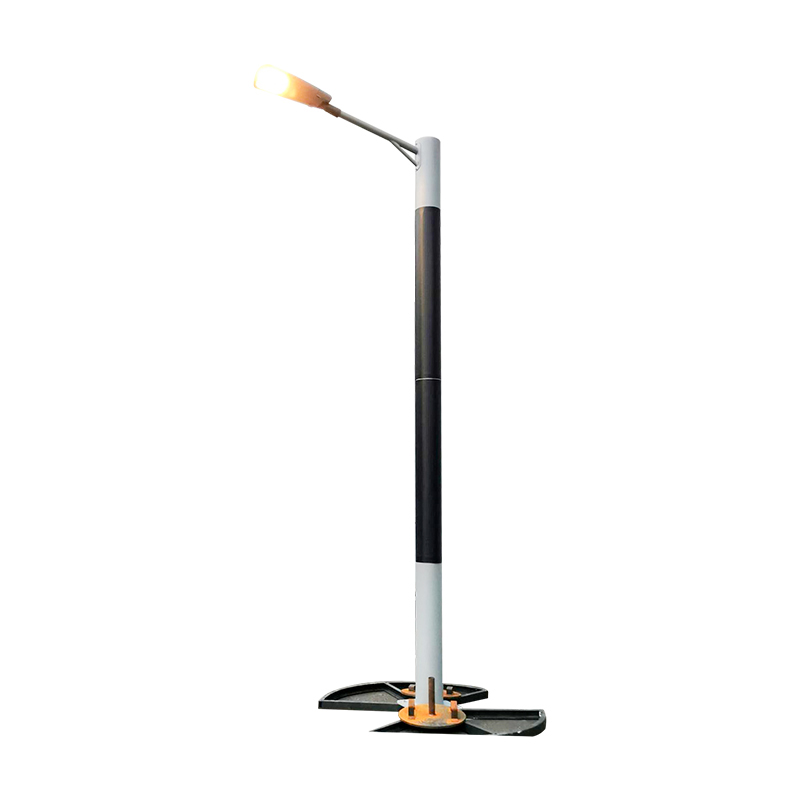 DDK-SSPL-2000 Cylinder Solar Pole Single/Double Arms And Street LED Lamps
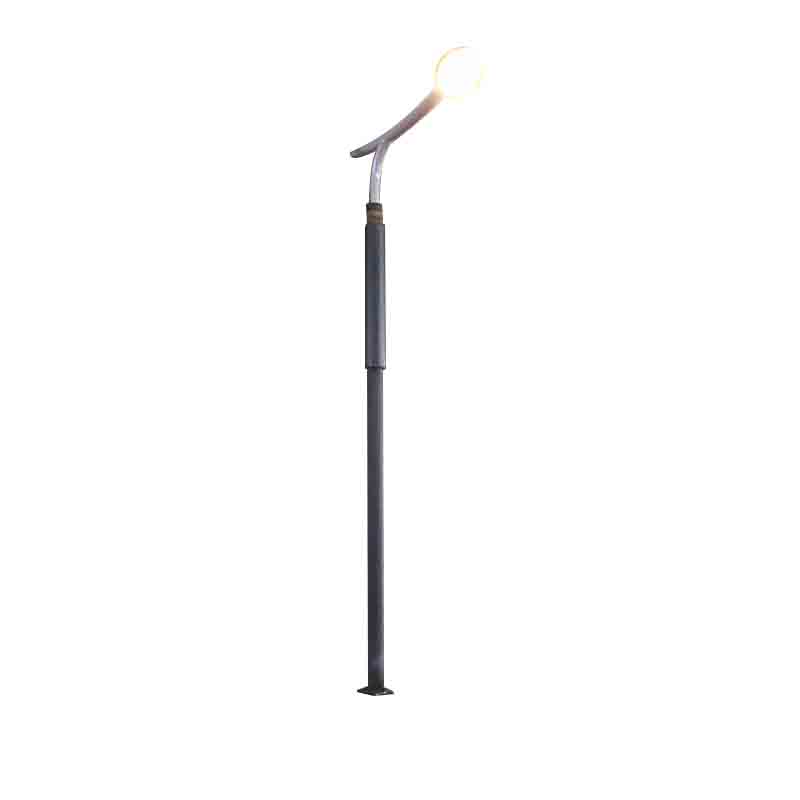 DDK-SSPL-2002 Cylinder Solar Pole With Lamp Head
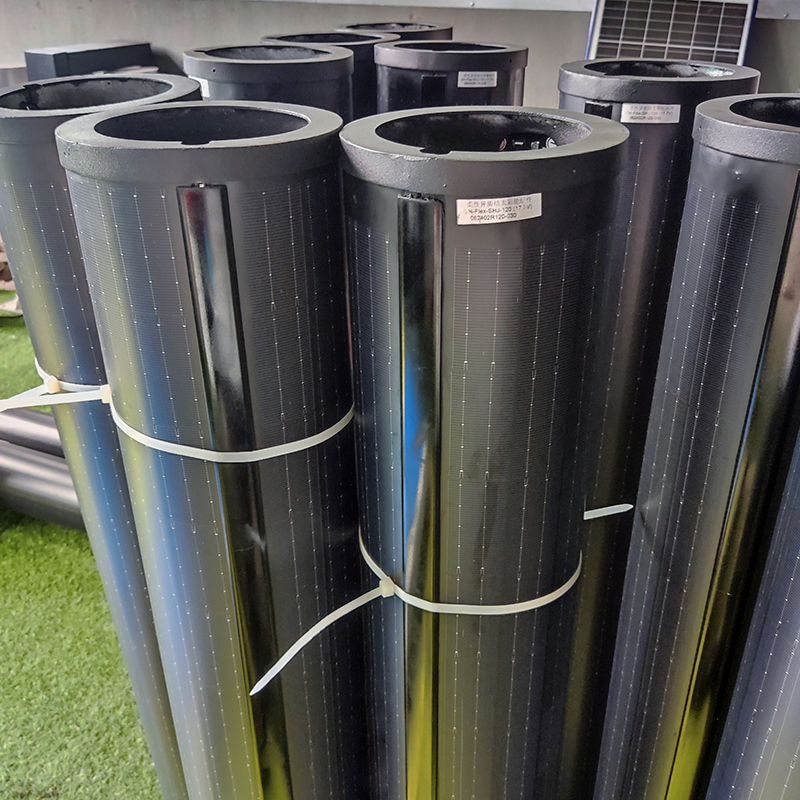 140W Flexible Solar Panel: High-Performance, Elegant and Versatile Power Solution for Lighting Poles and Park Lightings
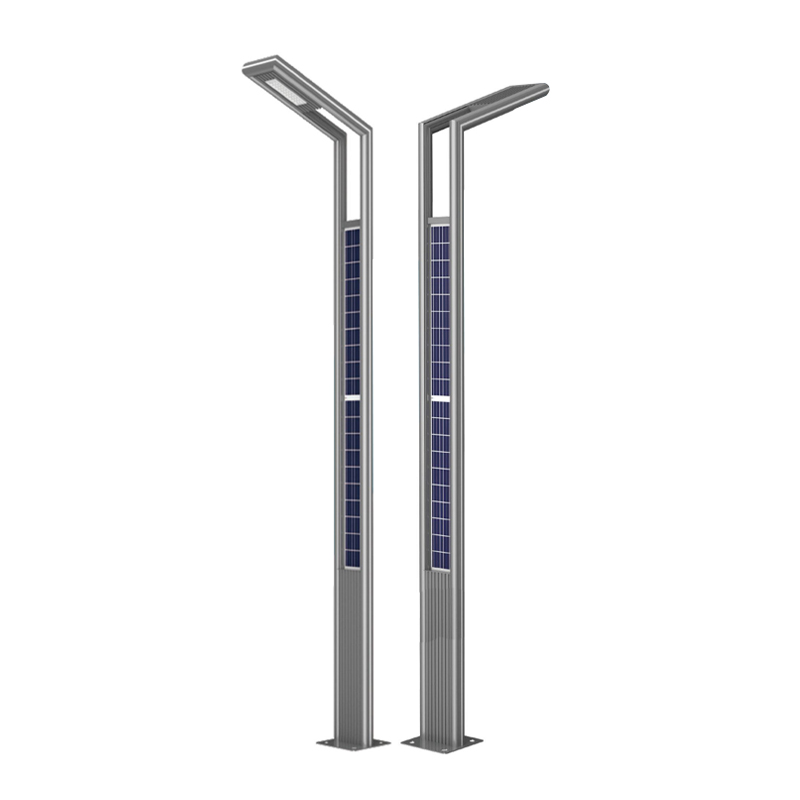 DDK-GN003 Double Sides Integrated Solar Aluminium Pole
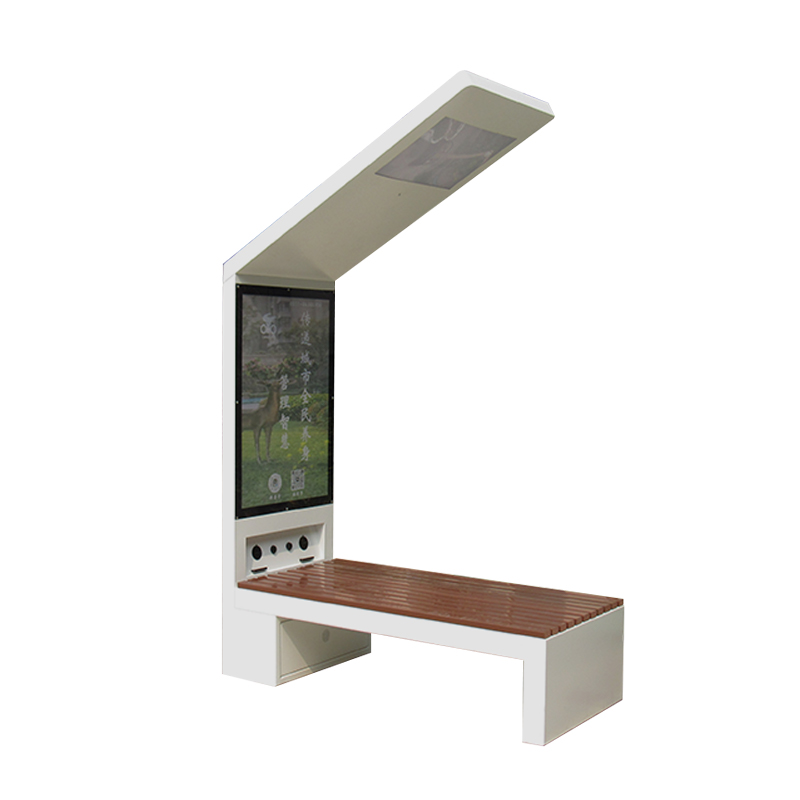 DDK-2000A Charging WIFI Solar Bench Outdoor Bench with Roof on the Top
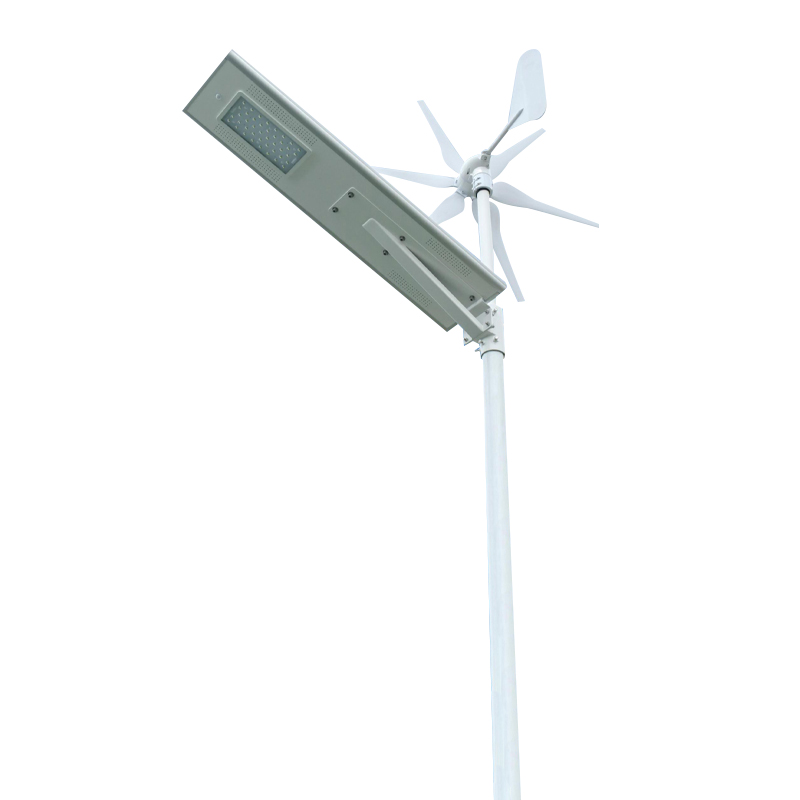 DDK G01 Solar&Wind Hybrid Integrated Optical Lens Solar All in One Light
 Customized Round Hexagon Octagonal Square Steel Street Light Poles for Outdoor Lightings
 3 to 16M Galvanized Steel Hinged Poles
Contact us
180 meters south of the intersection of Nanbei Avenue and Xuba Road, Gaoyou City, Yangzhou City, Jiangsu Province, China.
+86-18811954888
ddk@cnddk.net
 English
 русский
 Español
 عربى

