English
 русский
 Español
 عربى
عربى
Key Facts About Street Light Poles
The standard height of a street light pole in North America and Europe ranges from 20 to 30 feet (6 to 9 meters) for residential streets, 30 to 40 feet (9 to 12 meters) for arterial and collector roads, and 40 to 50 feet (12 to 15 meters) for highway and freeway lighting. The height is selected based on the road width, the required illuminance level (measured in foot-candles or lux), the spacing between poles, and the luminaire type used.
The average cost of a light pole installed on a public road ranges from USD 2,000 to USD 10,000 per complete installation including the pole, luminaire, foundation, electrical connection, and labor. Decorative poles in urban and commercial districts cost significantly more, reaching USD 15,000 to USD 25,000 per installed unit for cast iron or specialty finish steel designs in high-end applications.
The life expectancy of a light pole depends primarily on material and environment. Galvanized steel poles in typical non-coastal environments last 30 to 50 years. Aluminum poles last 25 to 35 years. Concrete poles can last 50 to 75 years. All poles require periodic light pole inspection to identify corrosion, structural damage, and foundation deterioration before failures occur.
Height of a Street Light Pole: Standards, Selection Criteria, and Road Type Reference
The height of a street light pole is not arbitrary. It is determined by a structured photometric design process that calculates the pole height, luminaire mounting angle, spacing, and light output needed to achieve a target average maintained illuminance on the road surface while controlling glare for drivers and pedestrians. Getting the height of a street light pole wrong creates either under-lit areas that increase accident risk or over-lit areas that waste energy and create light pollution.
Factors That Determine the Correct Height of a Street Light Pole
- Road width: Wider roads require taller poles to provide adequate coverage across the full carriageway. A single pole centered on a narrow residential street can adequately illuminate both lanes from 20 feet; a four-lane arterial requires 35 to 40 foot poles placed on alternate sides in a staggered pattern to achieve uniform coverage.
- Pole spacing and layout pattern: The spacing-to-mounting-height ratio governs uniformity. Typical ratios are 3:1 to 4:1 (spacing equals 3 to 4 times the mounting height). At 30-foot pole height with a 4:1 ratio, poles are spaced 120 feet apart, which is consistent with most residential street designs.
- Target illuminance and uniformity: The Illuminating Engineering Society (IES) RP-8 standard specifies target average maintained illuminance by road classification. Minor residential streets target 0.6 foot-candles average; major collector roads target 1.2 foot-candles; primary arterials target 2.0 foot-candles. Taller poles with higher lumen luminaires achieve these targets at wider spacing.
- Luminaire type and light distribution: Modern LED luminaires produce highly controlled Type II, III, or IV light distributions that direct light along the road corridor efficiently. The mounting height affects the cutoff angle and governs whether drivers experience disability glare from the luminaire. Taller mounting heights generally allow wider distributions without problematic glare.
Standard Height of a Street Light Pole by Road Classification
| Road Type | Typical Pole Height (feet) | Typical Pole Height (meters) | Typical Spacing (feet) | Target Illuminance |
|---|---|---|---|---|
| Residential local street | 20 to 25 | 6.1 to 7.6 | 80 to 100 | 0.6 fc average |
| Collector road | 25 to 30 | 7.6 to 9.1 | 100 to 130 | 0.9 to 1.2 fc average |
| Arterial road | 30 to 40 | 9.1 to 12.2 | 120 to 160 | 1.2 to 2.0 fc average |
| Highway or freeway | 40 to 50 | 12.2 to 15.2 | 150 to 200 | 0.6 to 1.2 fc average |
| Pedestrian plaza | 10 to 16 | 3.0 to 4.9 | 40 to 60 | 2.0 to 5.0 fc average |
| Large area or high mast | 80 to 150 | 24.4 to 45.7 | 300 to 600 | 1.5 to 5.0 fc average |
Parts of a Street Lamp: Components, Functions, and Material Specifications
Understanding the parts of a street lamp is essential for procurement, maintenance, and inspection personnel who must assess the condition of individual components rather than the pole as an undifferentiated whole. Each major component of the parts of a street lamp system has defined functions, failure modes, and service life characteristics.
The Eight Main Parts of a Street Lamp System
- Foundation and base anchor system: The buried concrete foundation that transfers the structural loads from the pole (its own weight, wind load on the pole and luminaire, impact loads from vehicles) into the surrounding soil. Anchor bolt cages embedded in the concrete connect to the pole base flange. Foundation depth and diameter are calculated from soil bearing capacity, wind speed zone, and pole height. Typical residential pole foundations are 3 to 5 feet deep and 18 to 24 inches in diameter. Inadequate foundation design or soil settlement is the most common cause of pole leaning that requires immediate attention during light pole inspection.
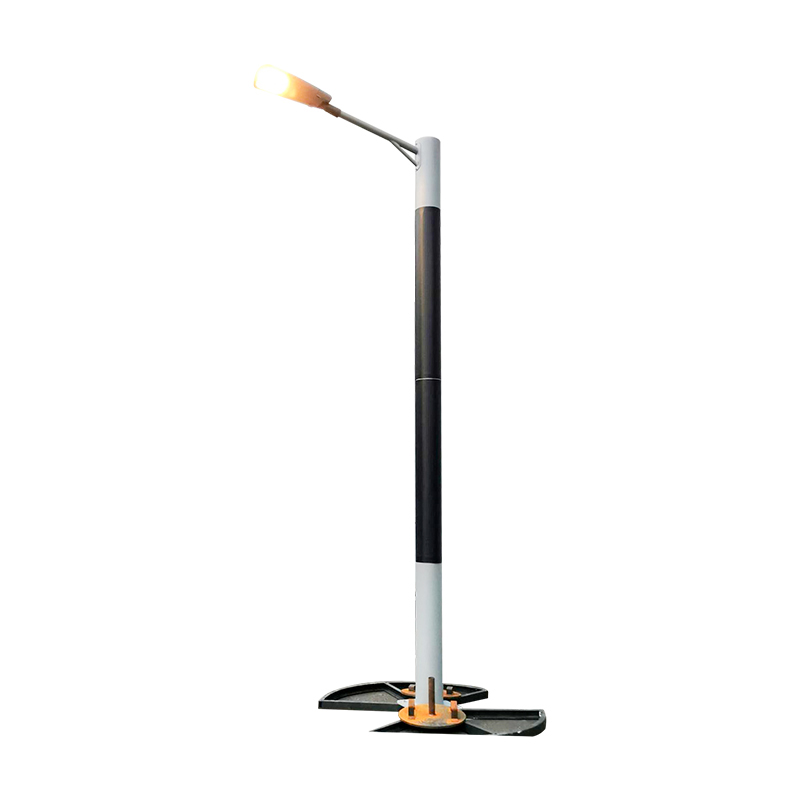
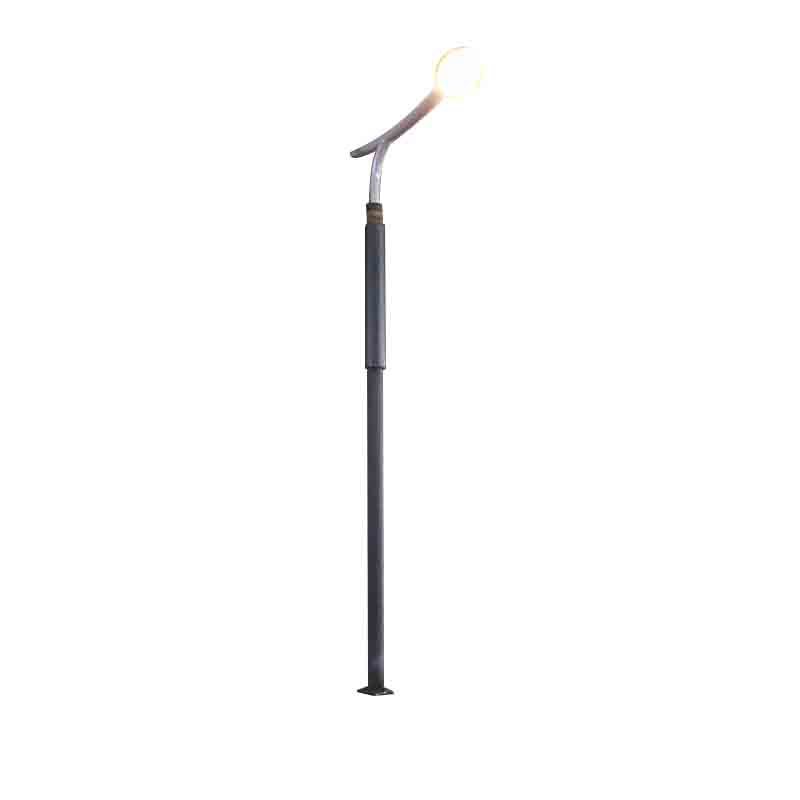
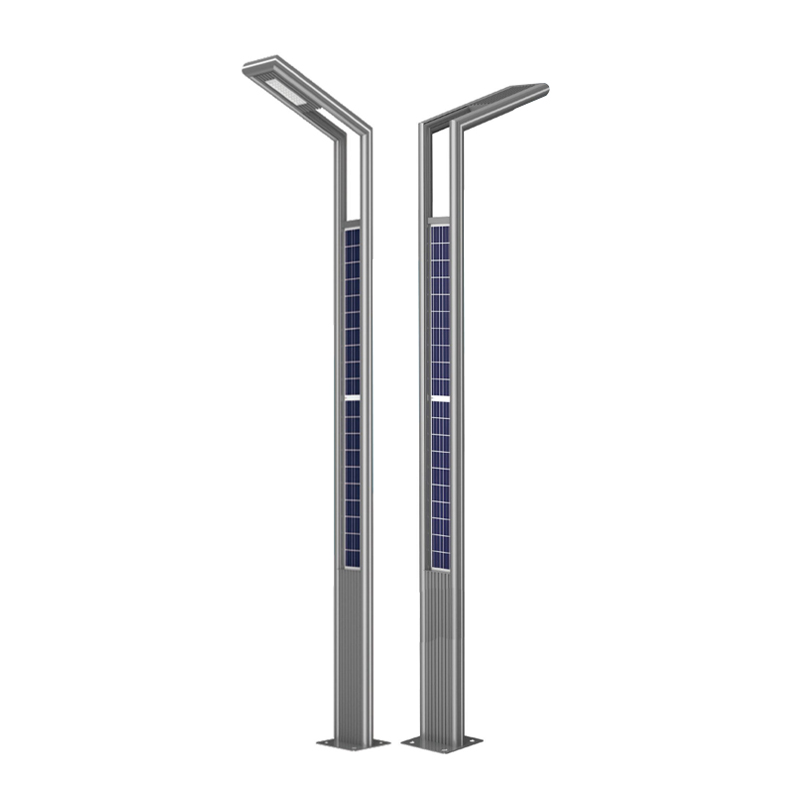
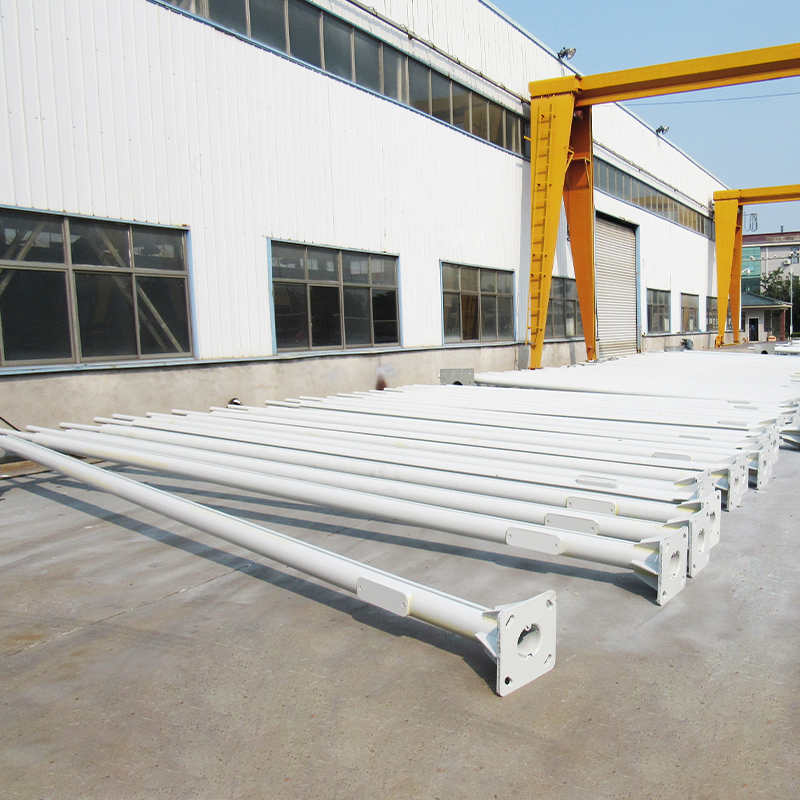
- Pole shaft: The vertical structural element, typically tapered (wider at the base, narrower at the top) or straight. Pole shafts are manufactured from galvanized steel, aluminum alloy, concrete, fiberglass, or decorative cast iron depending on the application. The shaft contains the handhole access opening near the base for electrical connection access and carries wiring conduit through its interior in most designs.
- Base flange or anchor base: The plate at the base of the pole shaft that bolts to the foundation anchor bolts, transferring all structural loads from the pole shaft to the foundation system. The base flange is typically welded to the shaft in steel poles and is the location most vulnerable to corrosion from surface water and salt accumulation at the pole-to-ground interface.
- Handhole and access cover: A rectangular or oval opening in the pole shaft approximately 18 to 36 inches above grade that allows access to the internal wiring and service fuse for maintenance and fault rectification. The handhole cover is typically held by security screws to deter unauthorized access. The handhole frame welds are a common corrosion initiation site in steel poles that should be specifically checked during light pole inspection.
- Tenon or mounting configuration: The fitting at the top of the pole shaft that connects the luminaire arm or the luminaire directly to the pole. Standard tenon sizes are 2-inch outer diameter for most residential and collector road poles and 3-inch outer diameter for arterial and highway poles. The tenon must align the luminaire in the correct orientation for the intended light distribution on the road.
- Luminaire arm (mast arm): A horizontal or angled bracket extending from the pole top or near the top that positions the luminaire over the road rather than directly above the pole. Arm length typically ranges from 2 to 12 feet depending on road width and the desired luminaire offset from the pole centerline. The arm is a significant load path component because the weight and wind load of the luminaire create bending moments at the arm-to-pole connection that are among the highest stress locations in the complete pole structure.
- Luminaire (light fixture): The complete light-producing assembly comprising the optical housing, LED light source module, driver electronics, and weatherproof enclosure. Modern LED luminaires for Street Light Poles have rated service lives of 50,000 to 100,000 hours at L70 (the point at which lumen output has declined to 70% of initial rated output), which at 12 hours per night corresponds to 11 to 23 years of service. The luminaire is the most technologically complex part of a street lamp and has the highest initial replacement cost among the individual components.
- Electrical service components: The underground electrical service cable from the grid connection, the photocell or daylight sensor that controls when the luminaire activates, the fuse or circuit breaker protecting the individual luminaire circuit, and in smart city installations, the networked control module that enables remote dimming, monitoring, and fault reporting. These electrical components are housed at the handhole level or within the luminaire housing depending on the system design.
Light Pole Inspection: Protocols, Methods, and Safety-Critical Findings
Light pole inspection is a systematic safety assessment that identifies structural deterioration, corrosion damage, electrical faults, and foundation problems before they cause pole failure. Pole failures endanger motorists, pedestrians, and utility workers, and create significant municipal liability. A well-designed light pole inspection program prevents these failures through systematic condition assessment at appropriate intervals.
Light Pole Inspection Frequency and Regulatory Requirements
Most transportation agencies and municipalities specify light pole inspection at 5-year intervals for steel and aluminum poles in non-coastal environments, 3-year intervals in coastal salt air environments or in areas with significant road salt application, and annual visual inspection of high-mast poles and any poles that have been involved in vehicle impacts. The AASHTO (American Association of State Highway and Transportation Officials) guide for inspection of roadway lighting structures provides detailed protocols that many state DOTs adopt as policy.
The Four Levels of Light Pole Inspection
- Level 1: Drive-by visual inspection. Conducted from a moving vehicle, this inspection identifies obviously leaning poles, poles with visible impact damage, outage patterns (consecutive poles not illuminating suggests a circuit fault rather than individual luminaire failures), and missing covers or shields. Level 1 inspection is typically conducted annually as part of maintenance crew routing and takes no more time than driving the route.
- Level 2: Hands-on ground-level inspection. The inspector approaches each pole, checks the base flange and lower shaft for visible corrosion and rust staining, verifies that anchor bolts are present and not visibly corroded, opens the handhole to inspect internal wiring condition and fuse status, checks luminaire mounting security by physical manipulation, and records the condition of each part of a street lamp for the inspection database. Level 2 inspections are conducted on a cyclical schedule covering all poles in the inventory typically every 5 years.
- Level 3: Non-destructive testing (NDT) inspection. Conducted when Level 2 inspection finds suspicious conditions including heavy rust staining, deep pitting corrosion, or soft spots identified by sounding the pole with a mallet. NDT methods for hollow steel poles include ultrasonic thickness testing (to measure remaining wall thickness after internal corrosion), magnetic particle inspection (to identify fatigue cracks at weld locations), and ground penetrating radar (to assess anchor bolt and foundation condition without excavation). These inspections require specialist equipment and trained technicians and are typically contracted to specialist inspection companies.
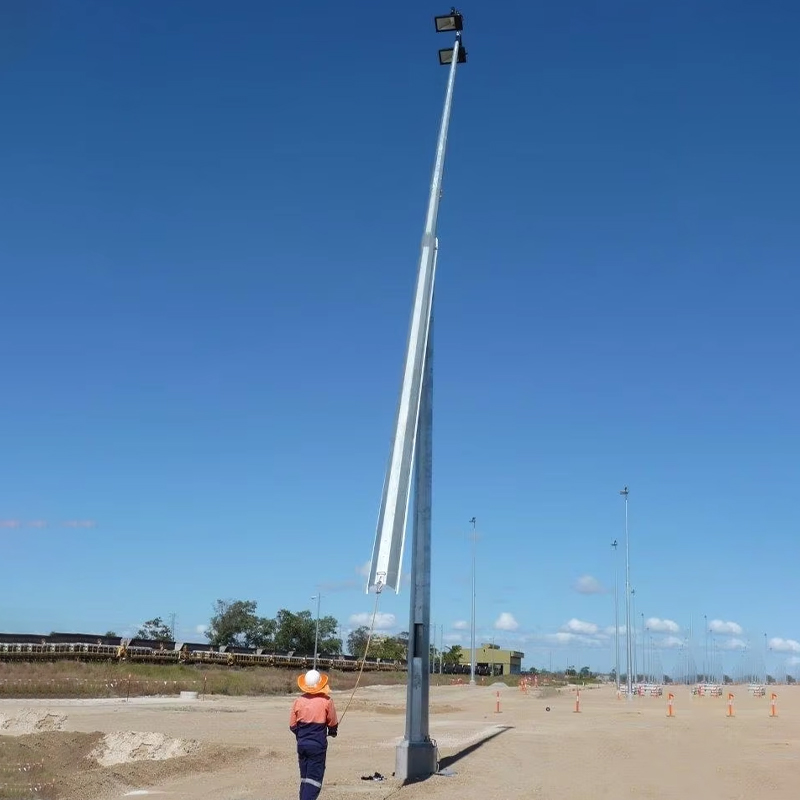
- Level 4: Climbing or aerial lift inspection. For high-mast poles above 80 feet, inspectors ascend the structure using safety harnesses and the pole's internal climbing ladder or an aerial work platform to inspect the upper shaft, ring arm connections, luminaire mounting ring, and lowering device cable. These inspections are mandated annually for high-mast poles by most state transportation agencies due to the catastrophic consequences of high-mast pole failure.
Most Common Findings Requiring Remediation During Light Pole Inspection
- Base plate corrosion: The most prevalent finding in older steel pole inventories. Water and road salt accumulate at the pole-to-pavement interface, creating accelerated corrosion of the base plate and lower shaft interior. Remaining wall thickness below 50% of original requires immediate pole replacement regardless of the overall appearance.
- Handhole frame corrosion and cracking: The stress concentration at the handhole corners combined with the disruption of protective coatings at the welds creates corrosion initiation sites that can develop into fatigue cracks under wind-induced cyclic loading.
- Anchor bolt corrosion and missing nuts: Anchor bolts exposed at the base flange corrode and can shear under extreme wind loading. Missing or loose nuts indicate that the base connection is structurally compromised.
- Foundation settlement or soil erosion: Poles that have shifted from vertical by more than 1 degree require investigation of the foundation and surrounding soil conditions before they can be returned to service.
Night Street with Lights: How Lighting Design Affects Safety, Comfort, and Community
A night street with lights that is well designed looks and functions very differently from one that is not, in ways that go beyond simply whether the road is illuminated. The quality of a night street with lights environment is measured by metrics including horizontal illuminance uniformity, vertical illuminance at pedestrian face height, glare limitation, and the color rendering index (CRI) of the light source, each of which affects how effectively people can navigate, detect hazards, and feel safe on the street.
What Makes a Well-Lit Night Street with Lights
- Uniformity ratio: The ratio of average to minimum illuminance across the road surface. IES RP-8 targets a minimum uniformity ratio of 3:1 (average is no more than 3 times the minimum). Dark spots between poles that exceed this ratio create the phenomenon of "scalloping" where the road alternates between bright and dark zones that impair driver adaptation and hazard detection.
- Vertical illuminance for pedestrian recognition: Drivers and other pedestrians must be able to detect faces and body postures at distances sufficient for reaction. IES guidance suggests minimum vertical illuminance of 0.5 to 1.0 foot-candles at a height of 1.5 meters in pedestrian-priority areas. Street Light Poles positioned only for roadway illuminance often fail this vertical illuminance requirement for pedestrian areas on the sidewalk.
- Color temperature and CRI for face recognition: 4,000 K neutral white LED luminaires with CRI above 70 provide substantially better recognition of facial features, clothing colors, and vehicle colors than the 2,200 K warm orange of high-pressure sodium (HPS) lamps. Research at the University of Arizona found that pedestrian detection distances increased by 50% to 100% under cool white LED lighting compared to HPS at equivalent illuminance levels.
- Control of glare: A night street with lights that has excessive glare from poorly shielded luminaires is paradoxically more dangerous than a less intensely lit street with good glare control. Disability glare from an unshielded luminaire reduces the driver's ability to see objects beyond the bright source, creating a visual limitation exactly opposite to the safety intent of the lighting.
What Is the Average Cost of a Light Pole: Purchase and Installation Budget Guide
The average cost of a light pole varies enormously with the pole type, height, material, luminaire specification, site conditions, and whether the project is new installation or replacement of existing poles. Understanding the complete cost components prevents budget surprises in lighting infrastructure projects.
Cost Breakdown: What Is the Average Cost of a Light Pole to Install
| Cost Component | Residential Pole (25 ft) | Arterial Pole (35 ft) | Decorative Urban Pole |
|---|---|---|---|
| Pole supply (shaft only) | USD 300 to 600 | USD 600 to 1,200 | USD 2,000 to 8,000 |
| LED luminaire and arm | USD 400 to 800 | USD 800 to 1,500 | USD 1,500 to 4,000 |
| Foundation and excavation | USD 500 to 1,000 | USD 800 to 1,500 | USD 1,000 to 2,500 |
| Electrical connection (conduit and wire) | USD 500 to 1,200 | USD 800 to 1,800 | USD 1,000 to 3,000 |
| Installation labor | USD 400 to 800 | USD 600 to 1,200 | USD 800 to 2,000 |
| Total installed cost | USD 2,100 to 4,400 | USD 3,600 to 7,200 | USD 6,300 to 19,500 |
These ranges represent installed costs in typical North American urban and suburban markets at 2023 to 2024 pricing. Projects in areas with high labor costs (major coastal cities, union labor jurisdictions), difficult soil conditions requiring deep foundations, or traffic control requirements for installation in active roadways will be at the high end or above these ranges. Replacement projects that can reuse existing foundations are significantly less expensive, with total costs typically 30% to 50% lower than new installation because the excavation and foundation components are eliminated.
What Is the Life Expectancy of a Light Pole: Material Comparison and Factors That Extend Service Life
The life expectancy of a light pole is one of the most commercially significant questions in street lighting asset management because it directly determines the annualized cost of pole ownership (total installed cost divided by expected service years), the budget cycle for replacement programs, and the condition inspection frequency required to manage structural safety risk.
Life Expectancy of a Light Pole by Material
- Galvanized steel (most common): The life expectancy of a light pole made from hot-dip galvanized steel is typically 30 to 50 years in non-coastal, non-industrial environments where road salt exposure is limited and drainage at the pole base prevents ponding water. In coastal salt air environments or in regions with heavy winter road salt application, the effective life expectancy of a light pole drops to 15 to 25 years because the corrosive environment degrades the zinc galvanizing coating and accelerates base plate and lower shaft corrosion. Powder-coated steel adds aesthetic life but does not significantly extend structural life if the coating is damaged and the base steel corrodes.
- Aluminum alloy: The life expectancy of a light pole manufactured from aluminum alloy is 25 to 35 years in most environments. Aluminum forms its own natural oxide film that provides good corrosion resistance in most atmospheric conditions, but aluminum is susceptible to pitting corrosion in chloride-rich environments (marine and road salt) and to galvanic corrosion when in contact with steel hardware components. Aluminum poles also have lower structural stiffness than steel, making them more susceptible to wind-induced vibration fatigue at weld locations on longer poles above 35 feet.
- Prestressed concrete: The longest-lived standard Street Light Poles material, with life expectancy of 50 to 75 years in typical environments. Concrete poles have no corrosion vulnerability in their structural mass (the concrete itself does not corrode), though the steel reinforcement and prestressing strands inside can corrode if the concrete cover is insufficient or cracked, allowing moisture and chloride penetration. Concrete poles are heavier and more expensive to transport and erect than steel or aluminum equivalents, limiting their use to specific markets.
- Fiberglass reinforced polymer (FRP): The life expectancy of a light pole manufactured from FRP is 40 to 60 years in most environments. FRP poles have no metallic components in the pole shaft and are therefore immune to galvanic and uniform corrosion. They are used in coastal, chemical plant, and high-moisture environments where steel and aluminum poles fail prematurely. UV degradation of the outer resin layer requires periodic surface treatment to maintain appearance, though this does not affect structural life significantly.
Practices That Extend the Life Expectancy of a Light Pole
- Ensuring drainage at the pole base: The most impactful single maintenance practice. Ponding water at the pole-to-pavement interface creates an electrolytic environment that accelerates corrosion orders of magnitude faster than dry conditions. Sloping surrounding pavement away from the pole base and ensuring drainage outlets in base flanges are not blocked dramatically extends base life.
- Touch-up coating of damaged areas: Applying zinc-rich paint or galvanizing repair compound to any areas where the protective coating has been damaged by impact, erosion, or vandalism immediately after damage is discovered prevents base metal exposure that initiates rapid corrosion in the damaged zone.
- Annual flushing of the pole interior: For steel poles with weep holes at the base plate, annual flushing of accumulated water and debris from the interior of the hollow shaft removes the internal moisture that causes interior corrosion at the same rate as exterior base corrosion in many failure cases.
- Systematic light pole inspection at appropriate intervals: Identifying corrosion and structural deterioration before it reaches the critical condition where load capacity is compromised allows remediation (cleaning, coating, reinforcement) that can extend service life by 10 to 20 additional years beyond the point at which uninspected deterioration would have produced a failure requiring emergency replacement.
Frequently Asked Questions
1. What is the standard height of a street light pole for residential neighborhoods?
The standard height of a street light pole for residential local streets is 20 to 25 feet (6.1 to 7.6 meters) in North American and most European markets. This height provides adequate road surface illuminance for two-lane residential streets (typically 24 to 28 feet wide) at pole spacings of 80 to 100 feet with IES Type II or Type III LED luminaires. Decorative residential poles in planned communities and historic districts often use shorter poles of 14 to 18 feet with more closely spaced fixtures to achieve a pedestrian-scale aesthetic while maintaining adequate illuminance levels.
2. What are the main parts of a street lamp on a standard Street Light Pole?
The main parts of a street lamp system are: the buried foundation and anchor bolt system; the pole shaft (typically galvanized steel or aluminum); the base flange connecting the shaft to the foundation; the handhole access opening with cover near the pole base; the tenon or top fitting connecting the luminaire arm; the luminaire arm (mast arm) extending over the road; the luminaire housing containing the LED module, optical system, and driver electronics; and the electrical service components including the underground supply cable, photocell or sensor, fuse, and any smart controls module. Each of these parts of a street lamp has specific inspection criteria and expected service life characteristics.
3. How often should light pole inspection be performed?
Light pole inspection should be performed on a schedule determined by the pole material, age, and environment: every 5 years for steel and aluminum poles in non-coastal environments; every 3 years in coastal salt air or heavy road salt regions; annually for poles that have been struck by vehicles or have recorded storm damage; and annually for high-mast poles above 80 feet regardless of environment. In addition to scheduled cycle inspections, drive-by visual inspection should be conducted approximately annually as part of maintenance crew routing to identify obviously leaning, damaged, or non-functioning poles that require priority attention before the next scheduled full inspection cycle.
4. What does a well-designed night street with lights look like compared to poorly lit streets?
A well-designed night street with lights provides uniform illumination across the full road width and sidewalk with no dark spots between poles (uniformity ratio better than 3:1), adequate vertical illuminance so that pedestrians can recognize faces and read body language at safe reaction distances, minimal glare from luminaires that have fully shielded optics cutting off at or below 80 degrees from nadir, and a color temperature of 3,000 to 4,000 K with CRI above 70 for good color recognition. A poorly lit night street with lights has alternating bright and dark zones between poles, dark shadowed sidewalk areas alongside brightly lit carriageways, visible bright luminaire sources that cause glare, and potentially orange sodium light that makes color identification difficult. The quality difference between these two scenarios has documented effects on pedestrian and driver safety.
5. What is the average cost of a light pole for a municipal street lighting replacement program?
The average cost of a light pole for a municipal street lighting replacement program in a typical North American market (2023 to 2024 pricing) is approximately USD 3,000 to USD 7,000 per installed pole for standard arterial and collector road applications using aluminum or steel poles at 30 to 40 feet with quality LED luminaires. Residential replacement programs using 25-foot poles typically run USD 2,000 to USD 4,500 per pole. Large-scale municipal programs that competitively bid hundreds or thousands of poles achieve unit costs 15% to 25% below the pricing of smaller individual projects. Decorative urban center replacement programs using custom-design poles, ornamental arms, and premium finish luminaires regularly reach USD 15,000 to USD 25,000 per installed unit in major city applications.
6. What is the life expectancy of a light pole in a coastal salt air environment?
The life expectancy of a light pole in a coastal salt air environment is significantly reduced compared to inland locations. Galvanized steel poles in direct marine exposure (within 0.5 miles of the ocean) typically last 15 to 20 years before base plate and lower shaft corrosion compromises structural integrity. Aluminum alloy poles in marine environments last 20 to 30 years due to aluminum's better inherent salt resistance, though pitting corrosion can develop at anchor bolt contacts and handhole frames. FRP (fiberglass) poles are the preferred specification for coastal installations with a life expectancy of 40 to 60 years because they have no metallic structural components vulnerable to salt corrosion. Concrete poles are also appropriate for coastal use with 50-plus year life expectancy when specified with adequate concrete cover depth and corrosion-resistant reinforcement.
7. Can Street Light Poles be repaired rather than replaced when corrosion is found?
Street Light Poles with corrosion can be repaired rather than replaced in specific circumstances where the remaining wall thickness after corrosion is still above 50% of the original design thickness, the corroded zone is localized to the coatings surface without structural penetration, and the pole has not been involved in vehicle impact or significant overload events. Repairs typically involve mechanically cleaning the corroded area, applying a zinc-rich primer and protective topcoat system, and installing protective wraps or sleeves at the base to prevent recurrence. However, when ultrasonic thickness testing during light pole inspection reveals that corrosion has reduced the wall thickness below 50%, or when inspection finds any through-wall penetration, the safe decision is replacement rather than repair, because post-corrosion structural analysis of heavily corroded poles consistently shows inadequate safety factors for the design wind loading.
8. How do LED luminaires affect the life expectancy of a light pole installation?
LED luminaires extend the effective service interval of Street Light Poles installations by dramatically reducing the frequency of luminaire replacement compared to high-pressure sodium or metal halide predecessors. HPS luminaires required replacement every 5 to 8 years (at 24,000 to 40,000 hour lamp life); LED luminaires rated at 70,000 to 100,000 hours operate 15 to 23 years at 12 hours per night before reaching L70 lumen depreciation. This means that a complete pole and LED luminaire installation today may complete the pole's full 30 to 40 year service life without requiring any luminaire replacement at all, dramatically reducing the total cost of ownership compared to earlier lamp technology that required multiple lamp replacements over the same period.
9. What types of Street Light Poles are used in decorative urban applications?
Decorative Street Light Poles in urban commercial districts, historic areas, and pedestrian plazas are manufactured from cast aluminum, ductile iron, or steel in heritage-inspired designs that complement the architectural character of the surrounding environment. Common styles include acorn post tops (inspired by Victorian gas lamp designs), fluted tapered poles with decorative bases (referencing classical architectural columns), and contemporary minimalist designs in brushed or anodized aluminum finishes. These decorative poles are typically shorter (14 to 18 feet) than standard road lighting poles and are spaced more closely (40 to 60 feet) with lower lumen luminaires to create a pedestrian-scale lighting environment that prioritizes aesthetic character and vertical illuminance for face recognition over maximum horizontal illuminance efficiency.
10. What causes Street Light Poles to fail and how can failure be prevented?
Street Light Poles fail through three primary mechanisms: base corrosion that reduces the structural cross-section below the minimum needed to withstand design wind loading; vehicle impact that creates bending damage or foundation uplift beyond the pole's structural capacity; and wind-induced fatigue cracking at stress concentration locations (handhole corners, arm-to-pole welds, base plate weld toes) after years of cyclic loading from wind oscillation. Prevention requires a combination of systematic light pole inspection at appropriate intervals that identifies deterioration before it reaches critical levels, drainage management at pole bases to eliminate the ponding water that accelerates corrosion, prompt coating repair when damage is observed, and selection of pole designs with adequate fatigue resistance at weld details. High-mast poles have specific additional requirements for lowering device and ring arm inspection given the catastrophic consequences of failure at height.