
call us
+86-18811954888
2026-11-19
A project buyer stands beside a pallet of solar street lights marked “200W” and asks a practical question: will these run from dusk to dawn, and how many years before we have to touch them again? The honest answer is that “200W” is not a runtime rating and it is not a lifespan rating. It is a label that may refer to the LED load, the solar panel, a combined product class, or a marketing figure that does not match either. The useful answer therefore comes in two parts: nightly performance and service life.
For a well-matched 200W-class solar light, expect roughly 8 to 12 hours of illumination on a full charge in mild weather, with the last hours often dimmed or motion-controlled. For service life, plan on the battery being the first major replacement at about year 3 to 5 with lithium iron phosphate, or year 1 to 3 with lead-acid. The LED source may be rated for 25,000 to 50,000 hours, the controller may last 5 to 10 years, and the panel and pole can last much longer. A realistic whole-system service life is 5 to 8 years, with maintenance, and up to 10 years when the battery is replaceable, the controller is protected, and the installation is correct.
That answer only holds when the product is engineered as a system. A true 200W LED load is a different animal from a 200W solar panel paired with a 60W or 80W LED. Buyers who compare only the “200W” badge can end up with a fixture that is bright for four hours, dim for the rest of the night, and has a battery that is cycled too deeply every day. The sections below explain what the label should mean, how to calculate runtime, how long each component really lasts, and what to put in a purchase specification so the answer is predictable rather than optimistic.
The first step is to separate the three common uses of the figure. In one case, 200W describes the LED fixture: the light engine draws about 200 watts when running at full output. In another, 200W describes the solar panel: the panel can produce 200 watts under standard test conditions. In a third, 200W is a product-class label used loosely for an all-in-one street light or flood light, where the actual LED may be 60W, 80W, or 100W and the panel may be 150W to 200W. These are not equivalent products, and they do not have the same nightly runtime.
A 200W LED fixture running for 12 hours at full output needs 2.4 kWh of energy per night before losses. That requires a battery with usable capacity above 2.4 kWh, plus solar harvest that replaces it daily. A 200W panel, by contrast, may generate only 500 to 700 Wh per day in a good location after temperature, dust, controller, and charging losses. That daily energy can support a 50W to 70W LED for a full night with dimming, but it cannot support a true 200W LED for 12 hours without a much larger panel and battery. The distinction matters because a buyer may read “200W solar light” and imagine a 200W LED, while the seller may be describing a 200W panel.
The table below gives typical interpretations. The runtimes are estimates for a new, correctly matched system in moderate temperatures, not guarantees for every product. They assume lithium iron phosphate batteries, an MPPT or good PWM controller, and a dimming profile that reduces output after a set time.
| Label on the product | Likely hardware | Energy needed or available | Full-output runtime | Practical overnight runtime with dimming |
|---|---|---|---|---|
| 200W LED fixture | 200W LED, 600W to 800W panel, 48V 75Ah LiFePO4 or larger | About 2.4 kWh for 12 hours at full output | About 10 to 14 hours on a generous battery | 12 hours is possible only with correct sizing and good solar recharge |
| 200W panel with 80W LED | 200W panel, 80W LED, 12.8V 50Ah LiFePO4 | About 640 Wh stored, 512 Wh usable at 80% depth of discharge | About 6 to 7 hours at 80W | About 9 to 12 hours with 30% to 50% dimming after midnight |
| 200W panel with 60W LED | 200W panel, 60W LED, 12.8V 60Ah LiFePO4 | About 768 Wh stored, 614 Wh usable at 80% depth of discharge | About 10 hours at 60W | About 12 hours with modest dimming or motion control |
| “200W class” all-in-one | Often 150W to 200W panel, 60W to 100W LED, 30Ah to 50Ah battery | Varies widely; check the battery watt-hours and LED wattage | About 4 to 8 hours at full output | About 8 to 12 hours if the controller dims and the battery is healthy |
| 200W marketing label with no data | Unknown LED, unknown panel, unknown battery chemistry | Cannot be calculated reliably | Possibly 2 to 5 hours | Not predictable without a datasheet and test report |
The practical lesson is simple: ask for the LED wattage, panel wattage, battery chemistry, battery voltage, battery amp-hours or watt-hours, controller type, and dimming profile. If those numbers are missing, the “200W” badge is not enough to answer how long the light will last in either sense. A product that cannot state its usable battery energy is a product that cannot promise all-night performance.
Nightly runtime is an energy-balance question. Start with usable battery energy in watt-hours, then divide by the average load in watts. A 12.8V 50Ah lithium battery stores 640 Wh. At 80% depth of discharge, the usable energy is about 512 Wh. If the LED draws 80W continuously, the theoretical runtime is 6.4 hours. If the controller runs 80W for the first five hours and then dims to 30%, the average load falls and the same battery can stretch to roughly 9 to 11 hours. That is why two products with the same battery can have very different overnight behavior: the dimming profile and the actual LED current matter as much as the battery label.
The solar side must replace what the light uses. A 200W panel in a location with 4.5 peak sun hours and a 75% system efficiency can deliver about 675 Wh per day. That is enough for a 60W LED running 11 hours, or a 70W LED running 9.5 hours, before dimming. It is not enough for a 200W LED running 12 hours, which needs 2.4 kWh. In that case the panel should be 600W to 800W, and the battery should be sized for at least one night of full operation plus a cloudy-day reserve. Buyers who want three days of autonomy in cloudy weather need to multiply the daily energy requirement accordingly, not simply add a slightly larger battery.
Temperature changes the result. Lithium iron phosphate loses usable capacity in cold weather, and lead-acid loses much more. A battery that delivers 10 hours in summer may deliver 6 or 7 hours on a freezing night if it is not insulated or heated. High heat shortens battery life even when runtime looks fine. The controller also needs a low-temperature charging cutoff for lithium batteries; charging below freezing can damage the cells and reduce the number of cycles the system delivers over its life.
For a true 200W LED load, a 200W panel is usually undersized. The panel must cover the nightly load plus charging losses, and it must do so on less than perfect days. A 550W monocrystalline panel is a more realistic building block for larger loads, especially when the system is designed for 12-hour operation and cloudy-day autonomy.
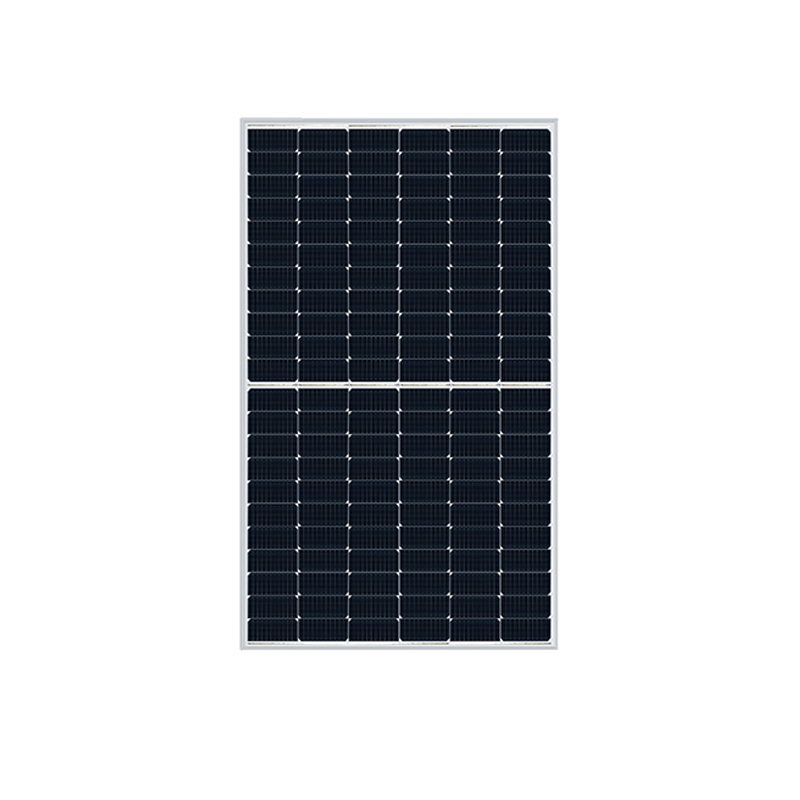 550W Monocrystalline Solar Panel SeriesA monocrystalline panel range with listed 150W–540W variants, suited to larger loads where panel capacity must cover nightly energy and charging losses.View Product →
The same logic applies to integrated fixtures. A well-designed all-in-one unit may combine a 200W-class panel, an 80W LED, a lithium battery, a controller, and a dimming profile in one housing. That can be a good fit for a path, campus road, or parking area where 8 to 12 hours of useful light is enough. It is not the same as a 200W LED flood light. The buyer should compare the delivered load and the usable energy, not the number on the front of the carton.
If the goal is a self-contained unit for a smaller road or perimeter area, an integrated solar all-in-one street light can be a sensible starting point, provided the datasheet states the LED wattage, battery energy, and dimming schedule clearly.
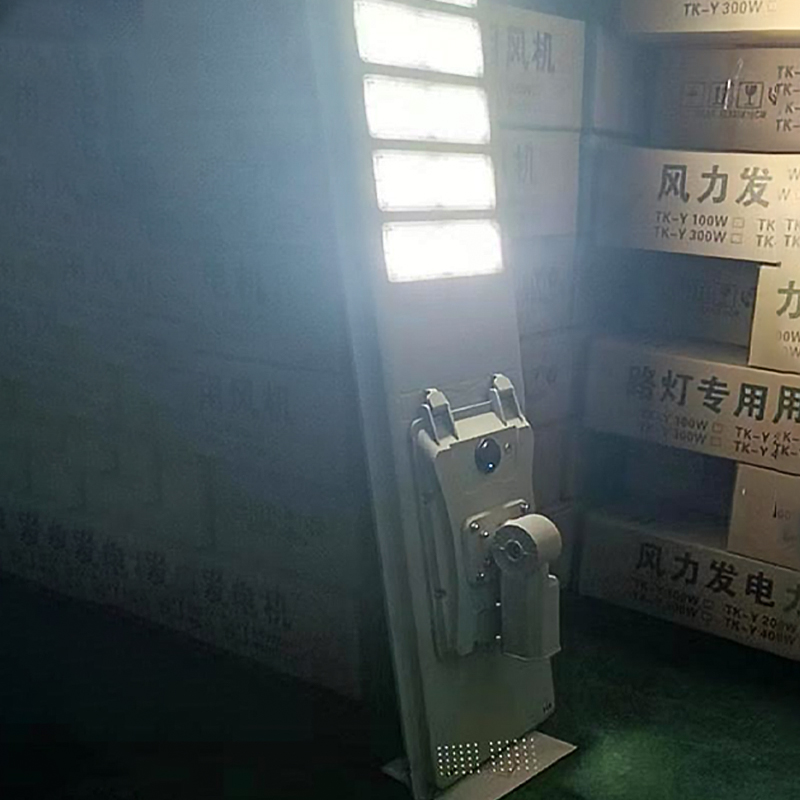 DDK-S0219 Integrated Solar All-in-One Street LightA self-contained street light combining a 150W LED, 100W monocrystalline panel and 30Ah LiFePO4 battery for smaller road or perimeter projects.View Product →
For projects that need more control over pole height, panel angle, battery access, and maintenance, a separated solar pole system is often easier to service than a sealed all-in-one. The engineering principle is the same: the panel must refill the battery, the battery must carry the night load, and the controller must protect both. More information on system-level solar street lighting design is available in this overview of solar-powered street lighting systems.
“How long does it last” usually means “when will it stop working as it did on day one?” The answer depends on which part fails first. In most solar lights, the battery is the limiting component. The LED may still light after five years, but the nightly runtime may have fallen from 11 hours to 5 hours because the battery has lost capacity. A buyer who expects a 10-year system life while using a 300-cycle lead-acid battery is going to be disappointed. A buyer who specifies a replaceable lithium battery and a controller with proper protection has a much better chance of reaching a 7- to 10-year service life with one battery replacement.
| Component | Typical rating | Realistic service in a nightly solar light | What usually ends its life |
|---|---|---|---|
| LED light engine | 25,000 to 50,000 hours to L70 | About 7 to 13 years at 10 hours per night | Heat, driver failure, moisture ingress, lumen depreciation |
| LiFePO4 battery | 2,000 to 5,000 cycles at moderate depth of discharge | About 4 to 8 years in daily cycling; longer with shallow cycles | High temperature, deep discharge, low-temperature charging, cell imbalance |
| Lead-acid battery | 300 to 500 cycles at 50% depth of discharge | About 1 to 3 years in daily cycling | Sulfation, deep discharge, heat, water loss in flooded types |
| Charge controller | 5 to 10 years with good surge and moisture protection | About 5 to 10 years | Lightning surge, water ingress, loose wiring, over-temperature |
| Solar panel | 15 to 25 years for glass-faced modules; about 5 to 10 years for some flexible panels | About 10 to 20 years for rigid panels with regular cleaning | Delamination, UV damage, cracked glass, shading, soiling |
| Pole, bracket, and housing | 10 to 20 years or more depending on coating and environment | About 10 to 20 years in normal conditions | Corrosion, coating damage, wind vibration, poor galvanizing |
The battery number deserves the most attention. A 200W-class light with a 50Ah lithium battery may have a cycle life of 2,000 to 4,000 cycles, which sounds like 5 to 10 years of daily use. In practice, heat, partial charging, and deep overnight discharge can bring that down. A light that drains the battery to 90% depth every night will not last as long as one that drains it to 60% and dims after midnight. That is why a slightly larger battery or a more aggressive dimming profile can be more valuable than a higher panel wattage alone.
Serviceability is part of lifespan. A sealed all-in-one fixture may be compact and easy to install, but if the battery cannot be replaced without removing the whole luminaire, the practical life of the product is limited by the battery. A separated solar pole with an accessible battery box and a replaceable controller is easier to maintain in year four or year six. For projects where the light must remain in service for a decade, that access is not a small detail. It is a procurement decision.
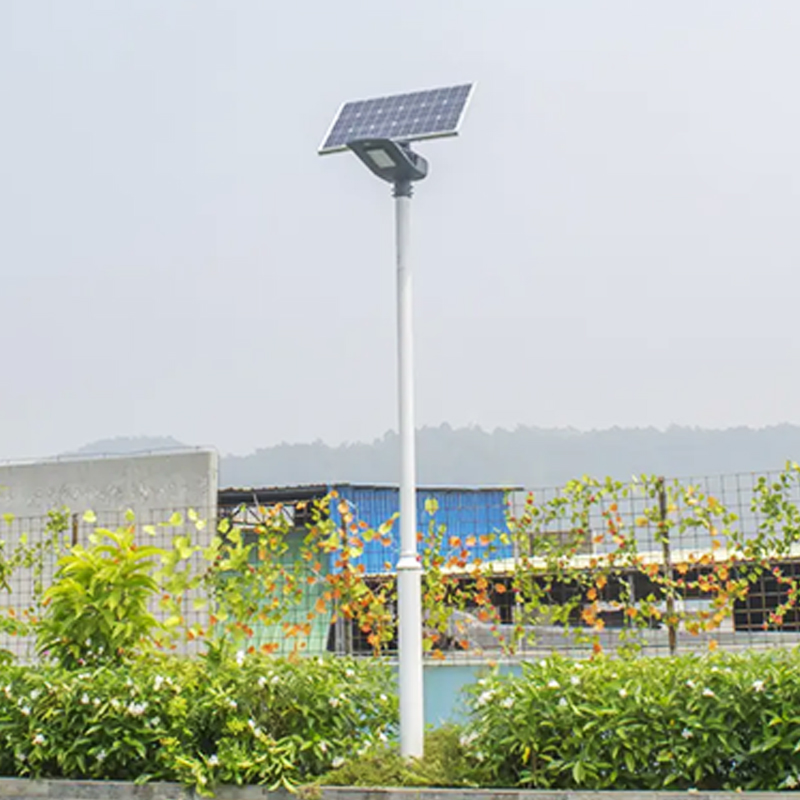 DDK-FEITIAN Separated Solar Pole LampA separated pole light with adjustable height and customizable power, designed for easier access to battery and controller components over long service life.View Product →
Component quality also affects the warranty value. A 5-year warranty on a luminaire that contains a 2-year battery is not the same as a 5-year system warranty with defined battery replacement terms. Buyers should ask whether the warranty covers the battery, the controller, the LED driver, and the panel separately, and what the pro-rata or replacement policy is after year two. The most useful warranty is the one that tells you what happens when the first battery reaches the end of its useful life.
Heat is the quiet killer. A solar light mounted on a dark pole in direct sun can see battery and controller temperatures well above ambient. Lithium cells age faster at high temperature, and sealed housings can trap heat even when the LED itself is rated for outdoor use. A black housing in a hot climate may look robust, but it can shorten battery life if there is no thermal path or ventilation. In hot regions, a separated system with the battery in a shaded or ventilated enclosure often lasts longer than a compact all-in-one with the battery behind the LED.
Deep discharge is the second major cause. If the controller cuts off at a very low voltage only after the battery is nearly empty, the battery cycles deeply every night. A better controller uses a planned dimming profile, a low-voltage disconnect, and a recovery strategy. The difference between 80% depth of discharge and 95% depth of discharge can be significant in cycle life. A larger battery, a lower LED current after midnight, or a motion sensor that raises output only when needed can all reduce stress.
Undersized solar panels create a slow failure that looks like a battery problem. The panel may charge the battery enough for summer, but in winter or during a cloudy week the battery never reaches full charge. Sulfation in lead-acid or cell imbalance in lithium can follow. The user sees a light that “used to work all night” and assumes the battery is defective, when the real issue is that the daily energy harvest was never sufficient for the load and location. A 200W panel may be adequate for a 60W LED in a sunny climate and inadequate for the same LED in a cloudy climate with long nights and shading.
Water and dust ingress matter more than many buyers expect. An IP65 rating is a useful starting point, but the seal around the battery compartment, cable glands, and controller cover must be designed for thermal cycling. A fixture that passes a rain test when new can leak after two years of expansion and contraction. Condensation inside a sealed housing can corrode the controller even if rain never enters. Desiccant, breathers, and proper gasketing are practical details that separate a durable product from a short-lived one.
Installation errors also reduce life. A panel facing the wrong direction, a pole shaded by a building, or a panel angle that collects dust will reduce charging. Loose battery terminals cause voltage drop and heat. A controller installed upside down or in direct sun may overheat. A pole that is not rated for the wind load of the panel and luminaire can vibrate and fatigue the mounting bracket. These are not exotic failures; they are common in projects where the light is treated as a commodity rather than a small power system.
Start with the lighting requirement, not the wattage label. Decide the mounting height, the target illuminance on the ground, the spacing between poles, and the hours of useful light. A 200W LED may be appropriate for a wide road or a large yard, but it may be overkill for a garden path or a small parking area. A 60W or 80W LED with good optics can sometimes deliver the same useful illuminance with less energy, a smaller battery, and a lower cost. The right question is not “is 200W enough?” but “what load profile delivers the required light for the required hours?”
Next, require a datasheet with the following values: LED wattage and lumen output, system efficiency, panel wattage and cell type, battery chemistry, voltage, amp-hours, watt-hours, usable depth of discharge, controller type, dimming schedule, autonomy days, ingress protection, operating temperature range, mounting height, and warranty terms by component. Ask for a runtime calculation for the worst-case month, not the best-case month. A supplier who cannot provide that calculation is asking the buyer to accept an unverified promise.
Set a minimum autonomy. For a municipal road or a safety-critical area, one night of autonomy may be too thin if the next day is cloudy. Two to three cloudy days of reserve is a more robust target, but it increases battery and panel size. For a garden or landscape light, one night of autonomy with dimming may be acceptable because a dim night is not a safety failure. The autonomy requirement should follow the use case, not a generic marketing claim.
Use a dimming profile that matches human activity. A light that runs at 100% from dusk to dawn wastes energy in the hours after midnight. A profile that runs at 100% for the first four to five hours, then 30% to 50% until dawn, can cut daily energy use by 30% to 50% while preserving useful light when people are active. Motion sensors can raise output when a person or vehicle approaches, but they should not be used as a substitute for basic illumination in a road or public space. The controller should be programmable and the settings should be documented, not hidden in a proprietary app.
Finally, specify service access. A battery compartment that can be opened with basic tools, a controller that can be replaced without cutting the pole, and a label that records the installation date and battery type will extend the practical life of the system. The cheapest first cost is not the lowest life-cycle cost if the whole fixture must be replaced when the battery fails. For projects with a 10-year horizon, the ability to replace the battery once and keep the LED, panel, and pole is usually the difference between a 5-year product and a 10-year asset.
In a sunny climate with 5 to 6 peak sun hours, a 200W panel paired with a 60W to 80W LED can deliver all-night operation with dimming, and the battery may reach 4 to 6 years with good thermal management. In a cloudy climate with 2.5 to 3.5 peak sun hours, the same panel may struggle in winter, and the system should be sized with a larger panel or a lower load. The “200W solar light lasts 8 to 12 hours” claim is therefore a mild-weather estimate, not a universal guarantee. The buyer should ask for a winter runtime calculation at the project latitude.
For a road or perimeter security application, a true 200W LED may be justified because the required illuminance and mounting height are high. In that case, the system should be designed as a 200W LED load with a 600W to 800W panel and a battery sized for at least one full night plus reserve. For a campus path, a 200W-class all-in-one with a 60W to 80W LED may be a better fit because it delivers useful light at lower energy and cost. For a garden or landscape, a 20W to 40W decorative fixture is often enough, and a 200W label would be a sign of oversizing rather than quality.
The manufacturer’s role is to match the pole, panel, battery, controller, and luminaire as a system. DDK Tech Elefacility Yangzhou Co., Ltd. works in outdoor lighting manufacturing and custom integration, including solar poles, integrated solar aluminum pole lights, separated solar poles, flexible solar panels, and solar public furniture. That matters because a 200W solar light is not just a lamp head; it is a small power plant with a mounting structure. The pole must carry the panel wind load, the panel angle must suit the site, and the battery enclosure must be serviceable. More detail on the company’s engineering and customization capability is available on the strength and manufacturing page.
Buyers should also separate “last” from “stay on.” A light may stay on all night for five years, but the light output may fall as the battery ages and the LED accumulates dust. A light may last ten years mechanically, but the battery may need replacement in year four. The most useful procurement language defines both: “The luminaire shall deliver not less than 90% of initial illuminance for the first 5,000 operating hours,” and “The battery shall retain at least 70% of rated capacity after 2,000 cycles.” That is more meaningful than a single “200W” label.
If the question is “how long does a 200W solar light last at night,” the answer is about 8 to 12 hours on a full charge for a well-matched 200W-class system in mild weather, with dimming or motion control making the last hours possible. If the light is a true 200W LED, expect a larger panel and battery, and expect the cost to rise accordingly. If the product is a 200W panel with a 60W to 80W LED, 8 to 12 hours is realistic, but the winter performance depends on the site and the battery reserve.
If the question is “how many years does it last,” the answer is about 5 to 8 years for a complete system with normal maintenance, with the battery as the first major service item at about year 3 to 5 for lithium iron phosphate or year 1 to 3 for lead-acid. The LED may last 7 to 13 years at 10 hours per night, the controller 5 to 10 years, and the panel and pole longer. A system designed with a replaceable battery, a protected controller, and a correctly sized panel can reach 10 years with one battery replacement. A cheap sealed unit with an undersized panel and a lead-acid battery may struggle to deliver three reliable years.
The safest buying rule is to ignore the “200W” badge until the datasheet answers four questions: What is the actual LED load? What is the usable battery energy? What is the daily solar harvest in the worst month? And which components can be replaced? When those answers are clear, the runtime and the lifespan stop being guesses. The light becomes an engineered asset with a predictable service interval, which is what a road, campus, industrial yard, or municipal project actually needs.
Related Products
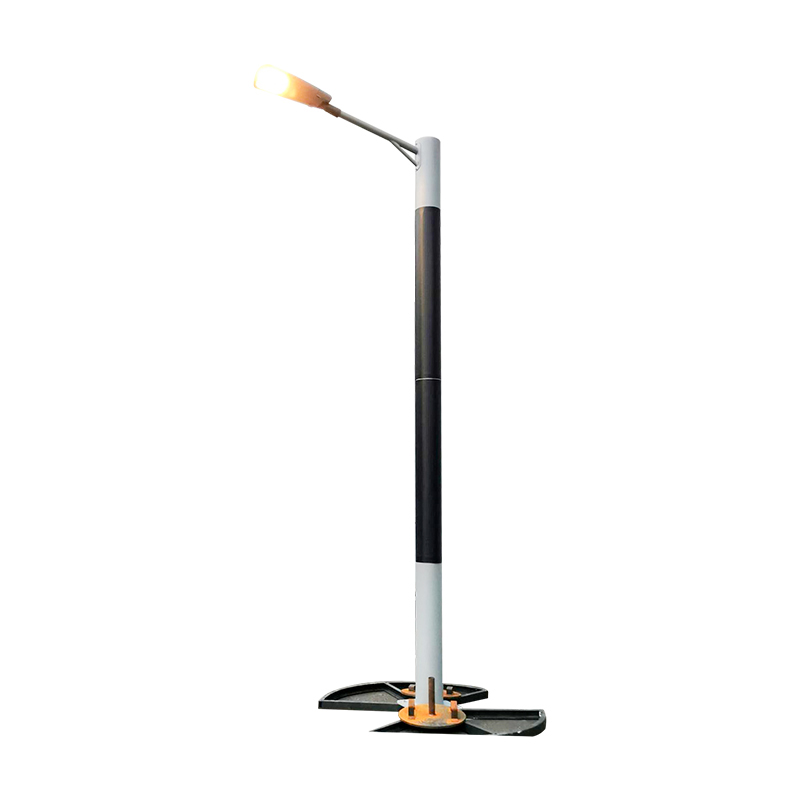 DDK-SSPL-2000 Cylinder Solar Pole Single/Double Arms And Street LED Lamps
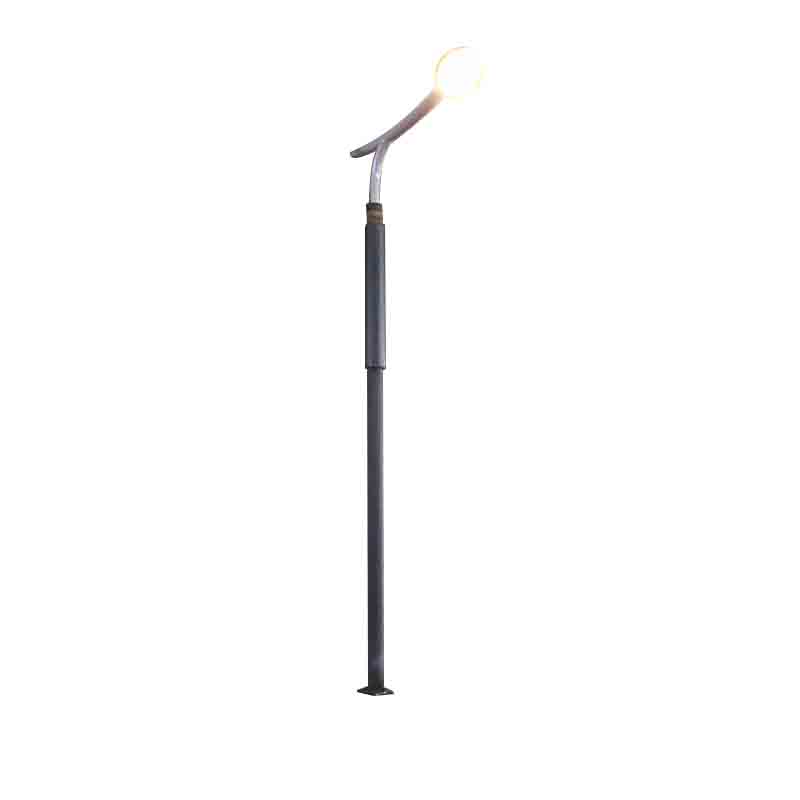 DDK-SSPL-2002 Cylinder Solar Pole With Lamp Head
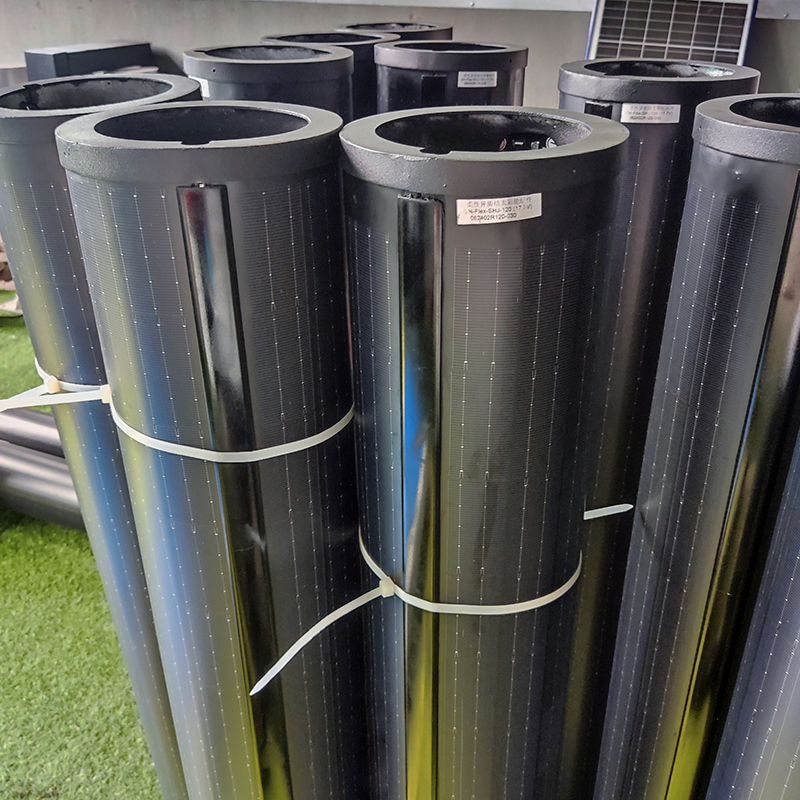 140W Flexible Solar Panel: High-Performance, Elegant and Versatile Power Solution for Lighting Poles and Park Lightings
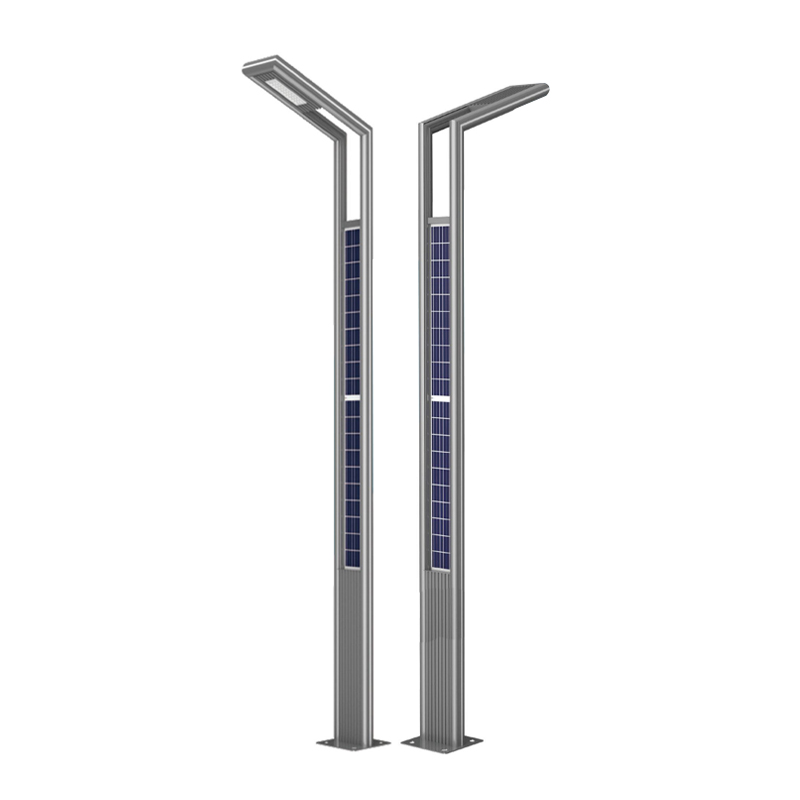 DDK-GN003 Double Sides Integrated Solar Aluminium Pole
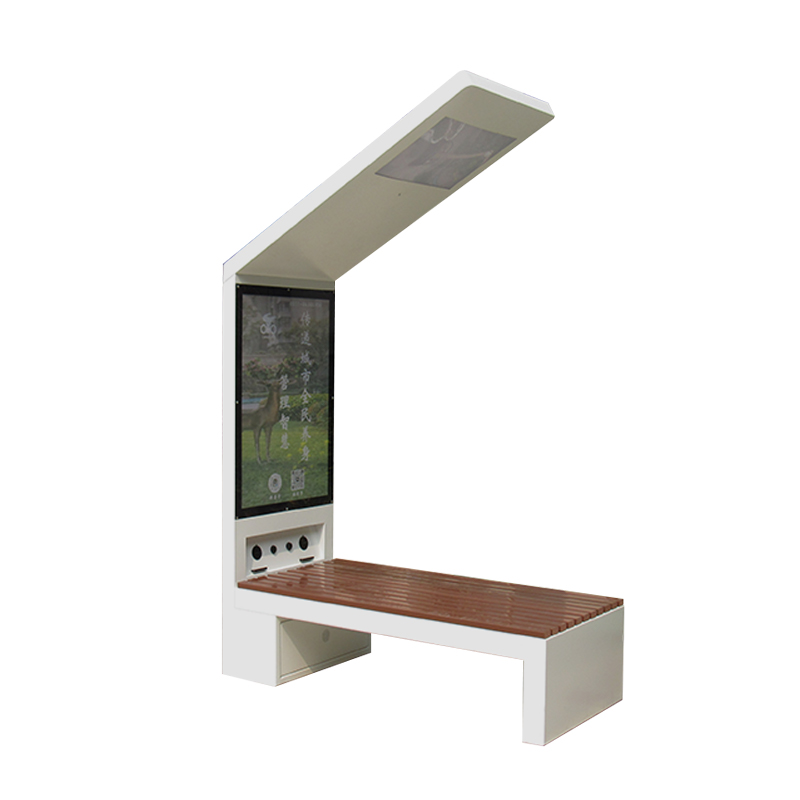 DDK-2000A Charging WIFI Solar Bench Outdoor Bench with Roof on the Top
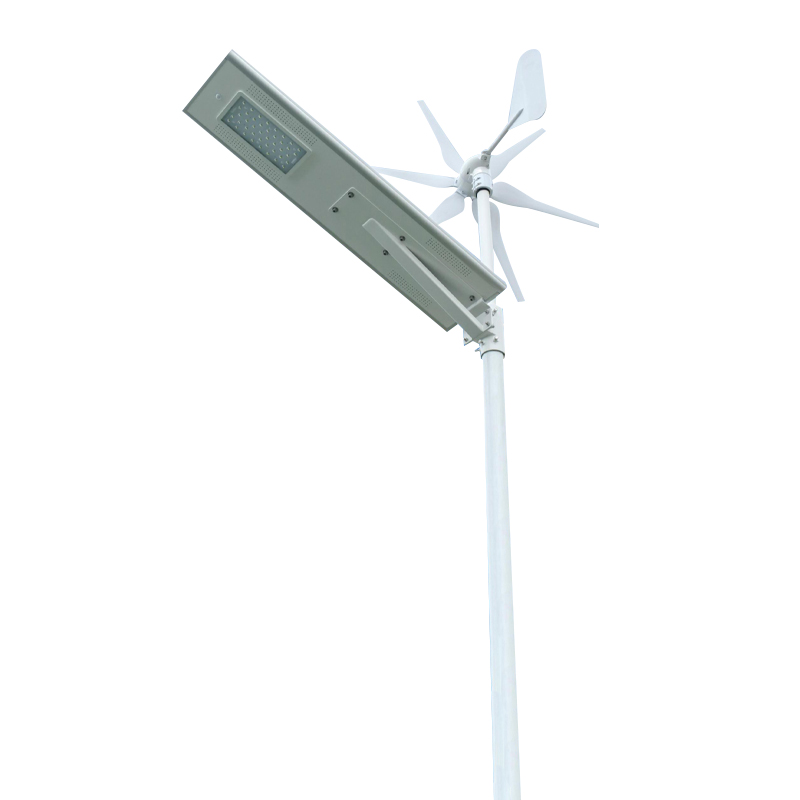 DDK G01 Solar&Wind Hybrid Integrated Optical Lens Solar All in One Light
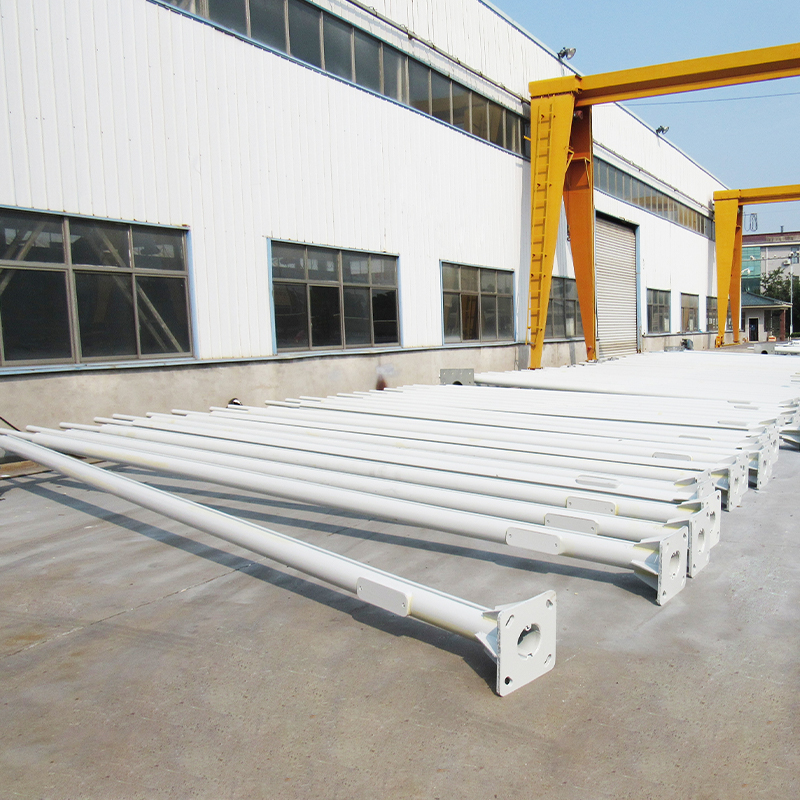 Customized Round Hexagon Octagonal Square Steel Street Light Poles for Outdoor Lightings
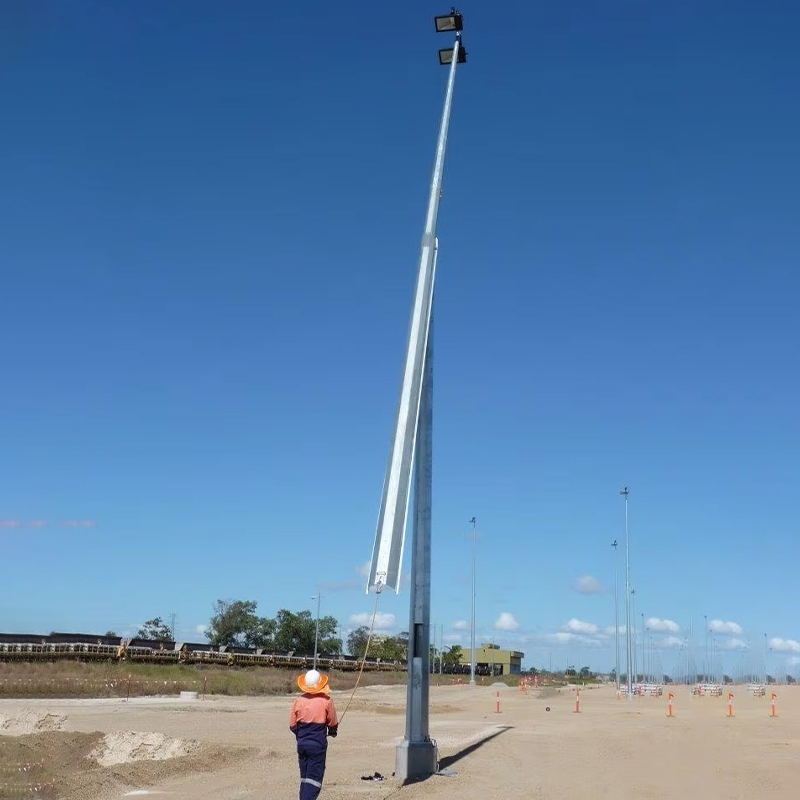 3 to 16M Galvanized Steel Hinged Poles
Contact us
180 meters south of the intersection of Nanbei Avenue and Xuba Road, Gaoyou City, Yangzhou City, Jiangsu Province, China.
+86-18811954888
ddk@cnddk.net
 English
 русский
 Español
 عربى

