
call us
+86-18811954888
2026-04-16
Street lights are among the most visible and universally familiar pieces of urban and suburban infrastructure, yet the technical decisions behind their height, type, power source, and operating mechanism are rarely understood by the people who benefit from them every night. Whether you are an urban planner selecting fixtures for a new development, a homeowner evaluating solar streetlight options for a driveway or garden path, an engineer specifying roadway lighting, or simply curious about the engineering behind the lights you pass every evening, the questions of how tall is a street lamp, what kinds of street lights exist, how do street lights work, and what the benefits of LED solar landscape lights are all have detailed and practically useful answers.
The direct answers to these questions are as follows. Street light height ranges from 5 meters for residential and pedestrian pathway lights to 20 meters or above for major highway luminaires, with the most common street light height on collector and arterial roads falling between 8 and 12 meters. The principal kinds of street lights include high pressure sodium (HPS), metal halide, fluorescent, induction, LED, and solar streetlight systems, with LED now the dominant technology for new installations worldwide. Street lights work through a combination of a power source, a control system (either a photocell, a time clock, or a networked controller), and a light source that converts electrical energy into visible light. And the benefits of LED solar landscape lights include zero grid electricity cost, installation without trenching or wiring, scalability from a single fixture to a full development, and 50,000 to 100,000 hours of LED service life that dramatically reduces maintenance compared to any previous light source technology. This article covers all of these questions in full depth.
The question of how tall is a street lamp does not have a single answer because street light height is a design variable that is determined by the road classification, the required illuminance level at the road surface, the spacing between poles, and the light distribution characteristics of the luminaire. The relationship between mounting height, pole spacing, and ground illuminance is governed by the physics of light propagation: a luminaire mounted at a greater height illuminates a larger area but at lower intensity per unit area, while a luminaire mounted lower illuminates a smaller area more intensely. Engineers optimize this relationship to achieve the target illuminance level (measured in lux, lumens per square meter) with the minimum number of poles and the most economical lamp output.
The following table summarizes the standard street light height ranges for the most common roadway and public space applications, based on international lighting standards including CIE 115 and ANSI/IES RP 8:
| Application | Mounting Height | Typical Pole Spacing | Target Illuminance |
|---|---|---|---|
| Pedestrian path and cycleway | 5 to 6 meters | 15 to 25 meters | 5 to 10 lux |
| Residential local road | 6 to 8 meters | 25 to 35 meters | 5 to 15 lux |
| Collector and distributor road | 8 to 12 meters | 30 to 45 meters | 15 to 30 lux |
| Primary arterial road | 10 to 15 meters | 35 to 50 meters | 20 to 30 lux |
| Motorway and expressway | 12 to 20 meters | 40 to 60 meters | 10 to 30 lux |
| Sports facilities and high mast | 20 to 40 meters | Single or clustered | 200 to 500 lux |
The mounting height of a street light is not merely a structural dimension; it is a critical safety parameter that determines how evenly the road surface is illuminated and how effectively drivers can detect hazards, pedestrians, and road markings in their path. Research published by the Illuminating Engineering Society shows that properly designed and maintained street lighting reduces nighttime road accidents by 25 to 40 percent compared to unlit conditions on equivalent road types, and that the uniformity of illuminance across the road surface, which is directly controlled by pole height and spacing, is as important as the average illuminance level for driver hazard detection performance. A road with uniform illuminance at 15 lux is safer for drivers than a road with average illuminance of 20 lux but severe hot spots and dark zones between poles, which is why the street light height and spacing are optimized together rather than independently.
Several practical factors beyond the target illuminance level influence the final street light height specification in any given installation:
The history of public street lighting is a history of successive lamp technology generations, each delivering improved efficiency, longer life, or better light quality than its predecessor. Understanding the different kinds of street lights and their respective performance characteristics helps in evaluating why LED and solar streetlight technologies now dominate new installations and the retrofit market.
High pressure sodium lamps produce light by passing an electrical discharge through a tube containing sodium vapor and mercury at high pressure. The dominant characteristic of HPS lighting is its intense yellow orange color (a correlated color temperature of approximately 2,000 to 2,200 K and a Color Rendering Index of 20 to 25), which was the signature of public lighting in most developed countries from the 1970s through the 2010s. HPS lamps achieve efficacies of 80 to 130 lumens per watt and have rated lamp lives of 15,000 to 24,000 hours. Despite HPS lamps' high electrical efficiency, their very poor color rendering (which makes it difficult for observers to discriminate color differences, recognize faces, and identify hazards under their light) and the environmental concern from their mercury content have driven the accelerated transition away from HPS to LED across global municipal street lighting networks over the past decade.
Metal halide lamps produce a much whiter and more color accurate light than HPS, with correlated color temperatures typically between 3,000 and 5,000 K and Color Rendering Index values of 60 to 90. They were widely used in commercial areas, retail streets, and public squares where color accuracy was valued, as well as in sports lighting applications where accurate color rendering of the playing surface and participants is important. Metal halide lamp efficacies of 70 to 100 lumens per watt are lower than HPS, and their lamp lives of 6,000 to 20,000 hours are shorter, making them more expensive to maintain than HPS in large networks.
Compact fluorescent luminaires were used in pedestrian areas, car parks, and underpass lighting where their moderate output, good color rendering, and relatively low cost were appropriate. Induction lamps, a variant that excites phosphors using high frequency magnetic fields rather than physical electrodes, were notable for their exceptional lamp life of 60,000 to 100,000 hours that reduced maintenance costs in inaccessible installations. Both technologies have been largely superseded by LED in new installations, though many induction systems remain in service because their long lamp life makes them economically viable to operate even while new LED systems offer better efficacy.
Light emitting diode (LED) street lights produce light through the electroluminescence of semiconductor materials, converting electrical energy directly into photons without the intermediate step of heating a filament or ionizing a gas column. This fundamental efficiency advantage, combined with rapid improvements in LED efficacy and cost, has made LED the standard for new street lighting installations and the preferred retrofit technology for existing networks globally. Modern LED street luminaires achieve efficacies of 130 to 220 lumens per watt, compared to 80 to 130 for HPS and 70 to 100 for metal halide, representing energy savings of 40 to 70 percent over the technologies they replace. Combined with their rated service life of 50,000 to 100,000 hours and the ability to dim them using smart controls, LED street lights have transformed the economics of public lighting networks worldwide.
A solar streetlight is a self contained lighting system that combines a photovoltaic panel, a battery storage system, an LED light source, and an electronic control unit in a single pole mounted assembly that requires no connection to the electrical grid. The solar panel charges the battery during daylight hours, and the control unit activates the LED luminaire at dusk and deactivates it at dawn, typically with dimming functions that reduce light output during low activity periods to extend battery autonomy. Solar streetlight technology has matured rapidly since the early 2010s with improvements in panel efficiency, lithium ion battery energy density, and LED efficacy all contributing to systems that can provide reliable illumination through 3 to 5 consecutive nights without sunshine in most climatic regions of the world.
The operating system of a modern street light involves four key technical elements that work together to detect ambient light conditions, deliver electrical power to the luminaire, convert that power to light with maximum efficiency, and distribute that light across the target area in the intended pattern. Understanding each of these elements answers the question of how do street lights work from first principles.
The control system of a street light determines when the light switches on and off and, in modern systems, modulates the light output level throughout the night. Three principal control approaches are used:
In a modern LED street luminaire, the power supply unit (driver) receives mains alternating current (typically 220 to 240 V AC at 50 Hz in Europe and most of Asia, or 110 to 120 V AC at 60 Hz in North America) and converts it to the direct current voltage and current profile required by the LED array. The driver provides regulated constant current output that controls the light output level precisely and protects the LEDs from the current spikes that would shorten their life. The LED array itself converts the electrical energy to light through the electroluminescence of semiconductor junctions, with conversion efficiencies in modern chips of 40 to 60 percent (meaning 40 to 60 percent of electrical input power appears as visible light).
The optical system of the luminaire, comprising the reflector geometry, the diffusing cover, and the optic lens pattern of the LED modules, shapes the raw LED output into the precise distribution pattern needed for the road surface. Modern LED street luminaires use precisely molded polycarbonate or borosilicate glass optics above each LED module that produce asymmetric light distributions optimized for road lighting, with the IES Type II, III, and IV distributions (defined by ANSI/IES standards) being the most commonly specified for road and pathway applications. These controlled distributions minimize wasted light thrown above the horizontal (reducing light pollution) and ensure that the available light output is concentrated where it is needed on the road surface.
A solar streetlight operates through a complete energy conversion and storage cycle that occurs daily:
The benefits of LED solar landscape lights combine the advantages of two transformative lighting technologies, LED efficiency and longevity with solar independence from the grid, into a product category that addresses nearly every practical limitation of previous outdoor lighting approaches. Understanding these benefits explains why LED solar landscape lights have moved from a niche product for off grid locations to a mainstream choice for residential gardens, commercial landscapes, and rural community lighting installations worldwide.
The most immediately tangible benefit of LED solar landscape lights is the elimination of ongoing electricity costs for outdoor lighting. A conventional 100 watt HPS pathway light operating 12 hours per night for 365 days per year consumes 438 kWh annually; at a typical residential electricity rate of $0.15 per kWh, this costs approximately $66 per fixture per year in electricity alone, not counting the meter, wiring, and distribution infrastructure costs. A solar streetlight with equivalent output replaces this entirely, with zero electricity cost throughout its service life. For a residential development with 20 pathway lights, converting from grid powered HPS to LED solar landscape lights can reduce outdoor lighting electricity costs from $1,320 to $0 annually, with the capital cost of the solar fixtures typically recovered through electricity savings within 3 to 5 years at standard residential electricity rates.
Grid powered street and landscape lights require underground cable runs from the power distribution system to each pole, involving excavation, conduit installation, cable laying, backfilling, and surface reinstatement that can cost $50 to $200 per meter of cable run depending on ground conditions and the number of circuits involved. In a landscape installation where lights are spaced 30 meters apart along a 300 meter path, the civil works cost for grid connections can exceed the cost of the light fixtures themselves. Solar landscape lights eliminate this civil infrastructure requirement entirely, with installation consisting only of setting the pole and securing it in the ground, a process that takes 30 to 90 minutes per fixture compared to the multi day civil works process for grid connections.
The LED component of a solar landscape light has a rated life of 50,000 to 100,000 hours to L70 (the point at which the LED output has depreciated to 70 percent of its initial value). At an average operation time of 12 hours per night, 50,000 hours represents 11 years and 100,000 hours represents 22 years of operation before the LED requires replacement. This service life dwarfs the 15,000 to 24,000 hour life of HPS lamps, the 6,000 to 20,000 hour life of metal halide lamps, and the 10,000 to 15,000 hour life of compact fluorescent lamps, dramatically reducing the maintenance frequency and labor cost associated with lamp replacement throughout the system's operational life.
LED solar landscape lights can be installed as individual standalone fixtures or as a complete system of dozens or hundreds of units across a large site, with no requirement for grid infrastructure capacity planning, load balancing, or protective equipment sizing that grid powered systems require. Additional fixtures can be added to an existing solar lit landscape at any time without upgrading electrical distribution infrastructure, and fixtures can be relocated if the landscape design changes without the cost of rerouting underground cables. This flexibility makes LED solar landscape lights the preferred choice for phased developments, temporary installations, and locations where future landscape changes are anticipated.
The combination of solar power and LED efficiency produces a dramatically lower carbon footprint per lumen hour of illumination than any grid powered lighting technology. A grid powered 100 watt HPS lamp drawing electricity from a national grid with an average carbon intensity of 0.3 kg CO2 per kWh produces approximately 131 kg of CO2 per year per fixture. An equivalent solar LED fixture produces essentially zero operational carbon emissions, with its only carbon cost being the embodied carbon of manufacturing the photovoltaic panel, battery, and luminaire, which is typically recovered through carbon neutral operation within 1 to 3 years.
A comprehensive comparison of the three most relevant current and legacy street lighting configurations helps decision makers understand where LED solar landscape lights perform best and where grid powered LED or remaining HPS systems may still have a role in specific contexts.
Selecting the correct solar streetlight specification for a given application requires matching the system's energy generation capacity, battery storage capacity, and LED output power to the illuminance requirement of the application and the solar resource available at the installation location. The following practical guidance covers the most common residential and commercial landscape lighting contexts where solar streetlights are specified.
For illuminating garden paths, driveways, and entrance areas at residential properties, LED solar landscape lights with 10 to 30 watt LED output and integrated monocrystalline solar panels of 20 to 60 watts are appropriate for most standard applications in temperate and subtropical climates. The target illuminance for pedestrian path safety is 5 to 10 lux at ground level, which can be achieved with pole mounted units at 4 to 6 meters height and 10 to 15 meter spacing for standard models. Motion sensor activation, which switches the light from a low level standby mode to full output when movement is detected within the coverage zone, extends battery autonomy significantly and is recommended for driveways and access routes where presence is intermittent rather than continuous throughout the night.
Rural roads and remote community lighting represent the highest value application context for solar streetlights because the alternative, grid extension at costs of $15,000 to $50,000 per kilometer in rural areas, is often economically unjustifiable for the population served. Solar streetlights for rural road applications typically use 60 to 120 watt LED luminaires on 8 to 10 meter poles with 100 to 200 watt solar panels and 200 to 400 watt hour lithium iron phosphate battery packs sized for 3 to 5 days of battery autonomy without sun. The World Bank and international development organizations have identified solar streetlights as one of the highest impact rural energy access interventions available, with documented reductions in road accident rates, improvements in nighttime economic activity, and increases in perceived community security in off grid communities that have received solar streetlight installations.
Commercial car parks and retail landscape areas require illuminance levels of 15 to 30 lux for safety and security, achievable with solar streetlights using 60 to 100 watt LED luminaires at 6 to 8 meter mounting heights in most retail site contexts. The main selection consideration in commercial settings is ensuring adequate battery capacity for the 10 to 14 hour winter nights in mid latitude locations where the solar day is shortest. Systems sized with battery storage sufficient for 14 hours of operation at full LED output will underperform in winter when battery recharge time is limited; specifications should include either a dimming profile that reduces consumption in the late night period or additional panel capacity to accelerate recharge in lower sun conditions.
The convergence of LED technology, wireless communication, and urban data systems has created a new generation of smart street lighting that goes beyond simply illuminating roads to becoming an active component of urban management infrastructure. Understanding how smart street lighting systems work and what benefits they deliver explains why cities worldwide are investing in networked control platforms alongside LED and solar streetlight hardware.
Smart street lighting systems equipped with motion and presence detection sensors can adjust luminaire output level in real time based on the detected presence of vehicles or pedestrians in the coverage zone. In a typical adaptive dimming scenario, a street luminaire operates at 30 to 50 percent of its full output during quiet nighttime periods; when a vehicle or pedestrian is detected approaching the coverage area, the luminaire dims up to full output within 1 to 2 seconds, providing full illuminance for the traveler and returning to standby brightness after the detected presence has passed. Cities that have deployed adaptive dimming street lighting on residential and secondary roads report additional energy savings of 40 to 60 percent on top of the savings already achieved by converting from HPS to LED, translating to total energy reductions of 60 to 80 percent compared to the original HPS infrastructure. At this level of efficiency, the remaining electricity cost of the street lighting network becomes a minor line item in the municipal services budget compared to its predecessor technology.
Each smart luminaire in a connected network reports its operational status, energy consumption, lamp hours operated, and any fault conditions to the central management platform in real time or on a scheduled reporting cycle. This visibility transforms the maintenance model for street lighting from a reactive process (where faults are discovered by citizen reports after days or weeks of outage) to a proactive process where the network management system flags luminaires approaching the end of expected service life, reports fault conditions within minutes of occurrence, and allows maintenance resources to be dispatched to confirmed fault locations rather than being deployed on time based inspection tours of the entire network. Municipalities that have implemented networked street lighting management report reductions of 30 to 50 percent in maintenance labor costs through the elimination of night inspection tours and the optimization of repair vehicle routing to address multiple fault reports in a single maintenance visit.
Modern smart street lighting poles increasingly serve as the mounting platform for additional urban sensing and communication infrastructure including air quality monitors, noise level sensors, traffic flow counters, pedestrian counting systems, and small cell telecommunications equipment. The street lighting network, which already provides widespread geographic coverage and a power source at every installation point, represents the natural deployment platform for this distributed urban sensing infrastructure. Cities in Northern Europe, East Asia, and North America have pioneered the deployment of multipurpose smart poles that combine LED street lighting with cellular base stations and urban sensors, reducing the total infrastructure cost of smart city sensing systems by sharing the pole, foundation, power supply, and communication cable infrastructure across multiple functions.
As street lighting systems become more capable and widespread, the impacts of artificial light at night on human health, wildlife, and astronomical observation have become increasingly important considerations in lighting design. Responsible street lighting design that addresses these concerns is not merely a regulatory compliance exercise but a genuine improvement in the quality of lighting infrastructure for communities and their natural environment.
Traditional globe and lantern style street lights emit a significant portion of their light upward into the sky, where it serves no illumination purpose but contributes to skyglow that obscures stars and affects nocturnal animals whose behavior depends on natural light cycles. Full cutoff luminaires, in which the luminaire housing and optic geometry prevent any light from being emitted above the horizontal plane, eliminate uplight entirely. LED street luminaires with full cutoff optics and backlight and glare (BUG) ratings meeting IES TM 15 criteria for the installation zone can reduce sky glow contribution by 80 to 95 percent compared to older globe style HPS lanterns, while maintaining or improving ground level illuminance through more effective directional control of the available light output. The adoption of full cutoff LED lighting in communities near astronomy research facilities, natural reserves, and rural areas where residents value the night sky has been one of the most positively received outcomes of the LED street lighting transition.
The correlated color temperature (CCT) of street lighting affects both human health and wildlife behavior through the suppression of melatonin production by blue rich light. Early LED street lights were frequently specified at 5,000 to 6,500 K (cool white) because these sources offered the highest efficacy at the time, but research has consistently shown that cool white LED sources with significant blue content suppress melatonin production more strongly in both humans and nocturnal animals than the warmer sources they replaced, potentially affecting sleep quality in residents living adjacent to bright, cool street lighting. Current best practice guidance from the American Medical Association (AMA) recommends street lighting CCTs of 3,000 K or below for residential areas, a recommendation that warm white LED sources at 2,700 to 3,000 K can meet while still achieving efficacy levels of 120 to 160 lumens per watt that far exceed any legacy light source technology. The good news for both energy efficiency and health is that the performance gap between warm and cool LED has narrowed significantly as LED technology has matured, making warm white the correct specification for most residential street lighting without any energy efficiency penalty.
The most fundamental principle of responsible street and landscape lighting design is ensuring that light is applied only where it is needed, at the levels that are actually required for the safety and security function, and not beyond. Over illumination, defined as providing more light than the applicable standard requires for the road classification or area type, is widespread in many existing street lighting networks and represents both unnecessary energy expenditure and unnecessary light pollution. Modern lighting design tools allow photometric calculations to be performed before installation to confirm that the proposed fixture type, mounting height, and pole spacing achieves the target illuminance level without exceeding it by more than 20 to 30 percent, enabling better and more responsible lighting design to be delivered with each new installation and retrofit project.
Related Products
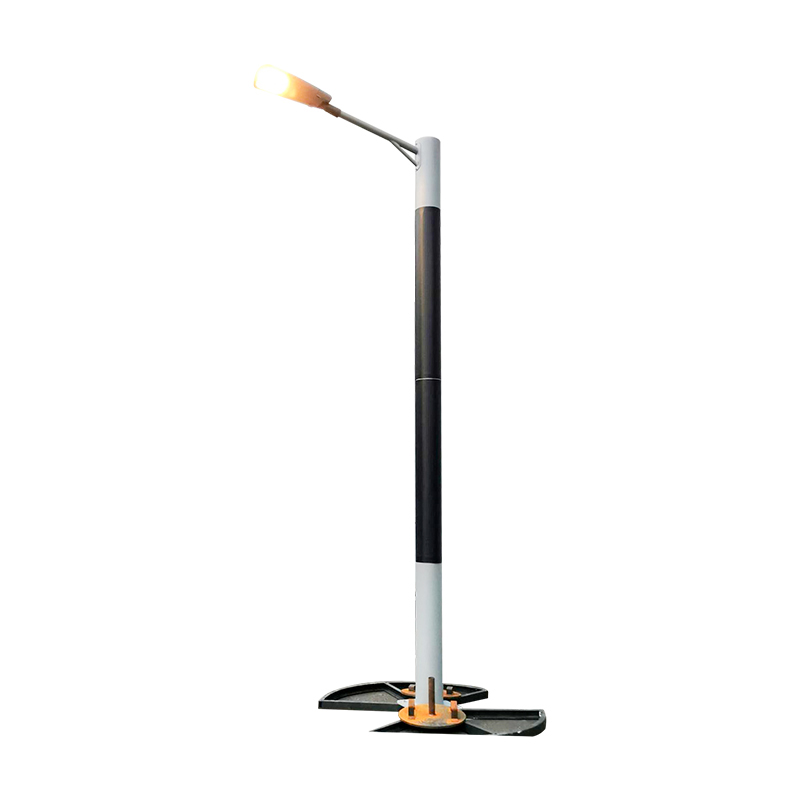 DDK-SSPL-2000 Cylinder Solar Pole Single/Double Arms And Street LED Lamps
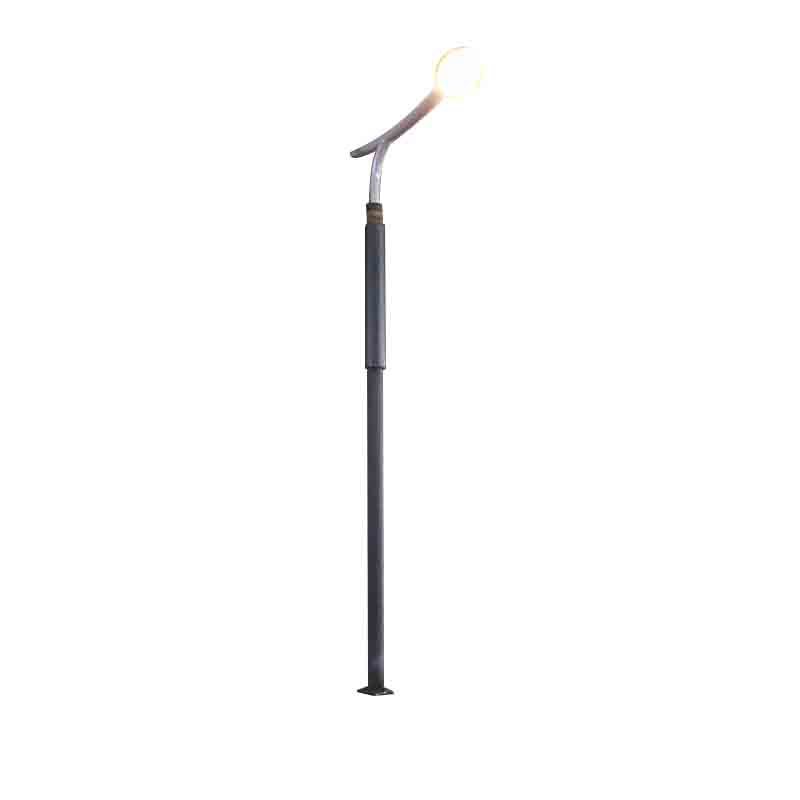 DDK-SSPL-2002 Cylinder Solar Pole With Lamp Head
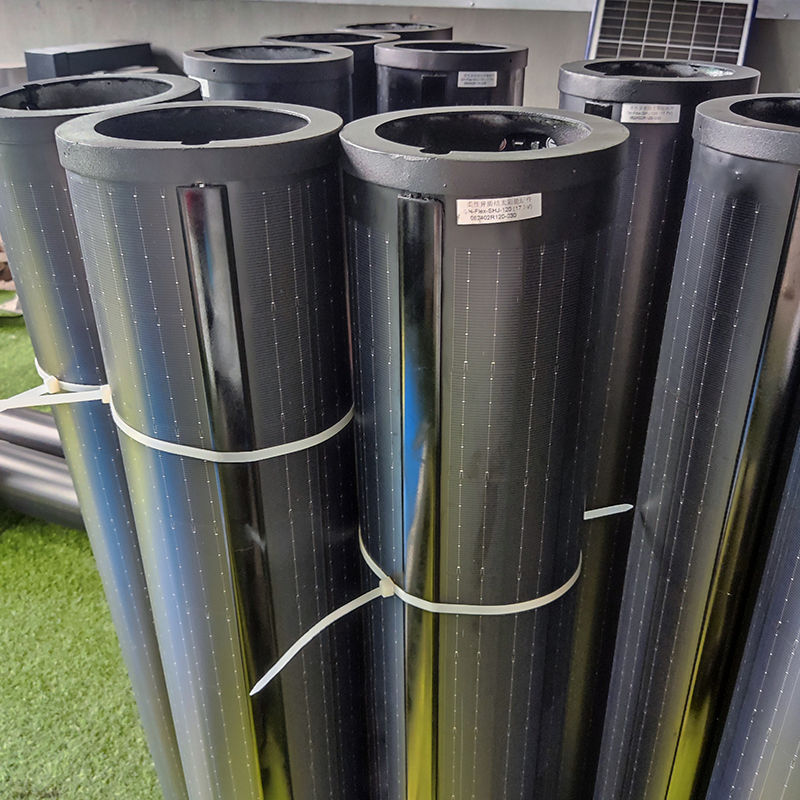 140W Flexible Solar Panel: High-Performance, Elegant and Versatile Power Solution for Lighting Poles and Park Lightings
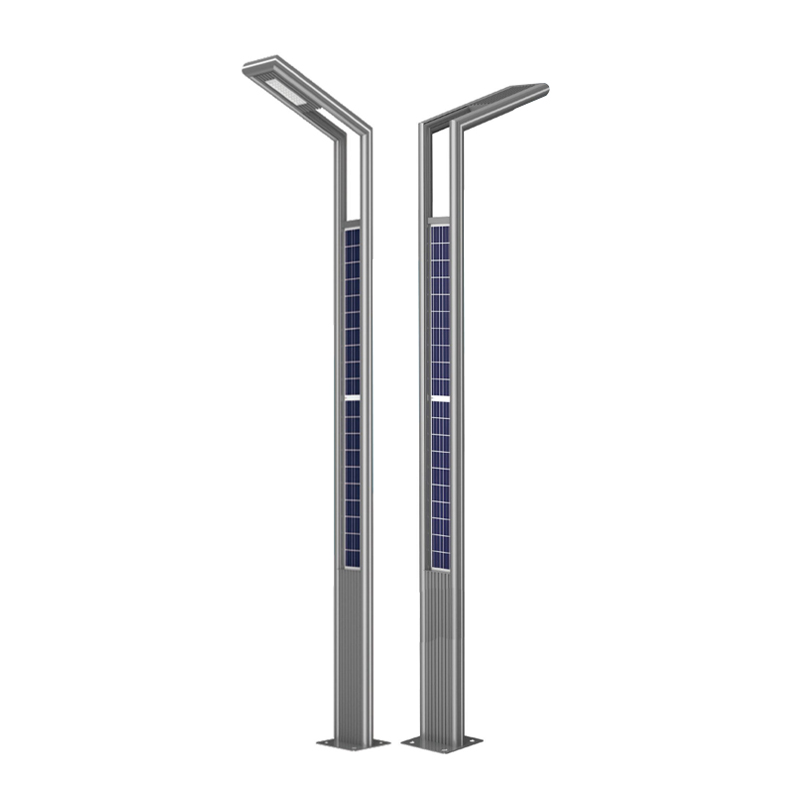 DDK-GN003 Double Sides Integrated Solar Aluminium Pole
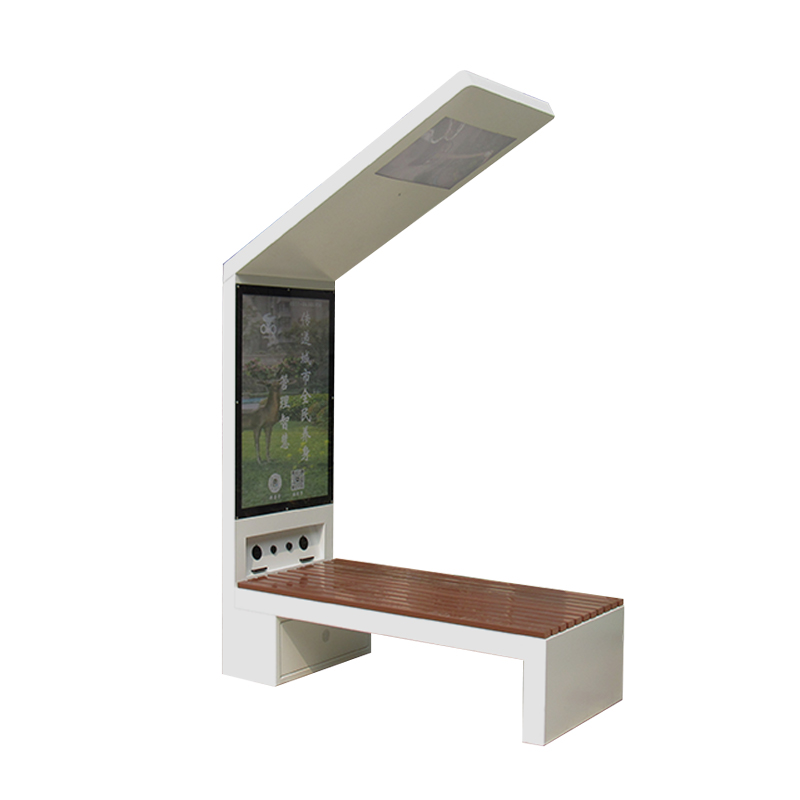 DDK-2000A Charging WIFI Solar Bench Outdoor Bench with Roof on the Top
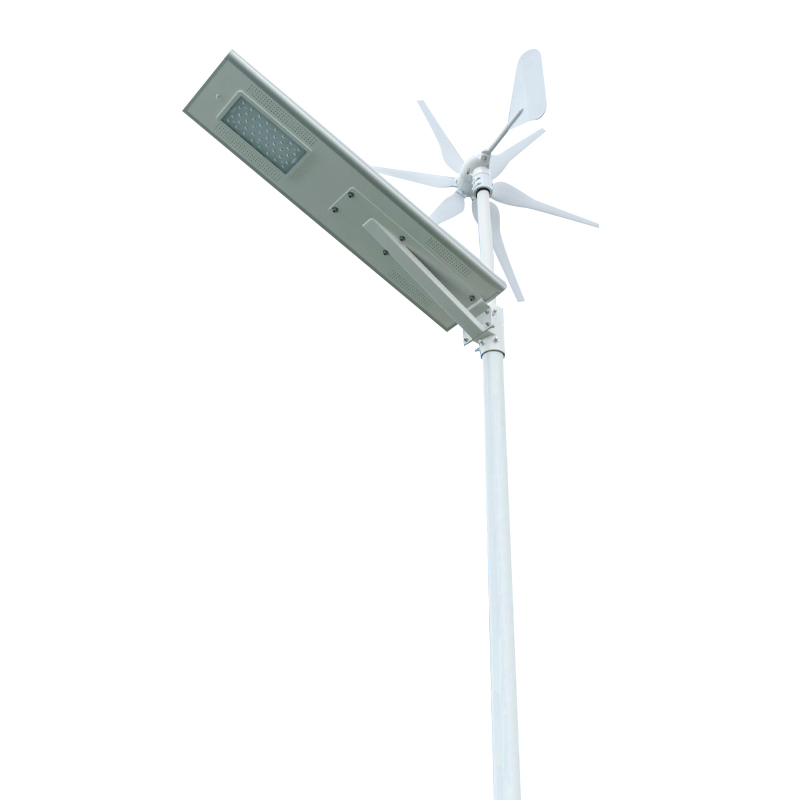 DDK G01 Solar&Wind Hybrid Integrated Optical Lens Solar All in One Light
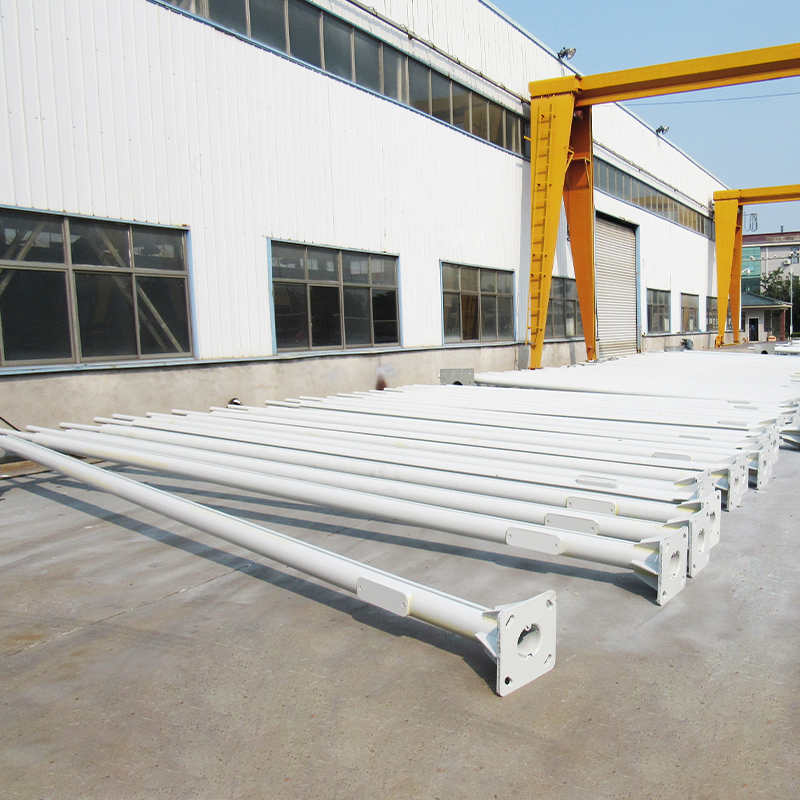 Customized Round Hexagon Octagonal Square Steel Street Light Poles for Outdoor Lightings
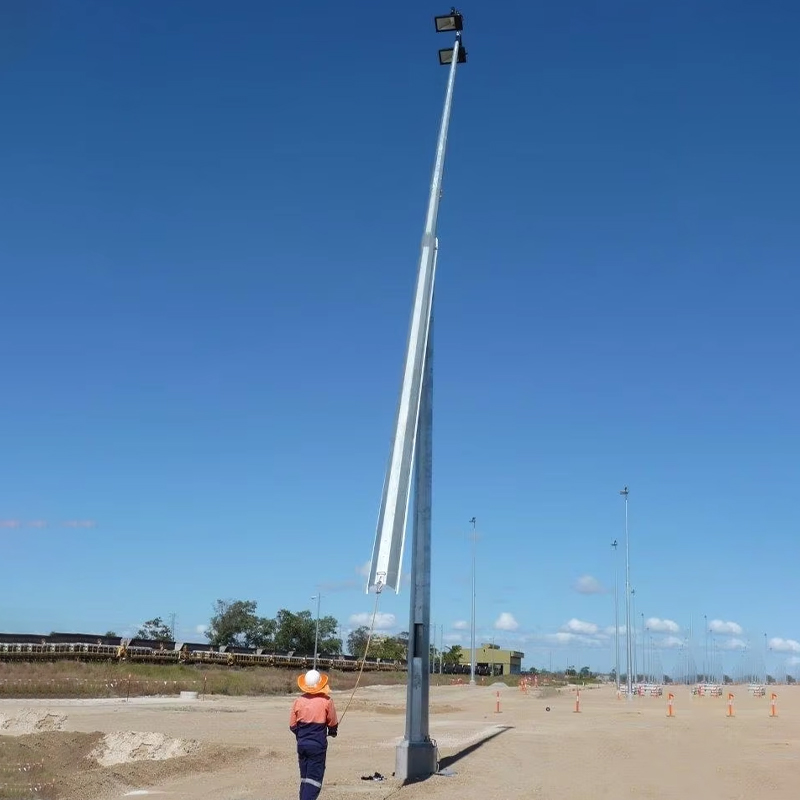 3 to 16M Galvanized Steel Hinged Poles
Contact us
180 meters south of the intersection of Nanbei Avenue and Xuba Road, Gaoyou City, Yangzhou City, Jiangsu Province, China.
+86-18811954888
ddk@cnddk.net
 English
 русский
 Español
 عربى
عربى

