What You Need to Know About Street Lights
Before diving into the details, here are the direct answers to the most common questions about street lights:
- The height of a street light pole typically ranges from 20 to 40 feet (6 to 12 meters) for standard roadways, with highway poles reaching up to 100 feet
- Street light spacing is generally calculated at 2.5 to 3 times the mounting height of the pole, meaning a 30-foot pole would have lights spaced 75 to 90 feet apart
- The cost of a street light pole ranges from $2,000 to $15,000 or more for the complete installed unit, depending on material, height, and fixture type
- The size of street lights (luminaire head) typically spans 12 to 24 inches in width, with the fixture housing ranging from small cobrahead styles to large roadway luminaires
- A mercury vapor light is a high-intensity discharge (HID) lamp that produces light by passing an electric arc through mercury vapor, emitting a distinctive bluish-white glow
Each of these topics carries significant implications for road designers, municipal planners, property developers, and homeowners. The sections below explore every aspect in practical detail.
Height of Lamppost and Street Light Pole: Standards by Application
The height of a lamppost is not arbitrary. It is determined by the type of road, the required illuminance level, the spacing between poles, and local design standards. Choosing the wrong mounting height leads to over-illumination, under-illumination, excessive glare, or wasted energy. Understanding the standards helps planners make correct decisions from the start.
Residential Street Lighting
In residential neighborhoods, the height of a street light pole is typically between 20 and 25 feet (6 to 7.5 meters). This lower mounting height is appropriate because:
- Traffic speeds are lower, requiring less widespread illumination
- Pedestrian activity is higher, necessitating lighting closer to ground level
- Shorter poles reduce light pollution and neighborhood glare
- Decorative poles in residential areas are typically 10 to 16 feet tall
Decorative lantern-style lampposts used along sidewalks and pedestrian walkways in residential areas often stand between 8 and 14 feet, providing intimate, comfortable lighting rather than wide-area flood illumination.
Collector Roads and Arterial Streets
For collector roads (roads that connect neighborhoods to major arterials) and arterial streets carrying moderate to heavy traffic, the standard height of a street light pole is 25 to 35 feet (7.5 to 10.5 meters). These poles must illuminate wider travel lanes, bike lanes, and sidewalks simultaneously, requiring greater mounting height to spread light effectively.
Highway and Major Intersection Lighting
Highways, interchanges, and large intersections require significantly taller poles. High-mast lighting towers at major highway interchanges typically stand between 80 and 150 feet (24 to 45 meters) tall. These towers mount multiple luminaire heads (typically 4 to 16 fixtures per pole) and illuminate very large areas from a single point, reducing the total number of poles required.
For standard highway segments without high-mast lighting, roadway poles of 35 to 45 feet (10.5 to 13.5 meters) are common.
Parking Lot and Area Lighting
Parking lot light poles generally stand between 15 and 30 feet (4.5 to 9 meters) depending on the size of the lot. Larger commercial parking areas may use poles of 25 to 30 feet with multiple arm-mounted fixtures, while smaller lots may use 15 to 20 foot poles with single fixtures.
Table 1: Standard height of a street light pole by application type
Factors That Determine the Height of a Lamppost
Several variables influence the final selection of lamp post height for any given project:
- Illuminance requirements: The target foot-candle or lux level at road surface dictates both fixture output and mounting height
- Road width: Wider roads require taller poles to ensure light reaches across all lanes
- Spacing constraints: If poles must be placed at greater distances due to utilities or driveways, taller poles with more powerful fixtures may be required
- Glare control: Excessive mounting height can cause glare for motorists, especially on curves
- Aesthetic requirements: Historic districts and scenic corridors often mandate specific pole styles and heights
- Wind loading: Taller poles must withstand greater wind forces and require heavier wall thickness and base design
Street Light Spacing: How Far Apart Should Poles Be Placed?
The standard rule of thumb for street light spacing is 2.5 to 3 times the mounting height of the pole. For a 30-foot pole, this translates to spacing of 75 to 90 feet between poles. However, this is a starting estimate only. Actual spacing is determined through photometric calculations that verify the required illuminance levels are achieved at the road surface throughout the installation.
Spacing Formulas and Photometric Design
Professional lighting designers use photometric software (such as AGi32, DIALux, or Revit with lighting plugins) to model light distribution across a road surface. These tools take into account the fixture's photometric data (candela distribution), pole height, road width, pavement reflectance, and target illuminance levels to determine optimal spacing.
A simplified formula used for initial spacing estimates is:
Spacing = (Fixture Lumens x Coefficient of Utilization x Maintenance Factor) / (Required Footcandles x Road Width)
For most standard roadways using modern LED luminaires with 10,000 to 20,000 lumens output, this formula produces spacing values of 80 to 150 feet for mounting heights of 25 to 35 feet.
Spacing by Road Type and Mounting Configuration
Pole placement configuration also affects spacing. There are several standard configurations:
- Single side placement: Poles on one side only. Used for narrow residential streets. Spacing is typically 1.5 to 2 times the pole height
- Opposite (staggered) placement: Poles alternate sides. Used for wider roads. Spacing per side is 2 to 3 times the pole height
- Opposite (paired) placement: Poles face each other across the road. Used for very wide roads or divided highways. Spacing is 3 to 4 times pole height
- Median placement: Poles mounted in the center median. Common on divided arterials. Spacing is 2.5 to 3 times pole height
Table 2: Recommended street light spacing by road type and pole height
IESNA and AASHTO Spacing Guidelines
In the United States, the Illuminating Engineering Society of North America (IESNA) publishes RP-8, the standard for roadway lighting design. IESNA RP-8 specifies target illuminance levels by road classification and pedestrian conflict zone, which directly drive spacing decisions. The American Association of State Highway and Transportation Officials (AASHTO) also publishes roadway lighting guidelines aligned with IESNA standards.
Key IESNA target illuminance levels include:
- Residential streets: 0.6 to 1.0 footcandles average maintained
- Collector roads: 1.0 to 1.4 footcandles average maintained
- Arterial streets: 1.4 to 2.0 footcandles average maintained
- High pedestrian conflict areas: up to 4.0 footcandles
Street Light Pole Cost: What to Budget for Materials and Installation
The total cost of a street light pole installation typically ranges from $2,000 to $15,000 per pole, including the pole itself, the luminaire, foundation, electrical connection, and labor. Understanding the cost breakdown helps municipalities, developers, and property managers plan accurate budgets.
Pole Material and Cost by Type
Street light poles are manufactured from several different materials, each with distinct cost, performance, and longevity characteristics:
Table 3: Street light pole cost by material type
Luminaire (Fixture) Cost
The luminaire mounted on top of the pole is a significant part of the total cost. Modern LED street light fixtures have largely replaced older technologies such as high-pressure sodium (HPS), metal halide, and mercury vapor lamps. LED fixture costs include:
- Small LED roadway luminaire (20 to 50 watts): $150 to $350
- Medium LED roadway luminaire (60 to 120 watts): $300 to $700
- Large LED roadway luminaire (150 to 250 watts): $600 to $1,500
- High-mast LED fixture assembly (multi-head): $3,000 to $15,000
Foundation and Electrical Connection Costs
The below-ground work is often underestimated in street light pole cost estimates. A standard direct-buried or anchor-bolt foundation for a 25 to 35 foot pole typically costs $500 to $2,000 depending on soil conditions and local labor rates. Trenching and electrical conduit installation from the nearest power source to each pole adds $30 to $80 per linear foot of trench, meaning a 200-foot run adds $6,000 to $16,000 to the project.
Electrical service connection fees charged by the utility company vary widely but typically range from $500 to $3,000 per point of connection.
Total Installed Cost Per Pole
When all components are combined, the total installed street light pole cost for typical roadway applications breaks down as follows:
- Standard galvanized steel pole (30 ft) with LED luminaire on a residential street: $2,000 to $5,000 per pole
- Aluminum pole (35 ft) with mid-range LED on a collector road: $4,000 to $8,000 per pole
- Decorative cast iron pole with ornamental LED fixture: $6,000 to $15,000 per pole
- High-mast steel tower with multi-head LED assembly at a highway interchange: $25,000 to $80,000 per tower
Annual operating costs for a modern LED street light are typically $50 to $150 per year in electricity, compared to $150 to $300 per year for older HPS or mercury vapor fixtures of comparable output.
What Is a Mercury Vapor Light? Technology, Uses, and Phase-Out
A mercury vapor light is a type of high-intensity discharge (HID) lamp that produces light by passing an electric arc through a pressurized mixture of mercury vapor and argon gas inside a quartz inner bulb. It was one of the earliest and most widely deployed electric street lighting technologies, introduced commercially in the 1930s and dominant through the 1970s and 1980s.
How Mercury Vapor Lights Work
The operation of a mercury vapor light involves several stages:
- When power is applied, an arc forms between two electrodes in the inner quartz tube, which contains mercury and argon
- The argon gas initiates the arc at low temperature
- As the lamp warms up over 3 to 5 minutes, the mercury vaporizes and the arc shifts from the argon to the mercury vapor
- The excited mercury atoms emit ultraviolet radiation, which strikes the phosphor coating on the outer glass envelope and is converted to visible light
- The light output stabilizes at a characteristic bluish-white color with a correlated color temperature of approximately 3,000 to 7,000K depending on lamp design
Mercury vapor lamps require a ballast to regulate current, and they cannot be restarted immediately after being turned off because the internal pressure drops and the arc cannot re-establish until the lamp cools (typically 3 to 6 minutes).
Characteristics and Performance of Mercury Vapor Lights
- Light output: A standard 400-watt mercury vapor lamp produces approximately 21,000 to 23,000 lumens at the start of life
- Color rendering index (CRI): Typically 15 to 55, which is very poor compared to modern LED (CRI 70 to 90+). Colors appear distorted, particularly reds and greens
- Efficacy: Approximately 30 to 65 lumens per watt, compared to 100 to 180+ lumens per watt for modern LED
- Lamp life: 16,000 to 24,000 hours, which was considered long at the time
- Warm-up time: 3 to 5 minutes to full output
- Restrike time: 3 to 6 minutes after power interruption before the lamp can restart
Why Mercury Vapor Lights Are No Longer Used
In 2008, the U.S. Environmental Protection Agency (EPA) and the Department of Energy effectively banned the manufacture and import of mercury vapor ballasts for general illumination applications, accelerating the phase-out of this technology. The primary reasons for discontinuation include:
- Environmental hazard: Each lamp contains 15 to 100 milligrams of mercury, a toxic heavy metal. Broken or improperly disposed lamps pose soil and water contamination risks
- Poor energy efficiency: Mercury vapor lamps waste 35 to 70% of consumed electricity as heat rather than light
- Poor color quality: The bluish-white, low-CRI light distorts colors and reduces visibility of road hazards compared to modern sources
- Lumen depreciation: Mercury vapor lamps lose up to 50% of their initial light output over their rated life while continuing to consume the same electricity
- Better alternatives: High-pressure sodium, metal halide, and subsequently LED technology all offer superior efficiency, color quality, and longevity
Where Mercury Vapor Lights Can Still Be Found
Despite being phased out of new installations, mercury vapor street lights can still be found in older neighborhoods and municipalities that have not yet completed infrastructure upgrades. Retrofitting an old mercury vapor fixture with a modern LED replacement typically reduces energy consumption by 50 to 75% and eliminates mercury disposal concerns. Many utilities and municipalities offer rebate programs specifically for mercury vapor to LED conversions.
Size of Street Lights: Luminaire Dimensions and Output Classes
The size of street lights refers both to the physical dimensions of the luminaire housing and to the output class (lumen level and wattage) of the fixture. Street light luminaire widths typically range from 12 to 36 inches, with lengths from 18 to 60 inches, depending on the fixture type and output level.
Physical Dimensions by Fixture Type
The most common street light fixture styles and their typical physical dimensions include:
Table 4: Physical size of street lights by fixture type and application
Output Classes and Wattage
The size of street lights in terms of light output is categorized by lumen output and corresponding wattage. Modern LED street lights are classified into output categories aligned with the types of roads they serve:
- Type I (pedestrian paths, narrow residential streets): 2,000 to 5,000 lumens, 20 to 50 watts LED
- Type II (residential streets, small parking areas): 5,000 to 10,000 lumens, 40 to 80 watts LED
- Type III (collector roads, medium parking lots): 10,000 to 16,000 lumens, 80 to 130 watts LED
- Type IV (arterial roads, large parking areas): 15,000 to 25,000 lumens, 120 to 200 watts LED
- Type V (high-mast, highway interchanges): 25,000 to 60,000+ lumens per head, 200 to 480 watts LED per head
Light Distribution Patterns
The size of street lights also relates to the optical distribution pattern they produce. The IESNA classifies roadway luminaire distributions as:
- Type I distribution: Narrow lateral spread, suited for pathways and narrow roads
- Type II distribution: Moderate lateral spread, for residential and collector roads
- Type III distribution: Wide lateral spread, for wider roadways mounted on one side
- Type IV distribution: Forward throw, for mounting at the edge of wide roadways
- Type V distribution: Circular, symmetrical spread, for area and high-mast applications
Matching the correct distribution type to the road geometry is essential. Using a Type V distribution on a narrow residential road would waste over 50% of light on lawns and buildings rather than the road surface.
Comparison of Old and New Street Light Technologies by Size and Efficiency
Table 5: Comparison of street light technologies by size, output, and efficiency
Choosing the Right Street Light Setup: Practical Decision Guide
Selecting the right combination of pole height, spacing, fixture size, and light technology requires balancing technical requirements, aesthetic goals, and budget constraints. The following practical framework covers the key decisions:
Step 1: Identify the Road Classification and Illuminance Target
Begin by classifying the road according to its function (residential, collector, arterial, highway) and looking up the applicable IESNA RP-8 illuminance requirements for that road class. This establishes the minimum average maintained footcandle level that the lighting system must achieve at road surface.
Step 2: Select Mounting Height Based on Road Width
A general guideline is that the mounting height of the lamp post should equal approximately 1.0 to 1.5 times the road width for single-side placement, or about 0.5 to 0.75 times the road width for opposite-side placement. A 40-foot-wide road with opposite-side poles would typically use poles of 20 to 30 feet in height.
Step 3: Estimate Spacing Using the Multiplier Rule
Apply the 2.5 to 3 times mounting height rule to get an initial spacing estimate, then verify with photometric software. Always check that the uniformity ratio (the ratio of average illuminance to minimum illuminance) stays within IESNA limits, typically 3:1 to 6:1 depending on road classification.
Step 4: Select Luminaire Size and Distribution Type
Match the luminaire output class and distribution type to the road width and required illuminance. For a 30-foot-wide residential road with 25-foot poles spaced 65 feet apart, a Type II or Type III distribution LED fixture producing 8,000 to 12,000 lumens would typically be appropriate.
Step 5: Evaluate Total Street Light Pole Cost
Obtain quotes for the complete installed cost including pole, luminaire, foundation, trenching, and electrical connection. Compare the life-cycle cost over 20 years, factoring in energy consumption, maintenance, and lamp replacement costs. Modern LED systems almost always show a lower 20-year total cost than older HID or mercury vapor installations despite higher upfront hardware costs.
Street Light Regulations, Safety Standards, and Environmental Considerations
Street lighting installations must comply with a range of regulations covering structural safety, electrical codes, photometric performance, and environmental impact. Planners and specifiers should be aware of the following requirements.
Structural and Wind Load Requirements
Street light poles must be engineered to withstand wind loads as specified by AASHTO Standard Specifications for Structural Supports for Highway Signs, Luminaires, and Traffic Signals. In hurricane-prone coastal areas, poles must be designed for wind speeds of 130 to 170 mph. Standard inland installations typically design for 90 to 110 mph. Poles must also meet breakaway or yielding requirements near roadways to reduce injury severity in vehicle collisions.
Electrical Safety and Code Compliance
All street lighting electrical installations must comply with the National Electrical Code (NEC) in the United States, as well as local utility interconnection requirements. Grounding, bonding, conduit fill, overcurrent protection, and disconnect requirements apply. Luminaires must carry UL listing (UL 1598 for luminaires or UL 8750 for LED components) to ensure safety compliance.
Light Pollution and Dark Sky Compliance
Uncontrolled street lighting contributes to skyglow and light pollution that disrupts ecosystems and reduces astronomical visibility. The International Dark-Sky Association (IDA) and the IESNA publish Model Lighting Ordinance (MLO) guidelines that define maximum light trespass and uplight limits by lighting zone. Key requirements include:
- Maximum backlight and uplight ratings for fixtures in dark-sky sensitive areas
- Use of full cutoff or cutoff classification fixtures that direct all light downward
- Color temperature restrictions: many dark-sky ordinances limit street lights to 3,000K or below to reduce blue-spectrum light that contributes to skyglow
- Adaptive controls: dimming or shutoff during low-traffic hours reduces total light output and energy consumption
Mercury Disposal Regulations
Mercury vapor lamps are classified as hazardous waste under the Resource Conservation and Recovery Act (RCRA) in the United States. Municipalities and contractors replacing mercury vapor street lights must follow EPA guidelines for lamp collection, packaging, and transport to certified recycling facilities. The cost of mercury lamp recycling is approximately $0.25 to $1.00 per lamp through licensed recyclers, a small but necessary cost of the transition to LED technology.
Frequently Asked Questions About Street Light Poles and Lighting
1. What is the standard height of a lamppost for a residential street?
The standard height of a lamppost for a residential street is typically 20 to 25 feet (6 to 7.5 meters). Decorative pedestrian lampposts in residential settings may be shorter, ranging from 8 to 14 feet. The exact height depends on road width, required illuminance level, and local design standards.
2. How is street light spacing calculated?
Street light spacing is initially estimated at 2.5 to 3 times the mounting height of the pole. This estimate is then verified using photometric software to confirm that the required average illuminance and uniformity ratio are achieved across the road surface per IESNA RP-8 guidelines.
3. How tall is a street light pole on a major highway?
On standard highway segments, the height of a street light pole is typically 35 to 45 feet. At major interchanges where high-mast lighting is used, towers can reach 80 to 150 feet, each supporting multiple luminaire heads to illuminate large interchange areas from fewer pole locations.
4. What does a street light pole cost to install?
A complete installed street light pole including the pole, LED luminaire, foundation, and electrical connection typically costs $2,000 to $8,000 for standard roadway applications. Decorative cast iron poles with ornamental fixtures can reach $15,000 or more per pole, and high-mast towers at highway interchanges can cost $25,000 to $80,000 each.
5. What is a mercury vapor light and is it still used?
A mercury vapor light is a high-intensity discharge lamp that produces light through an electric arc in pressurized mercury vapor, emitting a bluish-white glow. Mercury vapor ballasts were effectively banned from new production in the United States in 2008 due to low efficiency, poor color quality, and mercury environmental hazards. The technology is no longer used in new installations but may still be found in older, unupgraded street lighting systems.
6. What is the size of a standard street light fixture?
A standard mid-size cobrahead street light luminaire is typically 16 to 20 inches wide and 24 to 36 inches long. Smaller residential fixtures may be 12 to 15 inches wide, while large highway luminaires can be 24 to 28 inches wide. Post-top globe fixtures for decorative applications typically measure 10 to 18 inches in diameter.
7. How many lumens does a street light produce?
Street light lumen output varies by application. Residential street lights typically produce 5,000 to 10,000 lumens, collector road fixtures produce 10,000 to 16,000 lumens, arterial road lights produce 15,000 to 25,000 lumens, and high-mast fixtures produce 25,000 to 60,000+ lumens per head. Modern LED fixtures achieve these outputs at 40 to 200 watts depending on the output level.
8. What material is best for a street light pole?
The best pole material depends on the environment and application. Galvanized steel is the most cost-effective choice for standard inland applications. Aluminum is preferred for coastal or high-corrosion environments due to its natural corrosion resistance. Concrete offers the longest lifespan (50 to 80 years) for heavy-duty applications. Fiberglass composite is used in extremely corrosive environments where both steel and aluminum would degrade rapidly.
9. How does mounting height affect street light spacing?
Mounting height and spacing are directly related: taller poles allow greater spacing between poles because the fixture illuminates a larger area from greater height. However, very tall poles can create bright spots directly beneath the fixture and dimmer areas between poles if spacing is not carefully calculated. Proper photometric design ensures consistent illuminance throughout the installation regardless of mounting height.
10. Are there restrictions on street light color temperature?
Yes. Many municipalities and dark-sky ordinances restrict street light color temperature to 3,000K or below to reduce blue-spectrum light that contributes to skyglow and disrupts wildlife circadian rhythms. The American Medical Association (AMA) issued a guidance statement in 2016 recommending that outdoor LED lighting be limited to 3,000K or lower, particularly in residential areas, to reduce potential health effects of blue-rich light on human sleep patterns.

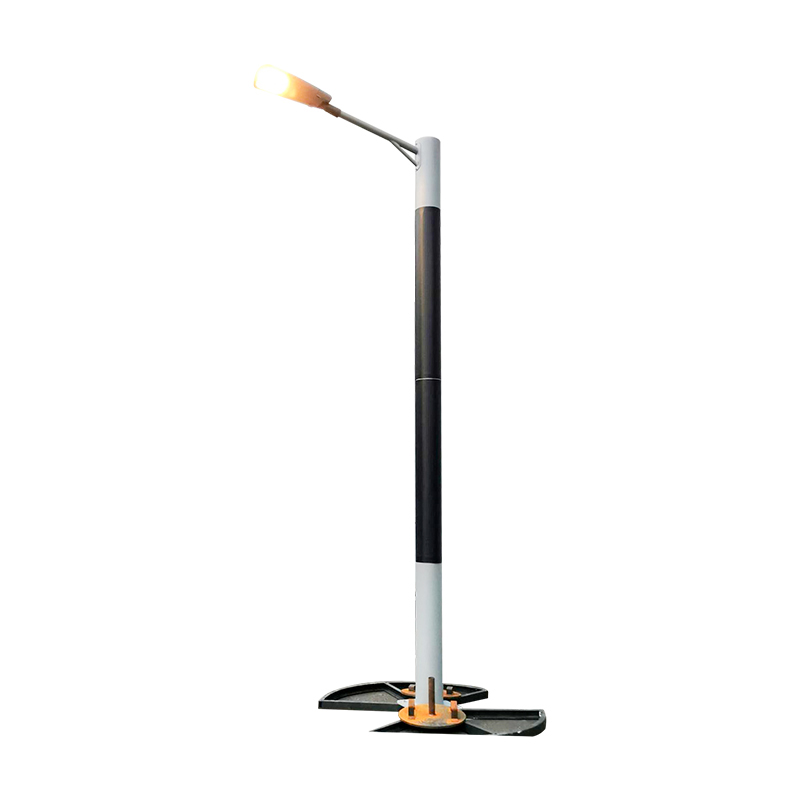 DDK-SSPL-2000 Cylinder Solar Pole Single/Double Arms And Street LED Lamps
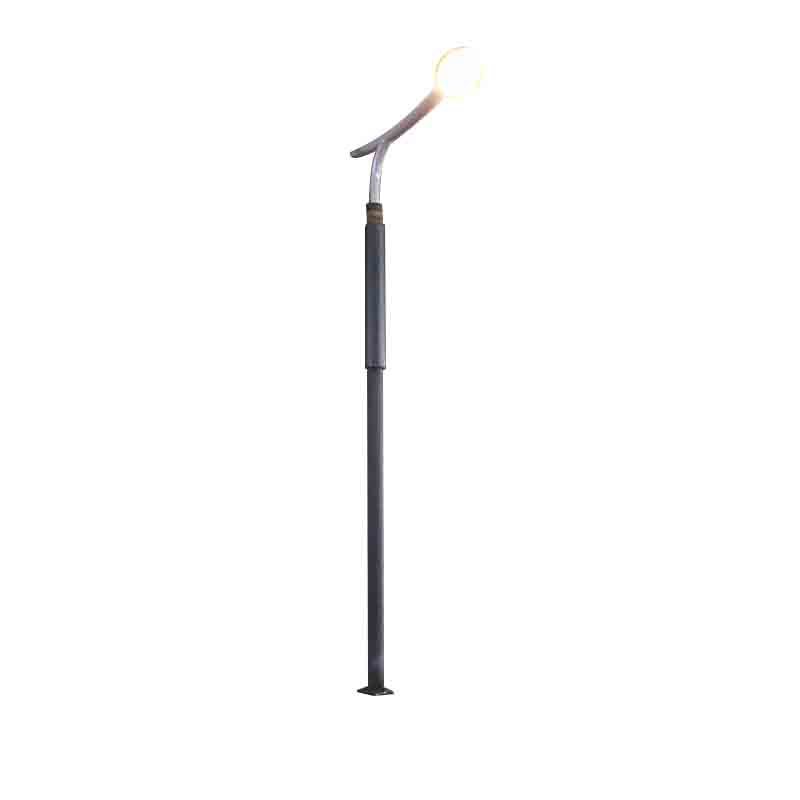 DDK-SSPL-2002 Cylinder Solar Pole With Lamp Head
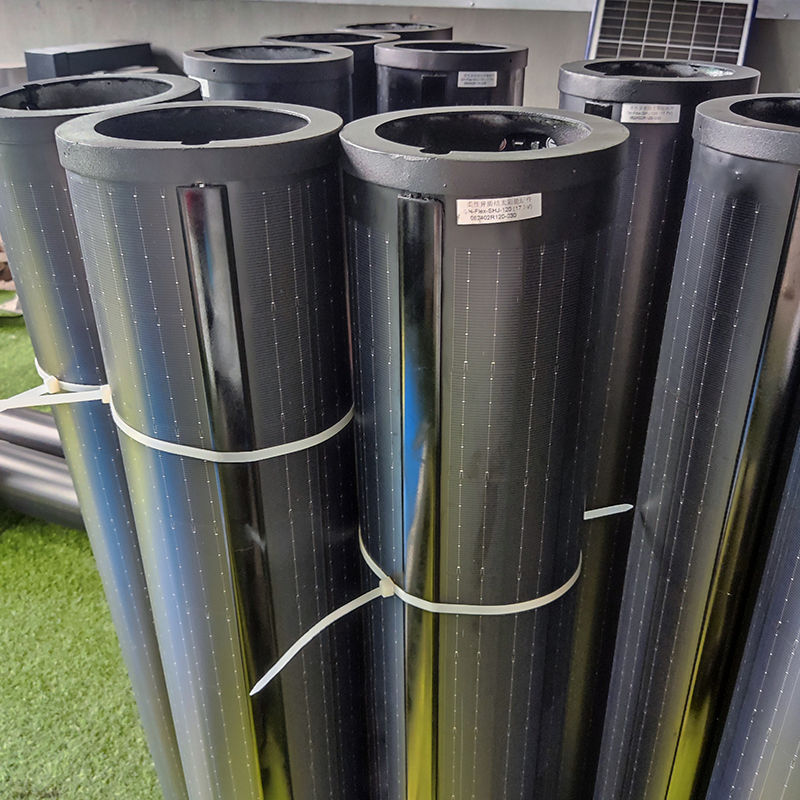 140W Flexible Solar Panel: High-Performance, Elegant and Versatile Power Solution for Lighting Poles and Park Lightings
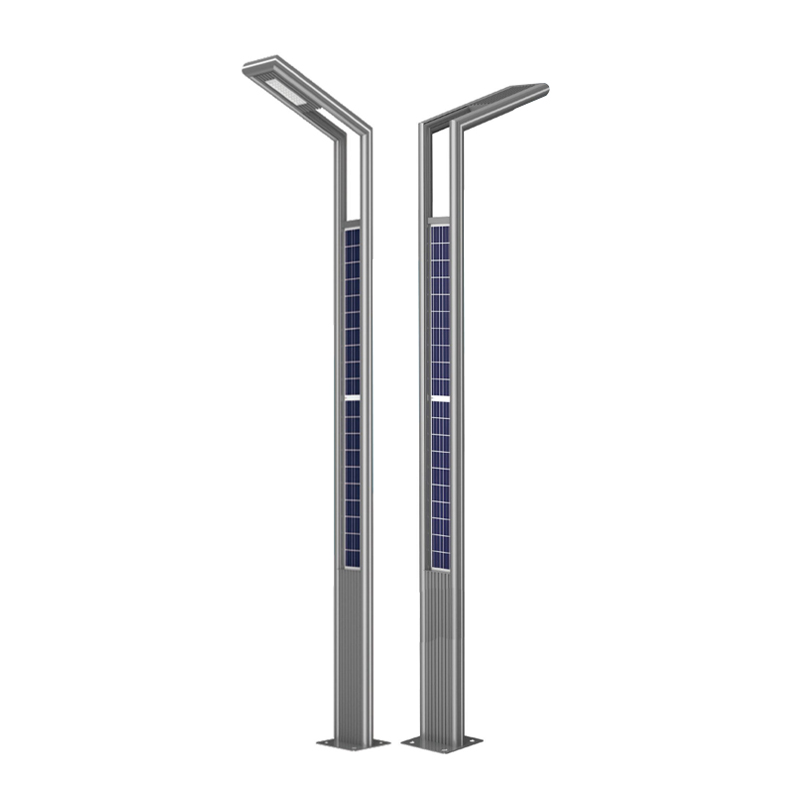 DDK-GN003 Double Sides Integrated Solar Aluminium Pole
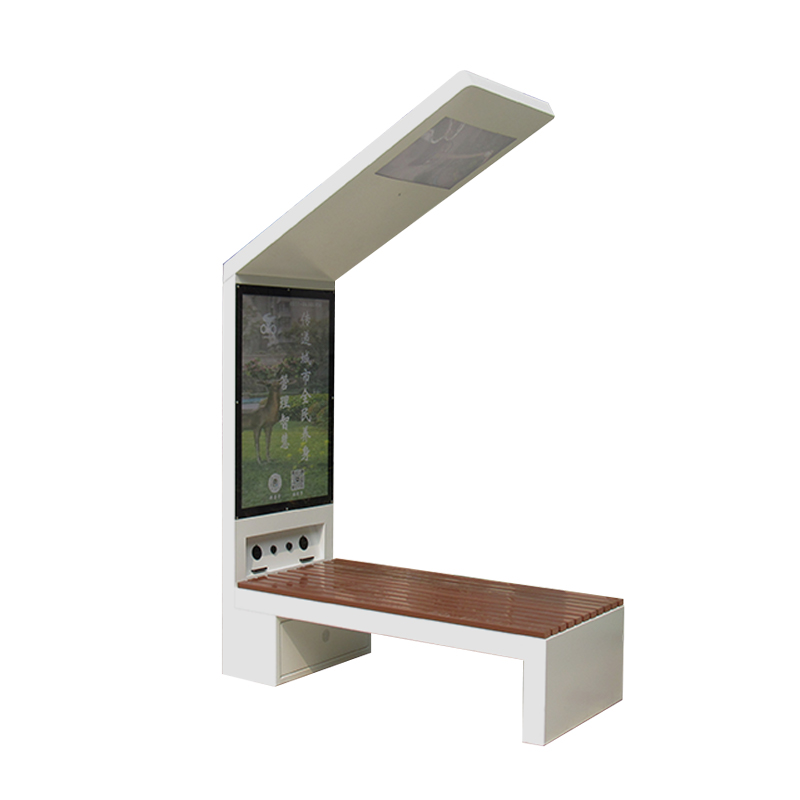 DDK-2000A Charging WIFI Solar Bench Outdoor Bench with Roof on the Top
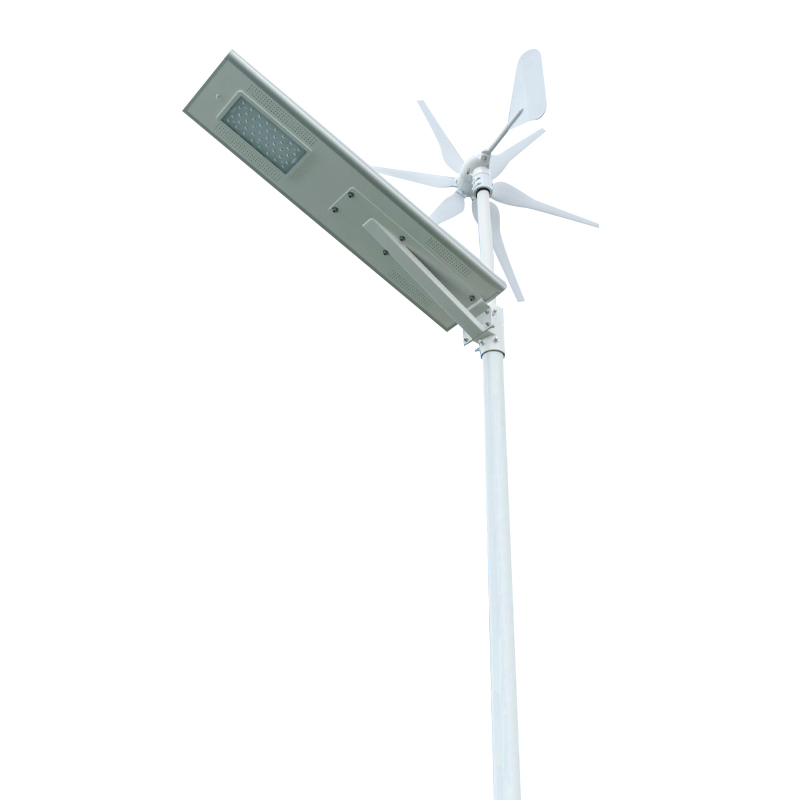 DDK G01 Solar&Wind Hybrid Integrated Optical Lens Solar All in One Light
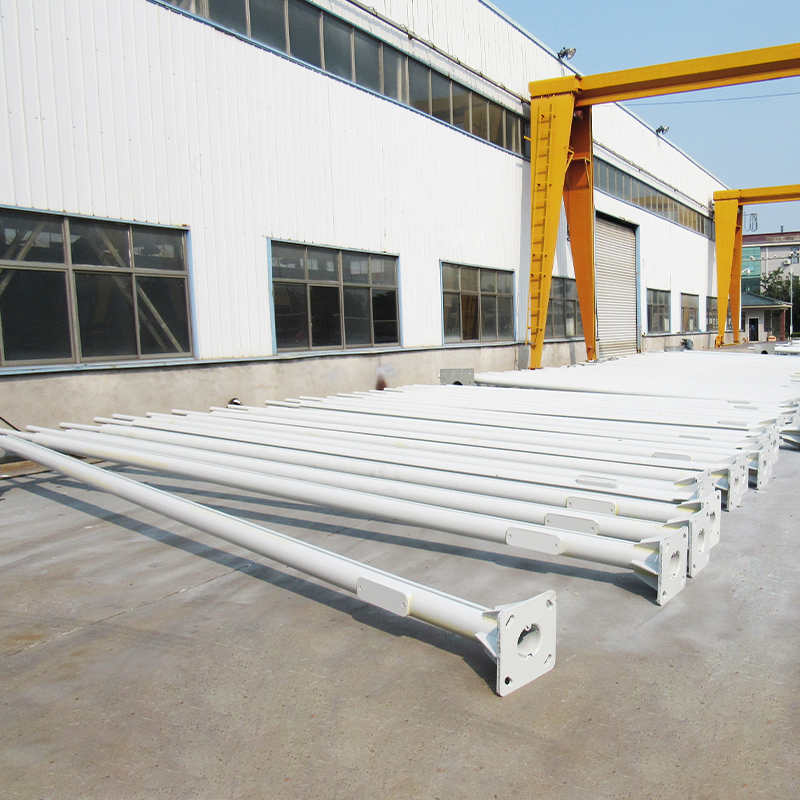 Customized Round Hexagon Octagonal Square Steel Street Light Poles for Outdoor Lightings
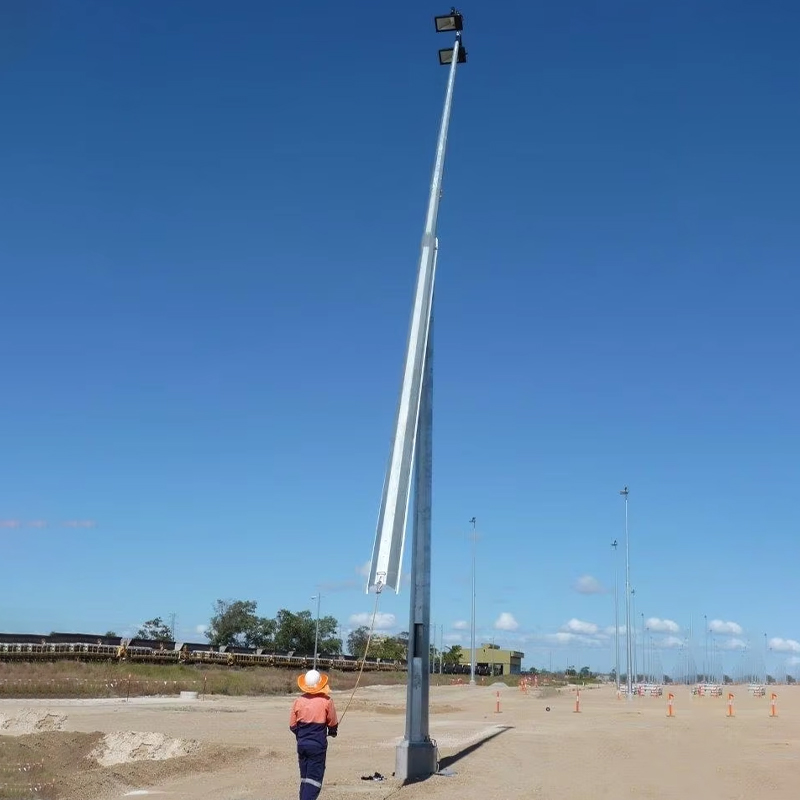 3 to 16M Galvanized Steel Hinged Poles
 English
 русский
 Español
 عربى
عربى

