
call us
+86-18811954888
2026-06-11
The most direct answer: standard street lamp height ranges from 20 to 40 feet (6 to 12 meters), depending on the application. Residential street lights typically stand 20 to 30 feet tall, while arterial roadways and highways use poles reaching 30 to 40 feet or higher. Parking lots and commercial areas commonly use poles in the 25 to 35 foot range, and decorative or pedestrian lights range from 8 to 15 feet.
Understanding the correct height lamp post for your specific use case is essential for achieving proper light distribution, meeting municipal codes, and ensuring safety. Whether you are planning a municipal roadway installation, a parking facility, a private driveway, or looking for solar lights for patio deck applications, height is the single most critical variable to get right before purchasing any fixture or pole.
The height of a light pole directly determines how wide an area a single fixture can illuminate. A pole that is too short concentrates light in a small zone, creating bright spots next to dark voids. A pole that is too tall spreads light too thin, reducing foot-candle levels at ground level below safety standards.
Lighting engineers use a ratio called the mounting height to spacing ratio (MH:S). For most roadway luminaires, this ratio falls between 3:1 and 4.5:1. That means a 30-foot pole should be spaced no more than 90 to 135 feet apart for consistent illumination. Getting the height wrong by just 5 feet can require adding extra poles or switching to higher-wattage fixtures, both of which increase project cost significantly.
Different environments call for very different pole heights. The table below summarizes the most widely referenced standards across North American and European municipal guidelines.
| Application | Typical Height (ft) | Typical Height (m) | Notes |
|---|---|---|---|
| Pedestrian walkways and parks | 8 to 15 | 2.4 to 4.6 | Decorative bollard or lantern style |
| Residential streets | 20 to 25 | 6 to 7.6 | Most common in suburban neighborhoods |
| Collector and arterial roads | 25 to 35 | 7.6 to 10.7 | Standard municipal roadway |
| Parking lots | 20 to 30 | 6 to 9 | Higher poles cover more stalls per fixture |
| Highways and expressways | 35 to 50 | 10.7 to 15.2 | High-mast lighting at interchanges |
| Stadium and sports fields | 60 to 100+ | 18 to 30+ | High-mast, multi-fixture configurations |
| Patio and deck residential | 6 to 12 | 1.8 to 3.7 | Solar lights for patio deck are ideal here |
Residential neighborhoods typically cap street light poles at 25 feet to preserve neighborhood character and reduce glare into upper-story windows. Commercial zones allow and often require taller poles because taller mounts reduce the total number of poles needed, lowering overall infrastructure cost. A single 35-foot pole in a large parking lot can illuminate roughly 6,000 to 8,000 square feet, while a 20-foot pole covers only around 2,500 to 3,500 square feet under comparable fixture conditions.
Steel Street Light Poles are the dominant choice for roadway and commercial outdoor lighting because of their superior strength-to-weight ratio, long service life, and consistent dimensional accuracy. Understanding the core specifications helps buyers make informed decisions and avoid costly overengineering or underspecification.
Most Steel Street Light Poles are fabricated from ASTM A572 Grade 50 or ASTM A36 structural steel, with the former being preferred for poles above 20 feet because its higher yield strength (50,000 psi versus 36,000 psi) allows for thinner walls without sacrificing load capacity. Poles are typically hot-dip galvanized after fabrication to a minimum zinc coating thickness of 85 microns (3.35 mils), which provides a service life of 50 to 70 years in most environments without additional painting.
Wall thickness varies with pole height and wind zone classification. A 20-foot residential pole may have a wall thickness of 0.120 inches (3 mm), while a 40-foot commercial pole in a high-wind coastal zone may require 0.179 to 0.250 inches (4.5 to 6.4 mm).
Every Steel Street Light Pole must be rated for its Effective Projected Area (EPA), which accounts for both the pole and the luminaire attached to it. A standard 30-foot pole with a single 150W LED cobra-head luminaire in a 90 mph wind zone requires an EPA of approximately 1.2 to 1.8 square feet for the luminaire alone, plus the pole's self-EPA. Exceeding the combined EPA rating is a code violation and a structural safety risk.
Solar Wrapped Poles represent one of the most significant evolutions in outdoor lighting infrastructure over the past decade. Rather than mounting a flat solar panel on a horizontal arm at the top of the pole, solar wrapped technology integrates photovoltaic cells directly around the cylindrical or tapered surface of the pole itself, turning the entire structure into an energy-generating asset.
The photovoltaic cells in a Solar Wrapped Pole are embedded in a laminated flexible substrate that is bonded to or formed around the pole during fabrication. Because the cells wrap around the full circumference, they capture sunlight from multiple angles throughout the day without requiring any tracking mechanism. A typical solar wrapped pole with a 6-inch diameter and 20-foot exposed height provides approximately 80 to 150 watts of peak generating capacity, depending on cell efficiency and geographic location.
Energy generated during daylight hours is stored in a lithium iron phosphate (LiFePO4) battery bank, either housed inside the pole base or in a separate below-grade enclosure. LiFePO4 chemistry is preferred over standard lithium-ion for outdoor infrastructure because it tolerates a wider temperature range (minus 20°C to 60°C operating range) and has a cycle life exceeding 2,000 full charge-discharge cycles, translating to roughly 10 to 15 years of daily cycling before significant capacity degradation.
Solar Wrapped Poles are not universally superior. Their energy output per dollar of installed cost is typically 15 to 25% lower than an equivalently sized flat-panel system in the same location, because the cells on the shaded side of the pole generate little to no power at any given time. They are best suited for locations where aesthetics, wind load, or vandalism concerns outweigh the goal of maximizing raw energy yield per fixture.
The Flexible Solar Panel is the core enabling technology behind both Solar Wrapped Poles and a growing range of portable and semi-permanent outdoor lighting systems. Understanding its properties helps specify the right product for each application.
Conventional rigid solar panels use crystalline silicon cells mounted between glass and a rigid aluminum frame. A Flexible Solar Panel replaces the rigid substrate with a thin film of either monocrystalline silicon, CIGS (copper indium gallium selenide), or amorphous silicon deposited on a polymer or metal foil backing. The result is a panel that can conform to curved surfaces and has a thickness of only 2 to 4 millimeters, compared to 30 to 40 mm for standard rigid panels.
| Attribute | Flexible Solar Panel | Rigid Crystalline Panel |
|---|---|---|
| Typical efficiency | 15 to 22% | 20 to 24% |
| Weight (per sq ft) | 0.5 to 1.2 lbs | 3 to 5 lbs |
| Minimum bend radius | 2 to 30 inches (product dependent) | Not applicable (rigid) |
| Expected service life | 15 to 25 years | 25 to 35 years |
| Wind load contribution | Minimal (conforms to structure) | Significant (flat surface catch) |
| Installation complexity | Moderate (bonding, sealing required) | Low (standard bracket mounting) |
| Cost per watt (installed) | $1.80 to $3.50 | $0.80 to $1.60 |
The Flexible Solar Panel finds application far beyond Solar Wrapped Poles. In outdoor lighting, common uses include integration into patio pergola canopies, curved garden wall caps, boat dock handrails, and portable ground-stake pathway lights. The same technology underlies the foldable panels used in remote work-site temporary lighting rigs, where a 100-watt flexible panel weighing under 4 lbs can power an LED work light for a full night shift after a single day of solar charging.
The Cylinder Solar Pole is a purpose-built outdoor lighting solution that combines the cylindrical steel pole structure with an integrated solar generation system in a single, factory-assembled unit. Unlike retrofit solar attachments or wrapped panel conversions, a true Cylinder Solar Pole is engineered from the ground up as a unified system, with the solar cells, battery, charge controller, and luminaire all specified to work together optimally.
A standard commercial-grade Cylinder Solar Pole in the 20-foot class typically includes the following integrated components:
Proper site selection is critical for Cylinder Solar Pole performance. The pole should receive a minimum of 4 peak sun hours per day (PSH) to sustain nightly operation, though 5 to 6 PSH is recommended for northern latitudes above 45 degrees. Obstructions such as buildings, tree canopies, or adjacent structures casting shade on the pole for more than 2 hours during the peak generation window (10am to 3pm solar time) will substantially reduce battery state of charge and may cause premature deep discharge.
Foundation requirements for a 20-foot Cylinder Solar Pole typically call for a concrete pier 18 to 24 inches in diameter and 4 to 5 feet deep, with four anchor bolts on a bolt circle of 8 to 12 inches. Soil bearing capacity should be verified before installation, particularly in clay or fill soils where uplift resistance may be inadequate.
A fully installed Cylinder Solar Pole in the 20-foot residential or commercial class ranges from $2,500 to $6,000 per unit installed, compared to $800 to $2,500 for a conventional grid-tied steel pole and LED fixture (excluding electrical trenching and connection costs). Electrical trenching for a grid-tied installation adds $10 to $30 per linear foot, meaning that any site where the nearest grid connection is more than 150 to 300 feet away often reaches cost parity with solar at or before the initial installation.
Operating cost savings are also significant: grid-tied street lights typically consume 400 to 1,200 kWh per pole per year at current energy prices, while a Cylinder Solar Pole has zero ongoing energy cost and minimal maintenance (panel cleaning once or twice per year, battery replacement after 10 to 15 years at approximately $300 to $600 per pole).
Among the most accessible applications for solar pole lighting, solar lights for patio deck installations represent a rapidly growing segment driven by homeowner interest in eliminating electrical work while still achieving a well-lit outdoor living space. The selection criteria for residential patio and deck lighting differ meaningfully from municipal or commercial applications.
For a typical residential deck or patio, post-mounted solar lights perform best at heights between 6 and 10 feet. Below 6 feet, the light source sits close to eye level, causing glare and shadow interference with seating areas. Above 10 feet, a single residential-grade solar fixture rarely produces enough lumens to maintain adequate foot-candle levels across a standard 200 to 400 square foot patio.
The most effective patio solar lighting layouts combine post heights strategically:
Not all solar patio lights are created equal. The most common complaint from homeowners is that lights dim significantly or go out entirely by midnight on shorter winter days. The following specifications indicate a quality product capable of reliable all-night operation:
Many homeowners unknowingly install solar deck lights in locations that guarantee underperformance. The solar panel on a patio post light must receive direct unshaded sunlight for at least 6 hours per day to fully charge the battery during a typical summer day. Deck overhangs, pergola roofing, tree branches, and nearby structures are the most common obstacles. Even partial shading, where a shadow covers just 20% of the panel surface, can reduce output by 40 to 60% due to the series-circuit architecture of most small solar panels.
When full sun is not available at the post location, consider a split-panel design: mount the solar panel on a south-facing wall or fence post where sun is available, and run the low-voltage DC cable to the light head at the deck post. Cable runs of up to 15 feet at 3.7V to 6V with appropriate wire gauge (22 to 20 AWG) introduce negligible voltage drop and allow complete freedom in locating the light independently of the panel.
With so many pole types, mounting heights, and energy systems available, choosing the right solution requires matching the product category to the application requirements. The following comparison framework addresses the most common decision points.
| Criteria | Steel Street Light Poles (Grid) | Solar Wrapped Poles | Cylinder Solar Pole | Solar Patio Post |
|---|---|---|---|---|
| Typical height range | 15 to 50 ft | 15 to 35 ft | 12 to 30 ft | 6 to 12 ft |
| Energy independence | No (grid required) | Yes | Yes | Yes |
| Best application | Dense urban grids, highways | Urban streetscapes, parks | Remote roads, campuses | Residential patio, deck |
| Installed cost per unit | $800 to $3,500+ | $3,000 to $7,000 | $2,500 to $6,000 | $50 to $400 |
| Permit requirements | Usually required | Usually required | Usually required | Rarely required |
| Maintenance level | Low (lamp replacement) | Low to moderate | Low to moderate | Very low |
Any permanent light pole installation is subject to local building codes, electrical standards, and potentially zoning ordinances. The following standards are the most commonly referenced in the United States and represent a baseline that most jurisdictions adopt or reference:
A building permit is typically required for any pole with a foundation (direct burial or anchor base) that will be a permanent structure. The threshold varies by jurisdiction, but a common rule is: any structure taller than 6 feet and attached to the ground requires a permit. Solar patio deck lights on removable stakes or post caps generally do not require permits. Cylinder Solar Poles, Solar Wrapped Poles, and Steel Street Light Poles on permanent foundations almost always do.
The standard height lamp post for residential streets is typically 20 to 25 feet (6 to 7.6 meters). This range balances adequate illumination for a two-lane residential road with acceptable glare control for adjacent homes. Some older neighborhoods have poles as short as 15 feet, while newer suburban developments commonly use 20-foot steel poles with LED cobra-head or shoebox fixtures.
Parking lot light poles are most commonly 20 to 30 feet tall, with 25 feet being the most frequently specified height for standard surface lots. Taller poles of 30 to 35 feet are used in large lots where minimizing the total number of poles is a priority, as each fixture covers a larger area. Shorter poles of 15 to 20 feet are sometimes used in small lots or covered structures where overhead clearance limits height.
A Solar Wrapped Pole is a conventional steel street light pole onto which flexible photovoltaic cells have been laminated or wrapped around the exterior surface. A Cylinder Solar Pole is a purpose-designed system where the cylindrical form, solar cells, battery, charge controller, and LED fixture are engineered and factory-assembled as a single product. Cylinder Solar Poles tend to have better system optimization and warranties, while Solar Wrapped Poles offer more flexibility in adapting existing pole stock to solar generation.
A Flexible Solar Panel uses thin-film or encapsulated monocrystalline cells on a polymer backing, enabling it to conform to curved surfaces like pole cylinders. Rigid panels use glass-encapsulated cells in an aluminum frame and must be mounted flat. Flexible panels are 60 to 80% lighter and add minimal wind load, making them essential for pole-integrated solar applications. However, they typically have a 5 to 10-year shorter service life than rigid glass-faced panels and cost more per watt of capacity.
Solar lights for patio deck applications perform best when post-mounted at 7 to 9 feet for general ambient lighting. At this height, the light source clears typical adult eye level (avoiding glare) while remaining low enough for a compact residential solar fixture to maintain useful foot-candle levels across the deck surface. Step and pathway bollard lights are typically 18 to 36 inches tall and serve a separate task of marking level changes and edges rather than providing area illumination.
The standard depth for direct burial Steel Street Light Poles follows the formula: 10% of total pole length plus 2 feet. For a 30-foot pole, this means a burial depth of 5 feet. For anchor-base installations, the concrete foundation depth is typically specified by a structural engineer based on soil conditions and wind load requirements, but commonly ranges from 3.5 to 5 feet deep for poles up to 35 feet.
Yes, but battery autonomy is the key design variable. A well-specified Cylinder Solar Pole in a climate averaging 3 peak sun hours per day (typical of northern Europe or the US Pacific Northwest in winter) can still operate reliably if the battery pack provides 3 to 5 days of autonomy at full brightness. Systems with smart dimming reduce energy draw by 50 to 70% during low-traffic periods, extending runtime substantially. Installers in cloudy regions should specify larger battery banks and consider tilt-adjustable panel sections to capture maximum winter sun angle.
Highway and high-mast light poles range from 40 to 100 feet or more in height. Standard high-mast poles at highway interchanges are typically 60 to 80 feet tall and carry multiple luminaire heads (4 to 12 fixtures) on a ring lowered by a winch for maintenance. This approach dramatically reduces the number of poles needed to illuminate a large interchange area compared to standard roadway poles, lowering both infrastructure cost and maintenance access requirements.
No. Solar Wrapped Poles are designed as fully off-grid systems. They generate, store, and consume electricity entirely within the pole assembly, requiring no connection to the utility grid. This is one of their primary advantages in new development, rural, and remote applications where grid extension costs are high. Some installations include a small hardwired backup connection as a redundancy measure, but this is an option rather than a requirement and is not needed in most deployments.
The primary decision factor is the number of poles you want in the lot. A 30-foot pole with a 150W LED fixture typically illuminates a coverage area of 90 to 120 foot diameter, while a 20-foot pole covers approximately 50 to 70 feet under equivalent fixture conditions. Fewer, taller poles reduce foundation and electrical circuit costs but require higher-output fixtures to maintain foot-candle targets. If the lot has trees or canopy obstructions that block taller poles, or if local codes cap height at 25 feet, 20-foot poles become the practical choice despite requiring more units.
Related Products
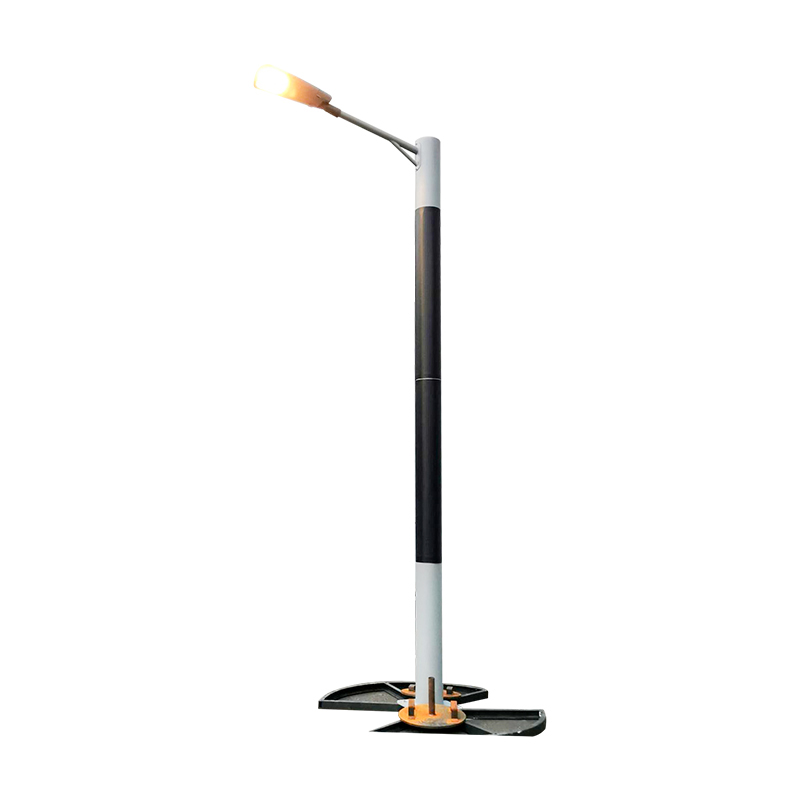 DDK-SSPL-2000 Cylinder Solar Pole Single/Double Arms And Street LED Lamps
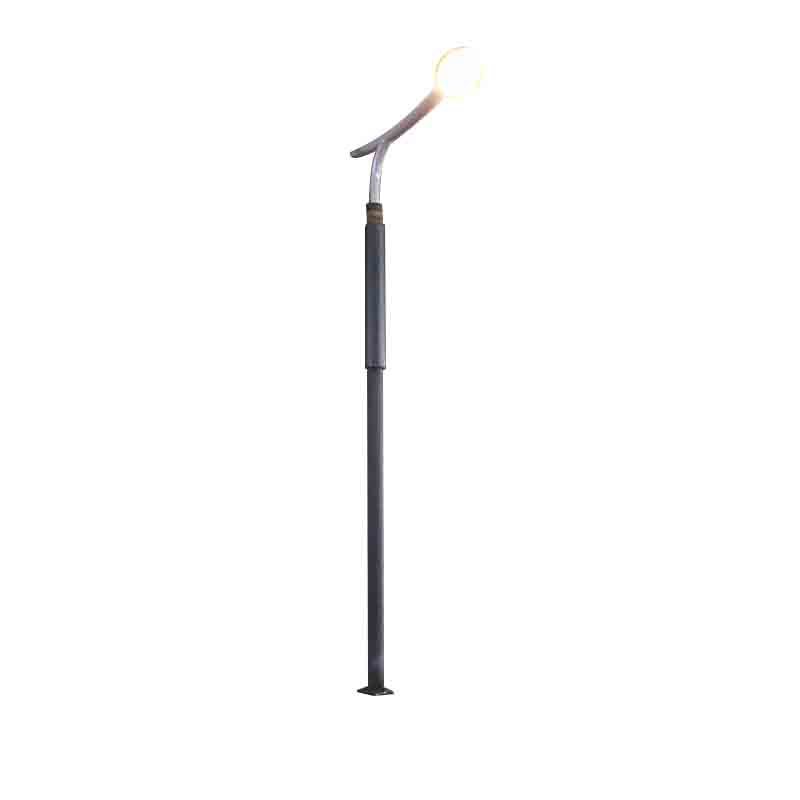 DDK-SSPL-2002 Cylinder Solar Pole With Lamp Head
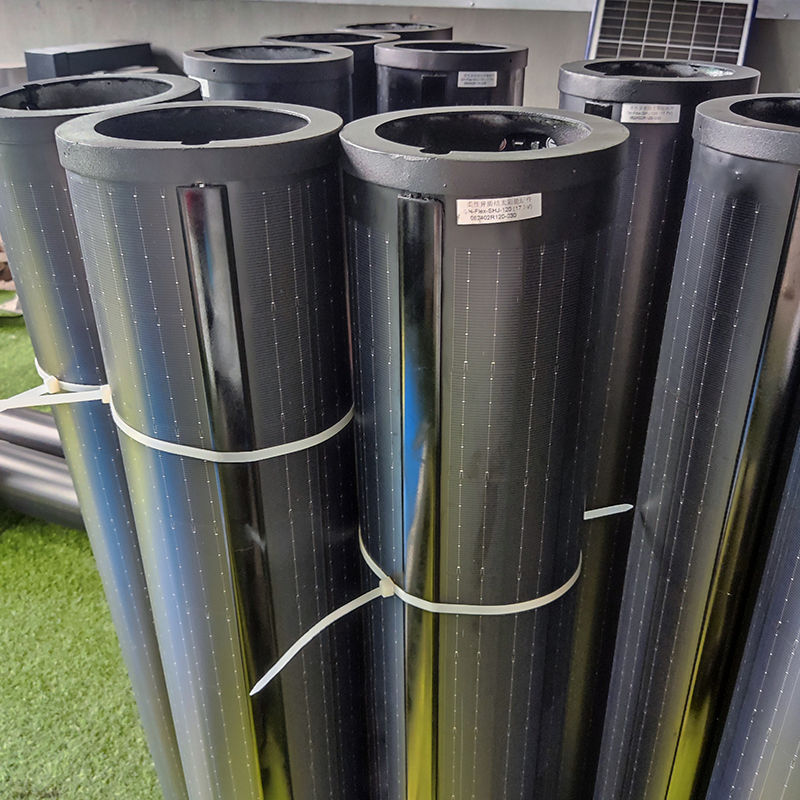 140W Flexible Solar Panel: High-Performance, Elegant and Versatile Power Solution for Lighting Poles and Park Lightings
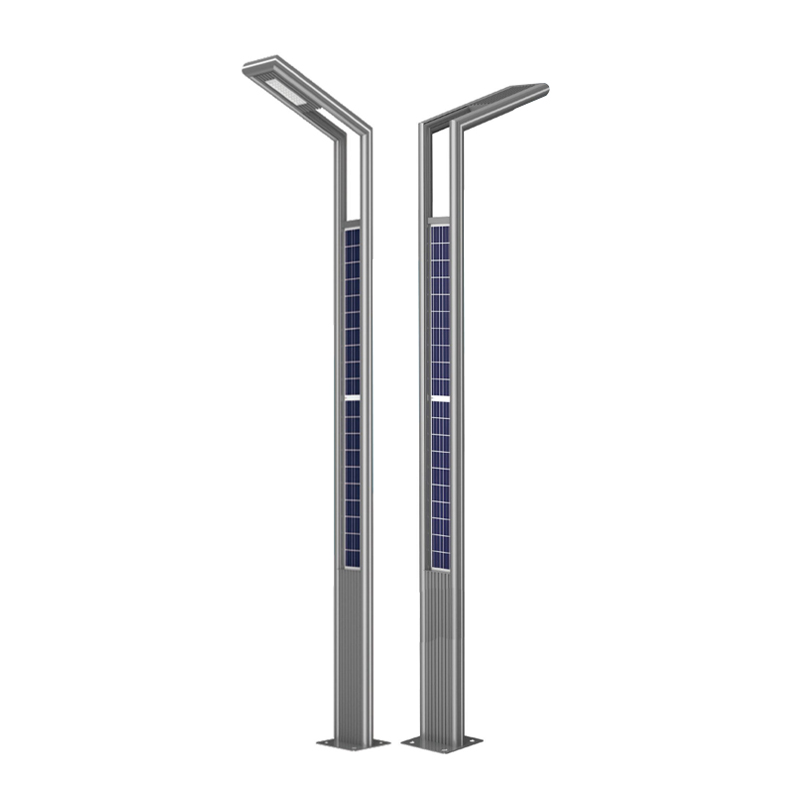 DDK-GN003 Double Sides Integrated Solar Aluminium Pole
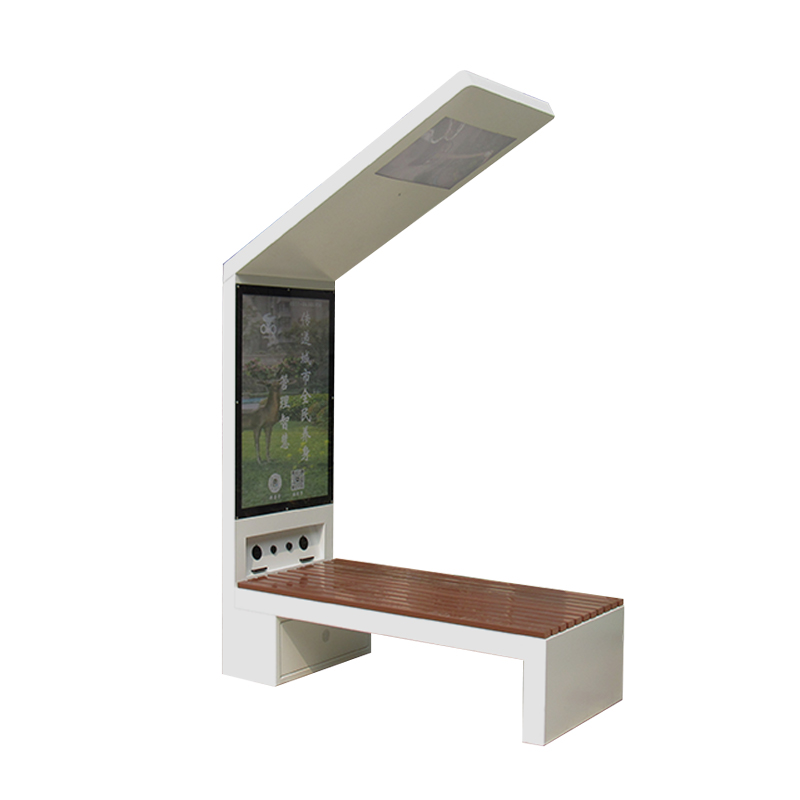 DDK-2000A Charging WIFI Solar Bench Outdoor Bench with Roof on the Top
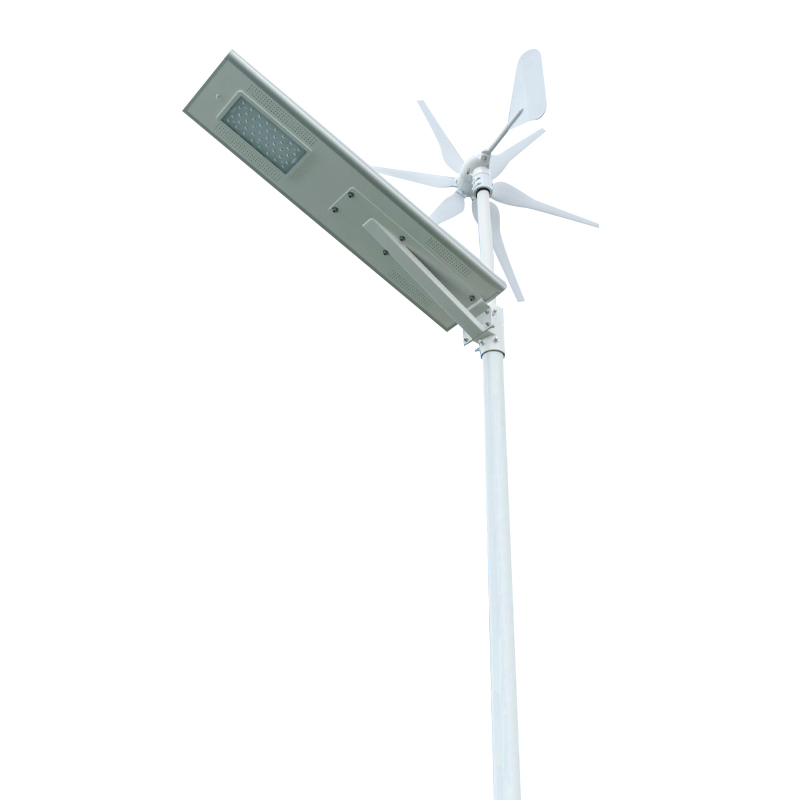 DDK G01 Solar&Wind Hybrid Integrated Optical Lens Solar All in One Light
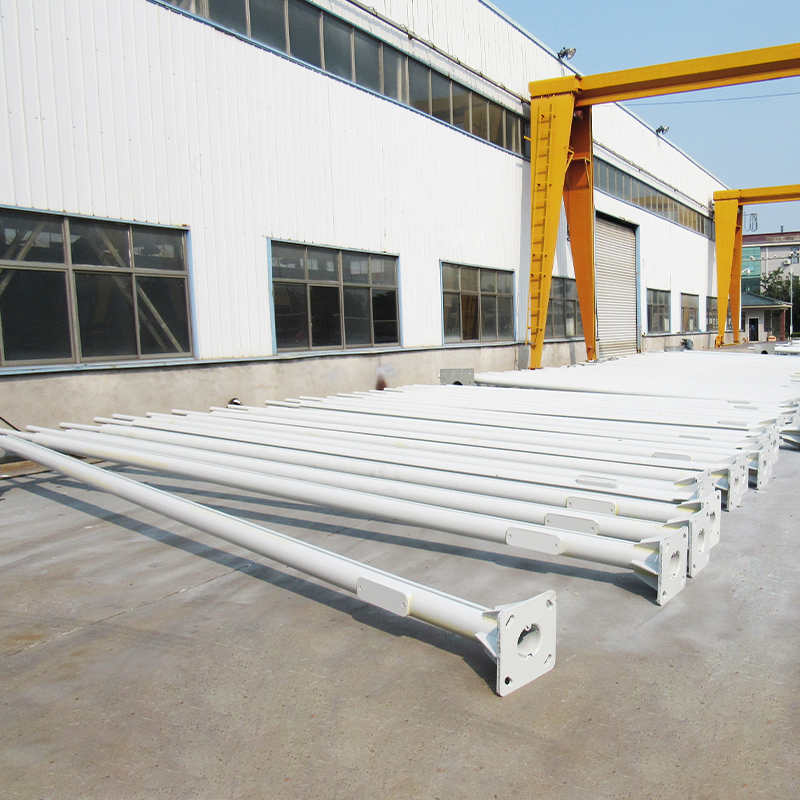 Customized Round Hexagon Octagonal Square Steel Street Light Poles for Outdoor Lightings
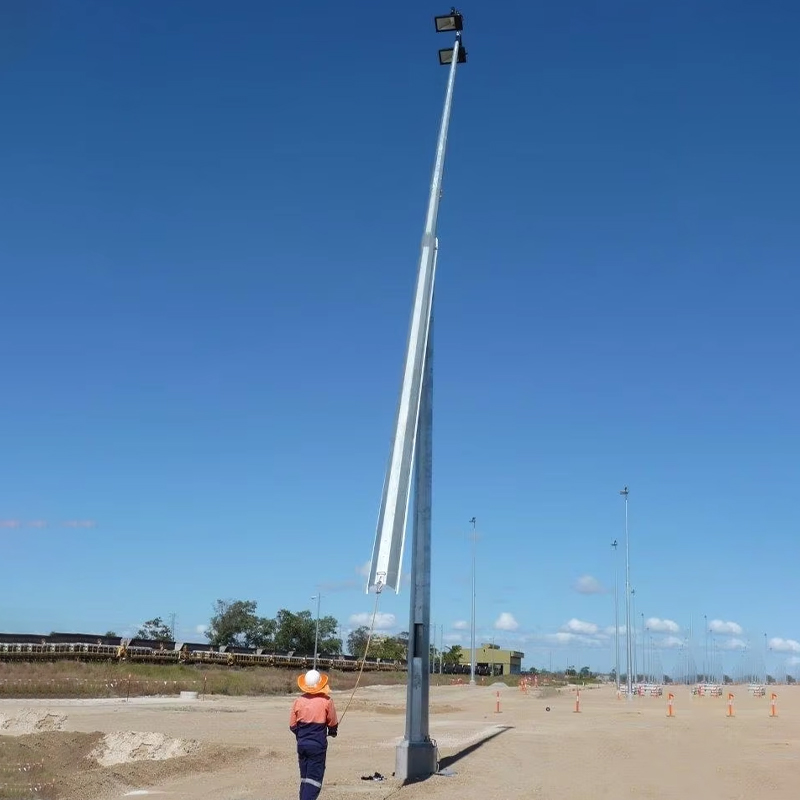 3 to 16M Galvanized Steel Hinged Poles
Contact us
180 meters south of the intersection of Nanbei Avenue and Xuba Road, Gaoyou City, Yangzhou City, Jiangsu Province, China.
+86-18811954888
ddk@cnddk.net
 English
 русский
 Español
 عربى
عربى

